
Reviewed · COOKING CLASSES
Accra: Cooking Class with Auntie KK in Osu
Come hungry, leave with a recipe. This three-hour cooking class in Osu gives you a close look at Ghanaian food in a family home, where Auntie KK teaches local recipes with fresh ingredients. I like the warm, personal setting, and I like that you eat what you prepare rather than simply watching a chef work. The main consideration is the price: at $185 per person, this is a costly cooking class, especially since transport to the meeting point is not included.
You meet across from the Club 69 signboard, then cook, eat, and spend time with Auntie KK and her family. The class is conducted in English and Twi, and the food, drinks, ingredients, entry, and photo opportunities are included. Two verified bookings gave the experience a full five out of five, with special praise for Auntie KK’s kindness, the family atmosphere, and the delicious food.
In This Review
- What makes this Osu cooking class worth your time
- Meeting Auntie KK across from Club 69
- Cooking in a Ghanaian family home
- Choosing your Ghanaian dish
- Jollof rice
- Waakye
- Banku and tilapia
- Fufu and light soup
- Kelewele
- Red red
- Groundnut soup and kenkey
- From ingredient lesson to shared meal
- Is $185 per person good value?
- Who will enjoy the three-hour class most?
- Practical tips before you book
- Should you book Auntie KK’s cooking class?
- FAQ
- Where does the cooking class meet?
- How long does the cooking class last?
- What is included in the price?
- Is hotel pickup included?
- Which languages are spoken?
- What dishes can be prepared?
- Is the activity wheelchair accessible?
- Can I cancel the booking?
- Can I reserve now and pay later?
What makes this Osu cooking class worth your time
- Auntie KK welcomes you at a family home: The setting gives the class a personal feel instead of a formal restaurant lesson.
- You work with Ghanaian ingredients: The preparation helps you understand what goes into local dishes and where those foods fit in Ghanaian cooking.
- You eat the meal you prepare: The final tasting brings the lesson together, with food and drinks included.
- You can choose from well-known Ghanaian dishes: Options may include jollof rice, waakye, banku with tilapia, fufu with light soup, kelewele, red red, groundnut soup, or kenkey.
- The class is practical and social: You get hands-on preparation, conversation, and photo and video opportunities.
- You can cancel up to 24 hours ahead: Reserve now and pay later if you want more flexibility in your plans.
Meeting Auntie KK across from Club 69
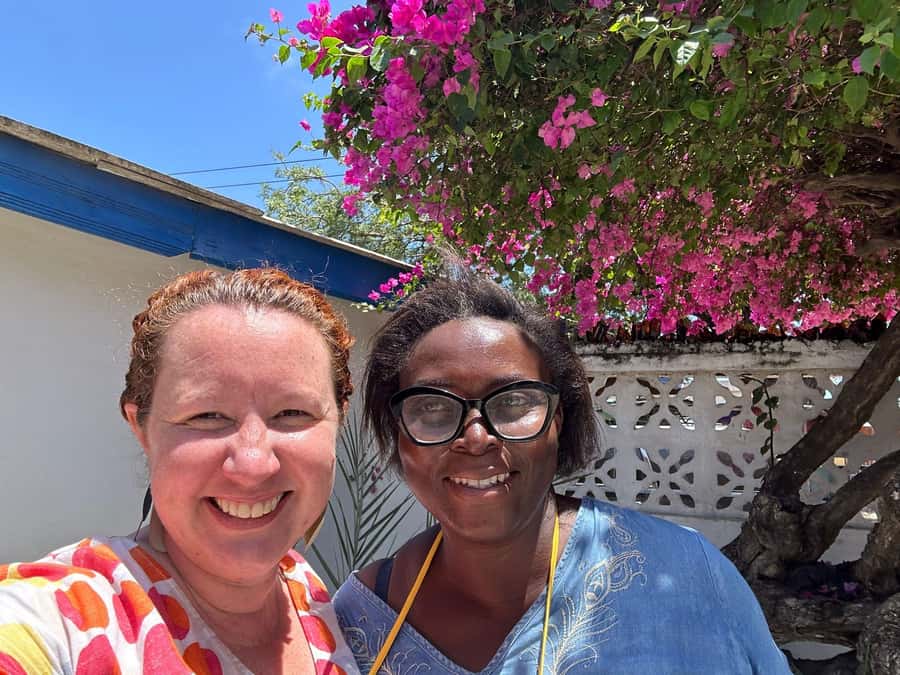
Your meeting point is easy to describe but worth checking carefully. Look for a white wall and a blue gate directly across the street from the Club 69 signboard in Osu. Auntie KK waits there to welcome you.
You do not get hotel pickup, so you need to arrange your own ride to the meeting point. Transportation is also not included after the class, though you can easily get a ride back to where you came from. If you are carrying cooking supplies, shopping bags, or luggage, plan your transport with a little extra care.
This first meeting is more than a simple handoff. The experience is built around a family welcome, and Auntie KK’s role shapes the class from the start. The tone is friendly and informal, which suits a cooking lesson better than a stiff, demonstration-only format.
The exact start time depends on availability, so check before booking. The class lasts three hours, a useful length for learning several preparation steps without giving up an entire day in Accra.
More Accra outings people pair with this:
- The Cape Coast Day Tour
★ 5.0 · 525 reviews - Experience the Beauty, History and the Culture Of Accra in a Day
★ 5.0 · 323 reviews - The Cape Coast Tour
★ 5.0 · 177 reviews
Cooking in a Ghanaian family home
The family-home setting is the heart of the experience. You are not simply seated in a restaurant while someone explains a finished plate. You take part in preparing the food, using ingredients supplied for the class and learning how local recipes come together.
That matters because Ghanaian food is not only about a final list of ingredients. Texture, seasoning, cooking order, and shared eating all play a part. Working through the preparation helps you connect the dish on your plate with the food traditions behind it.
I also like the way the class gives you room to ask questions. The instructor speaks English and Twi, so English-speaking visitors can follow the lesson while still hearing the local language used in the home. You leave with more than a full stomach. You also leave with a recipe and some confidence to try the dish again.
The class includes photo and video opportunities. That is useful if you want a record of the cooking process, though the best reason to bring your phone is to capture the ingredients and preparation stages. Take notes as you go, too. A finished plate can look simple, but the steps that produce its flavor are easier to forget.
Choosing your Ghanaian dish
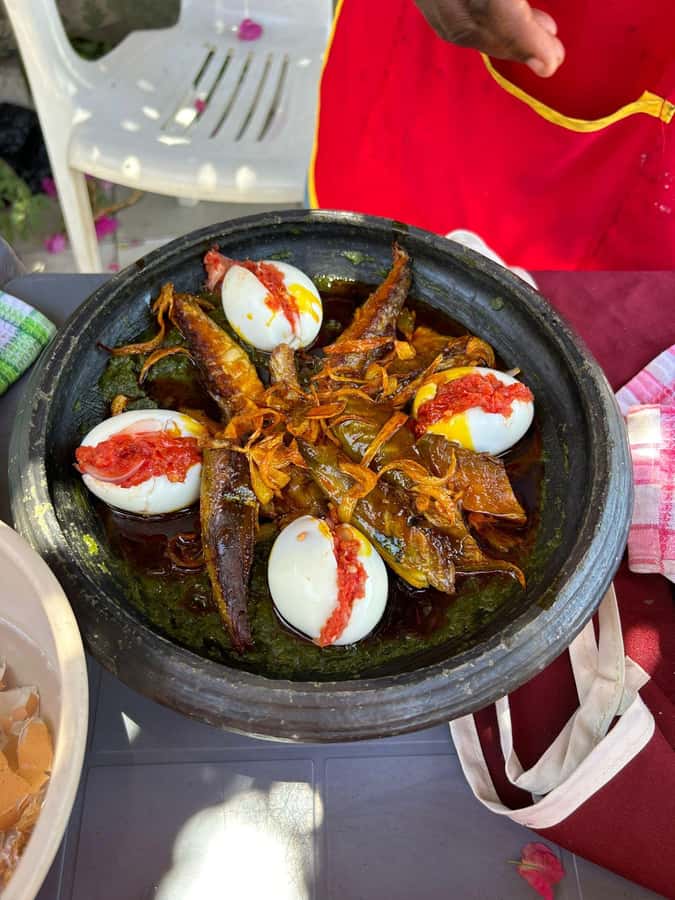
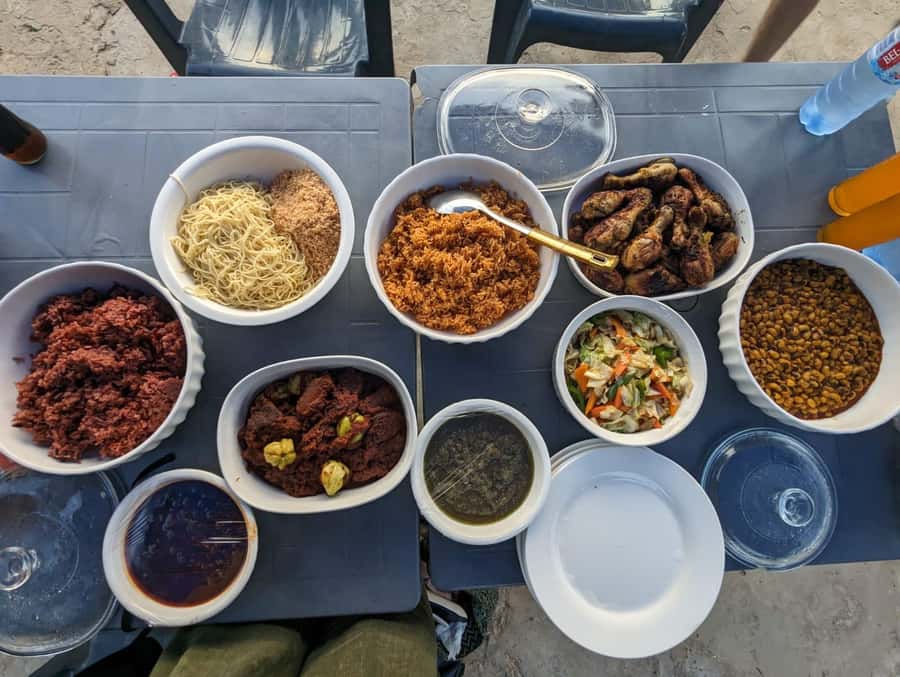
The food choices cover several of Ghana’s best-known dishes. The exact meal selection is not specified, so ask about your available choices when arranging the class. Each dish offers a different window into Ghanaian cooking.
Jollof rice
Jollof rice is cooked in a tomato and pepper sauce, often with vegetables and meat. It is one of the best choices if you want a familiar starting point with bold seasoning and a clear preparation process.
The appeal of making it yourself is that you can follow how the sauce develops before the rice cooks in it. At home, you can use the recipe as a base and adjust the heat to suit your taste.
More Ghanaian cooking sessions in Accra:
- Home Cooking Class by Auntie K
★ 5.0 · 62 reviews - Local Ghanaian Cooking Class in Accra to help support wellness community center
★ 4.5 · 22 reviews - Authentic Ghanaian Cooking Class in Accra
★ 4.5 · 11 reviews - Authentic Ghanaian Cooking Lessons and Take Out Services.
★ 5.0 · 9 reviews
Waakye
Waakye combines rice with sorghum leaves, which give the dish its reddish-brown color. It is usually served with several accompaniments, including fried fish, spaghetti, and spicy pepper sauce.
This is a good pick if you want to understand how one Ghanaian meal can bring several textures and flavors to the same plate. It is also a reminder that local food often works as a complete shared meal rather than a single item served alone.
Banku and tilapia
Banku is made from fermented corn and cassava dough. It is commonly paired with grilled or fried tilapia and pepper sauce.
This choice may be especially useful if you want to learn about fermented staples and the soft texture of banku. The fish provides a crisp or grilled contrast, while the pepper sauce adds heat. Ask for guidance on how to handle the dough and how the components are served together.
Fufu and light soup
Fufu is a soft, starchy side dish made from ingredients such as cassava, plantains, or yams. Light soup can be prepared with fish, meat, or vegetables.
This meal introduces you to one of Ghana’s most familiar combinations of a substantial starch and a strongly seasoned soup. It is also a dish tied closely to communal dining, making it a fitting choice for a class held in a family home.
Kelewele
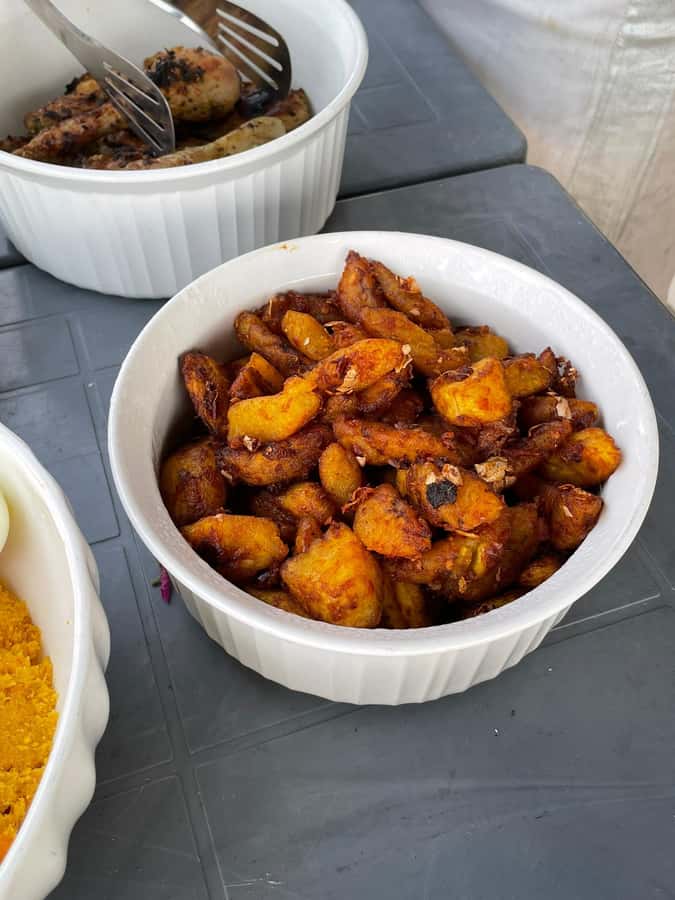
Kelewele is fried plantain seasoned with ginger, garlic, and hot peppers. It works as a snack or side dish and offers a quick way to experience Ghanaian flavors.
Choose kelewele if you want something with a direct, punchy flavor. The dish is simple to describe, but the balance of sweetness, spice, and seasoning is what makes it memorable.
Red red
Red red is a bean stew made with black-eyed peas and palm oil, often served with fried plantains or rice.
It is a hearty option and a good match for anyone who enjoys beans and savory stews. The fried plantains add sweetness and a different texture to the plate.
Groundnut soup and kenkey
Groundnut soup, also called nkate nkwan, uses groundnuts, vegetables, and sometimes meat or fish. It can be served with rice or fufu. The result is a rich, nutty soup with a different flavor profile from light soup.
Kenkey is fermented corn and cassava dough wrapped in corn husks and steamed. It is often served with fried fish and pepper sauce. These dishes are useful choices if you want to learn more about fermentation, staple foods, and the way Ghanaian meals balance a filling base with sauce and fish.
From ingredient lesson to shared meal
The class begins with an introduction to the ingredients used in your chosen meal. This is an important stage, not filler. You get a clearer sense of what is common in Ghanaian cooking and how individual ingredients shape the final dish.
Next comes preparation. You help with the work rather than standing back. The specific tasks depend on the meal you select, but the goal is to take part in the process from raw ingredients to finished food.
The best part comes when you sit down to taste the results. Because you helped make the meal, the first bite has a small reward built into it. You can see how the seasoning, texture, and cooking method came together, then ask questions while the details are still fresh.
Food and drinks are included, so you do not need to budget for a separate meal during the class. The shared table also gives the experience its social side. You are eating with the people who helped prepare the food, not simply collecting a plate at the end of a lesson.
A five-star rating from three verified bookings supports the strongest parts of the experience. Julian from Switzerland praised Auntie KK’s fun approach, tasty food, and good atmosphere. Ashley from the United States gave particular credit to Auntie KK and her family, calling the food delicious and the whole experience worth repeating.
Is $185 per person good value?
The $185 price needs a careful look. It is not a budget cooking lesson. You are paying for a three-hour private-feeling cultural experience that includes the class, ingredients, food, drinks, a professional local chef, and photo and video opportunities.
The value is strongest if you want personal contact and a meal-based activity rather than a cheap food demonstration. The family-home setting is a major part of what you are buying. You also leave with a recipe and the ability to recreate the dish, which gives the experience value beyond the day itself.
The value is weaker if your main goal is simply to eat Ghanaian food at the lowest cost. Accra offers other ways to taste local dishes, and this class also requires you to pay for your own transport to and from Osu.
Before booking, confirm which dishes are available and how much hands-on cooking is included for your selected meal. That question will help you decide if the price matches what you want from the experience.
Who will enjoy the three-hour class most?
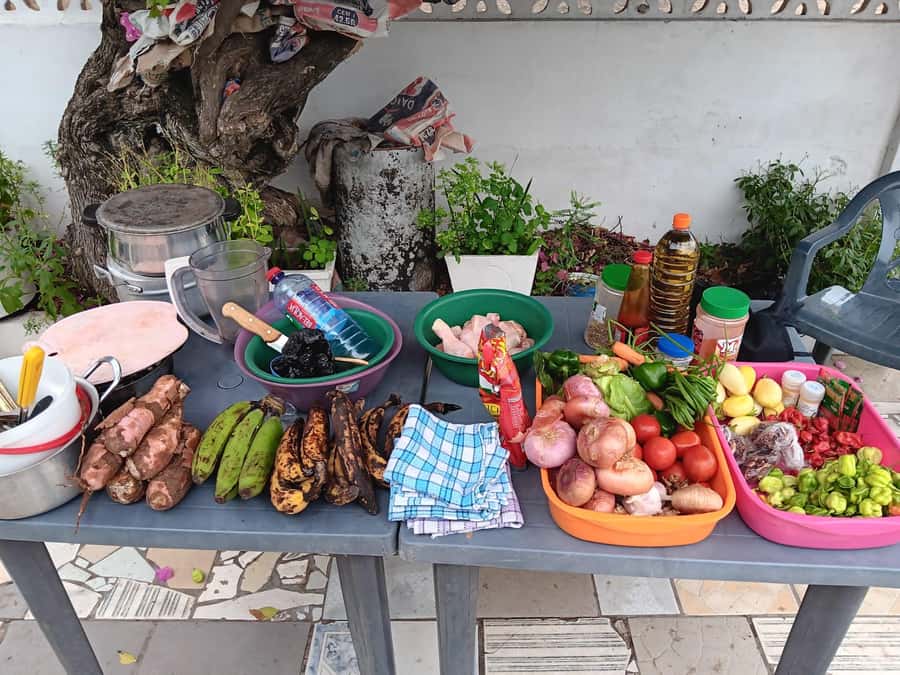
I would recommend this class to visitors who want food to be part of their cultural experience in Accra. It suits curious eaters, home cooks, couples, families, and small groups who enjoy learning by doing.
It is also a good choice if you want a friendly introduction to dishes you may see elsewhere in Ghana. After learning how jollof rice, kelewele, banku, or groundnut soup is prepared, you will recognize those foods with a better sense of what you are tasting.
The class may be less suitable for someone seeking a fast, low-cost meal or a formal professional cooking course. The focus is on local recipes, family hospitality, and shared food. You should come ready to participate, ask questions, and spend time at the table.
The activity is listed as wheelchair accessible. If access details are important for your visit, confirm the arrangements when booking so the meeting point and cooking area work for your needs.
Practical tips before you book
Wear clothing that you can cook in comfortably. The activity involves preparation, and you will want to focus on the food rather than worrying about your clothes.
Arrive at the white wall and blue gate across from Club 69 rather than waiting at the club itself. The landmark is the Club 69 signboard, but the actual meeting place is across the street.
Ask about the dish choices ahead of time. If you have your heart set on banku and tilapia or red red, confirm that it can be prepared during your session.
Plan your ride in advance. Hotel pickup and drop-off are not included, and transportation is your responsibility. You can get a ride back after the class, but having your departure plan ready keeps the end of the experience easy.
Keep your phone available for photos and notes. The class includes photo and video opportunities, and a few written reminders can help you reproduce the recipe later.
Cancellation is flexible: you can cancel up to 24 hours in advance for a full refund. You can also reserve now and pay later, which helps if your Accra schedule is still changing.
Should you book Auntie KK’s cooking class?
Book it if you want a warm, hands-on introduction to Ghanaian food and do not mind paying a premium for a personal family setting. The strongest reasons are Auntie KK’s welcoming presence, the chance to cook with local ingredients, and the pleasure of eating a meal you helped prepare.
Skip it if you only want the cheapest way to sample Ghanaian dishes or if arranging your own transport is inconvenient. For everyone else, this is a useful three-hour activity in Osu, especially if you want to leave Accra with a recipe, a full belly, and Ghanaian food memories that reach beyond a restaurant menu.
FAQ
Where does the cooking class meet?
Meet in Osu, across the street from the Club 69 signboard. Look for a white wall and a blue gate.
How long does the cooking class last?
The class lasts three hours.
What is included in the price?
The price includes the class entry, cooking ingredients, food, drinks, photo and video opportunities, and a professional local chef.
Is hotel pickup included?
No. Hotel pickup and drop-off are not included, and transportation is your responsibility.
Which languages are spoken?
The instructor speaks English and Twi.
What dishes can be prepared?
Possible Ghanaian dishes include jollof rice, waakye, banku and tilapia, fufu and light soup, kelewele, red red, groundnut soup, and kenkey. Confirm the available choices before booking.
Is the activity wheelchair accessible?
Yes, the activity is listed as wheelchair accessible.
Can I cancel the booking?
Yes. You can cancel up to 24 hours in advance for a full refund.
Can I reserve now and pay later?
Yes. The booking option allows you to reserve your place and pay later.
More Workshops in Accra
- African Drum and Dance Lessons
★ 5.0 · 6 reviews - Half-Day Private African Drumming Lessons with Pick Up
★ 5.0 · 3 reviews - Culinary for Social Change-Cooking Class
★ 5.0 · 2 reviews - Beadmaking Workshop
★ 5.0 · 2 reviews
Most recently reviewed around Accra
- Visit Aburi Garden, Tetteh Quarshie Cocoa Farm & Waterfall★ 4.0 · 4 reviews
- Private 9-Day Tour in Ghana★ 5.0 · 2 reviews
- Wli Waterfalls, Mount Afadjato & Tafi Atome Monkey Sanctuary★ 5.0 · 2 reviews
- Cape Coast and Elmina castle Day Trip★ 5.0 · 2 reviews
- Time with Nature★ 5.0 · 2 reviews
- Culinary for Social Change-Cooking Class★ 5.0 · 2 reviews
- Private Slave Castles and Dungeons Tour in Cape Coast, Ghana★ 5.0 · 3 reviews
- Experience Accra★ 5.0 · 2 reviews
Cooking Classes, compared.

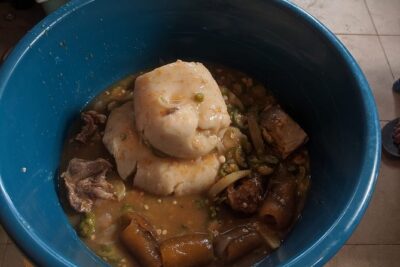
Local Ghanaian Cooking Class in Accra to help support wellness community center
Read our review →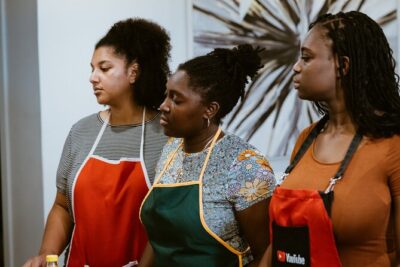
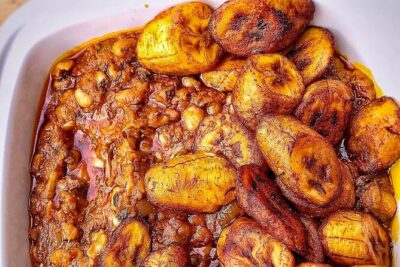
Authentic Ghanaian Cooking Lessons and Take Out Services.
Read our review →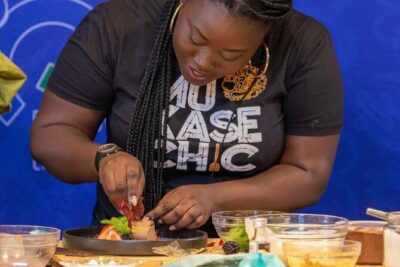
Kejetia Market Tour and Traditional Food Cooking Class.
Read our review →Browse the lists this tour appears in