
Reviewed · WILDLIFE
15-Day Ghana Wildlife Private Tour
Ghana rewards patience. This 15-day private tour links coastal wetlands, Upper Guinea rainforest, woodland, and northern savannah in one long wildlife route. I like the chance to search for unusual mammals such as pangolins, Egyptian Tomb Bats, dwarf crocodiles, and anomalures, and I like the mix of guided walks, night spotlighting, 4×4 drives, and canopy viewing.
I also like the strong local support. Guides including Philip Senyo, Foster, and Jackson have been praised for bird and wildlife spotting, while the drivers are noted for safe road work and smooth planning. The main drawback is the price, $4,995 per person, plus long road transfers and difficult forest sightings that can never be promised.
In This Review
- Key points at a glance
- What the $4,995 price really buys
- Day 1: An easy landing near Shai Hills
- Day 2: Shai Hills bats, then Kakum after dark
- Days 3 to 5: Three full days in Kakum National Park
- Day 6: Brenu Akyinim adds beach and dry-country habitat
- Days 6 to 8: Ankasa’s remote wet forest
- Days 9 and 10: Pangolins and community conservation
- Day 11: A long transfer to Mole National Park
- Days 12 to 14: Three days of open-country wildlife at Mole
- Day 15: Tamale, Accra, and the final checklist
- Guides, vehicles, and daily comfort
- Who should book this Ghana wildlife tour?
- Should you book the 15-Day Ghana Wildlife Private Tour?
- FAQ
- Where does the tour begin?
- How long does the tour last?
- Is this a private tour?
- What is the price?
- Is accommodation included?
- Are meals included?
- Are international flights included?
- Is the Ghana visa included?
- What animals might I see at Mole National Park?
- Can the tour be canceled because of weather?
Key points at a glance
- Egyptian Tomb Bats at Shai Hills: Begin with a rare bat target in a dry savannah setting near Accra.
- Five days around Kakum: The long stay gives you repeated chances at pangolins, colobus monkeys, galagos, bats, and forest rodents.
- Remote Ankasa camping: Ghana’s only pristine wet evergreen Upper Guinea rainforest brings a wilder, quieter forest experience.
- Community conservation near New Edubiase: Search for pangolins while supporting a local effort against hunting and illegal logging.
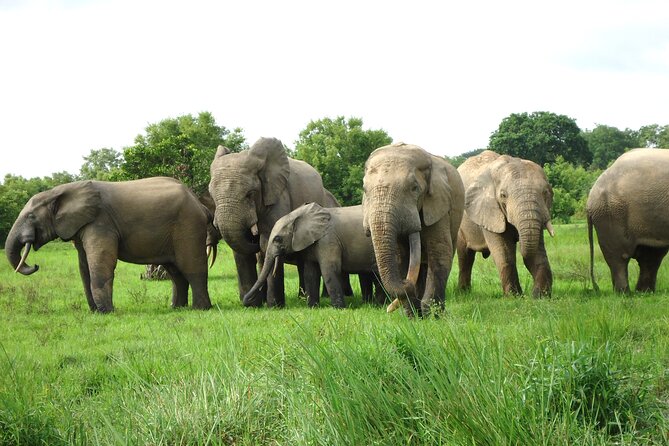
- Elephants from the Mole hotel terrace: The northern park combines open-country wildlife with comfortable high escarpment views.
- Private touring: Your own group travels with a guide, driver, air-conditioned vehicle, airport transfers, meals, water, and excursion fees.
What the $4,995 price really buys
At first glance, $4,995 is a serious fare for a 15-day Ghana tour. It becomes easier to understand when you look at the ground services included: accommodation, airport transfers, an air-conditioned vehicle, an experienced driver, an expert local guide, excursion fees, unlimited mileage fuel, mineral water, and most meals.
The package lists 13 breakfasts, 13 lunches, and 14 dinners. That removes much of the daily decision-making, which matters in remote areas where restaurants and supplies may be limited. You also have 24-hour office support and a private group rather than a shared departure.
The price is strongest for people who want a carefully supported wildlife trip across several difficult-to-reach areas. You are not simply paying for park entry. You are paying for a long route, local access, night searches, forest vehicles, camp staff, and guides who know where rare mammals have appeared.
International flights, drinks, and the Ghana visa are not included. The final day uses an internal flight from Tamale to Accra to save nearly two days on the road, but the supplied cost details do not clearly say if that domestic flight is included. I would confirm this before paying.
More Accra outings people pair with this:
- The Cape Coast Day Tour
★ 5.0 · 525 reviews - Experience the Beauty, History and the Culture Of Accra in a Day
★ 5.0 · 323 reviews - The Cape Coast Tour
★ 5.0 · 177 reviews
Day 1: An easy landing near Shai Hills
Your guide meets you at Kotoka International Airport in Accra after customs. Look for the Ashanti African Tours sign outside the main terminal, then settle into the transfer toward your hotel near Shai Hills Resource Reserve.
The drive can take about an hour, depending on traffic. This is a sensible first night location because you avoid crossing Accra again in the morning and begin close to the first wildlife site.
After check-in, your guide gives a briefing and answers questions about the days ahead. Pickup, airport transfer, and the first hotel night are part of the practical value here. You can arrive, meet your team, and get straight into the program without arranging a separate city transfer.
Day 2: Shai Hills bats, then Kakum after dark
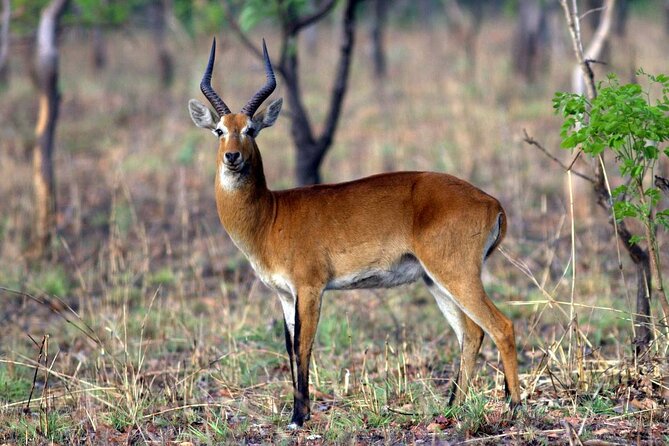
Shai Hills offers a useful change from the rainforest that follows. Its mix of savannah, grassland, and woodland supports Olive Baboons, Red-fronted Duiker, Kob, and Bushbuck, but the main target is the Egyptian Tomb Bat.
The reserve also gives the tour a cultural edge. Near the bat caves, you can visit a traditional shrine and hear how the Shai people moved into the area while escaping slave raiders. That context makes the morning more than a wildlife checklist.
After lunch, you drive toward Kakum National Park and the Upper Guinea rainforest. The plan is to reach the forest in the late afternoon or early evening, with a possible forest outing before or after dinner.
Forest mammals are hard to see, especially at night and in thick vegetation. The guide may search for bats, rodents, Potto, duikers, and pangolins, but you should treat these as targets rather than promises.
Days 3 to 5: Three full days in Kakum National Park
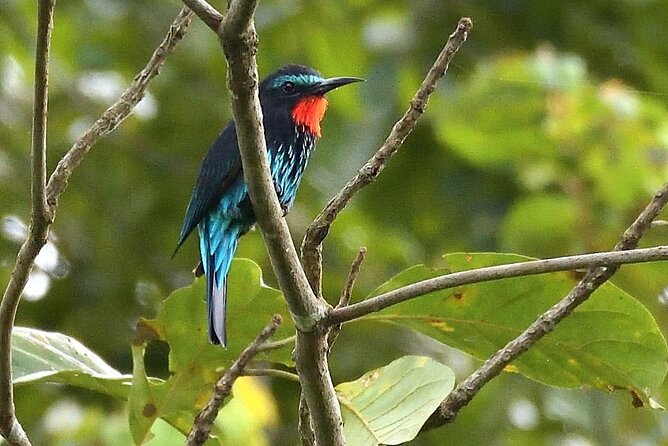
Kakum protects about 360 square kilometers of secondary Upper Guinea tropical rainforest. Its famous canopy walkway rises roughly 40 meters above the forest floor, and the platforms are large enough for telescopes.
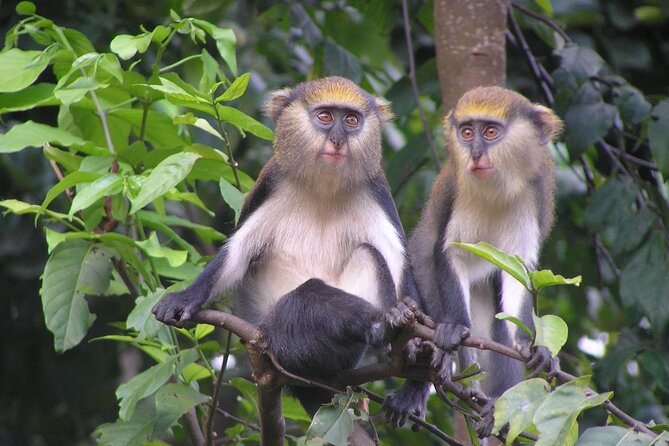
An early start is important. The first hours of the morning offer the best light and cooler conditions, while the elevated view can help you scan the treetops for squirrels and monkeys. Possible species include African Giant Forest Squirrel, Gambian and Red-legged Squirrels, Olive Colobus, Lowe’s Mona, Geoffrey’s Pied Colobus, and Lesser Spot-nosed Monkey.
Long-tailed Pangolin is a major focus here, with Tree Pangolin also possible. The tour also searches for Lord Derby’s and Pel’s Anomalure, small gliding rodents that are easy to miss unless you have time and a sharp guide.
The schedule wisely allows a rest during the hottest part of the afternoon. Evenings return you to the forest for walks and spotlighting. Those outings can last several hours and may produce nocturnal species such as Demidoff’s Galago, Bush Baby, Tree Hyrax, Giant Pouched Rat, bats, and other rodents.
Day 4 gives you another full block of searching for Bossman’s Potto, Common Cusimanse, Royal Antelope, Maxwell’s Duiker, pangolins, and both anomalure species. Day 5 begins before first light with several hours of night searching and also leaves time to review which target animals still need attention.
Kakum is one of the tour’s best examples of why a private trip helps. If you still need a particular animal, the guide can focus the next outing instead of following a fixed group schedule. The tradeoff is that you may spend long periods walking quietly, waiting, and seeing far fewer mammals than the list suggests.
A few other Accra trips we have written up
- Private Multi-Day Ghana Tour about Culture History and Wildlife – 7 Days
★ 5.0 · 8 reviews - 9 Day Ghana Wildlife and Culture Tour
★ 5.0 · 5 reviews - Ghana 4-day Nature and Wildlife Adventure
★ 5.0 · 2 reviews - 5 Days Adventurous Wildlife Safari
★ 4.5 · 49 reviews
Day 6: Brenu Akyinim adds beach and dry-country habitat
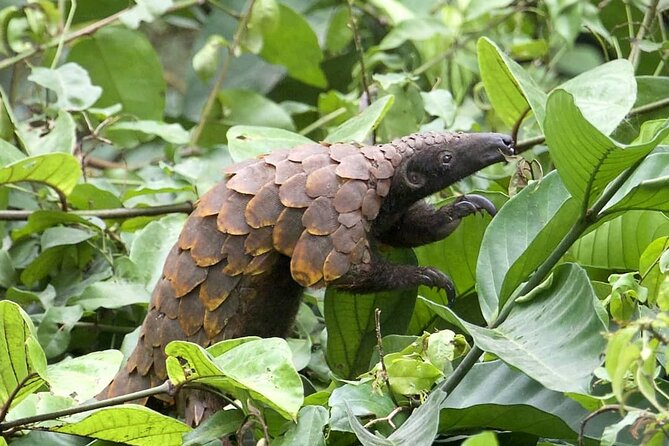
After the rainforest, Brenu Akyinim provides a welcome change. Along the beach road near Elmina, the search turns to Slender Mongoose and Ground Striped Squirrel, along with other rodents.
Birdlife is also good here, even though mammals remain the main purpose of the trip. You can walk to one of Ghana’s better beaches before lunch, then continue west toward Ankasa.
This is a shorter wildlife stop, but it breaks up the forest work and adds another habitat. It also gives you a coastal experience without turning the tour into a beach holiday.
Days 6 to 8: Ankasa’s remote wet forest
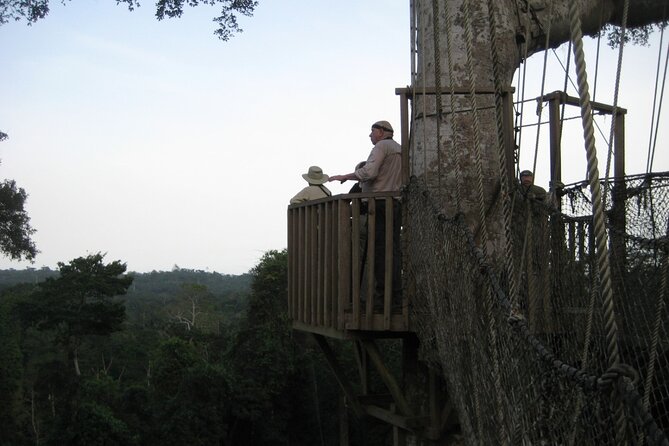
Ankasa Conservation Area and adjoining Nini Suhien National Park protect more than 509 square kilometers of continuous forest. This is described as Ghana’s only pristine wet evergreen Upper Guinea rainforest, making it one of the most important stops for anyone focused on West African forest mammals.
A remote camp is set up before you arrive. It has showers, flushing toilets, and electricity, so you get basic comfort without losing the feeling of being far from towns. A camp leader handles meals and daily needs, while 4×4 Land Rovers and local drivers help the group reach deeper forest areas.
The rhythm here is demanding but rewarding: before-first-light walks, late afternoon outings, and night walks with spotlights. Common Cusimanse, Demidoff’s Galago, African Palm Civet, bats, rodents, and anomalures are among the targets.
The Hammer Bat is one of the more striking possibilities. Pel’s and Lord Derby’s Anomalure have also been seen here. At waterholes, you may find signs of Bongo and Red River Hog, while the rare Dwarf Crocodile is a regular possibility.
Ankasa is not a place for quick viewing from a vehicle window. You need stamina for repeated walks, patience for dark forest conditions, and a willingness to accept blank stretches. The reward is access to a forest that sees fewer visitors and supports species rarely encountered on standard Ghana routes.
Days 9 and 10: Pangolins and community conservation
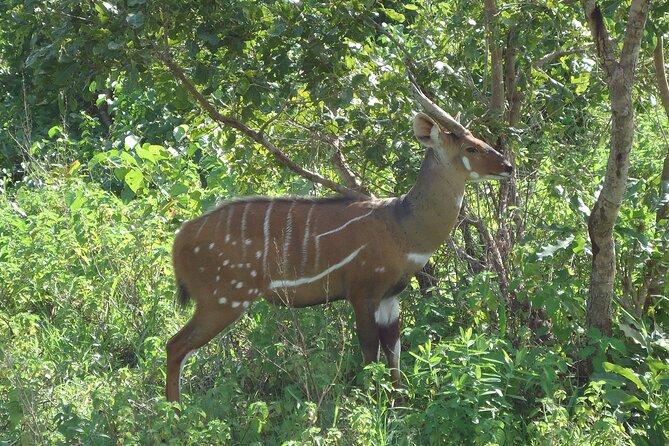
The route then heads to the Ashanti Region and a remote community protecting a small patch of Upper Guinea forest. The goal is to arrive by late afternoon, settle in, and prepare for a night walk.
Pangolin is the headline target. These animals are endangered and heavily trafficked, so the conservation work here gives the search a purpose beyond adding a rare species to a list. The local project works to protect the forest from illegal hunting and logging.
If a pangolin is still needed, local residents may help guide the search. That local involvement is one of the more meaningful parts of the trip, since it connects wildlife protection with the people who live near the forest.
Day 10 is spent searching for remaining target species. Butterflies are especially numerous, with several hundred species recorded in the area, so even a mammal-focused group has plenty to watch between sightings.
The evening is spent with the local community. This is not a polished resort stop. It is a chance to experience a more local setting, though comfort and facilities may be simpler than at the larger hotels.
Day 11: A long transfer to Mole National Park
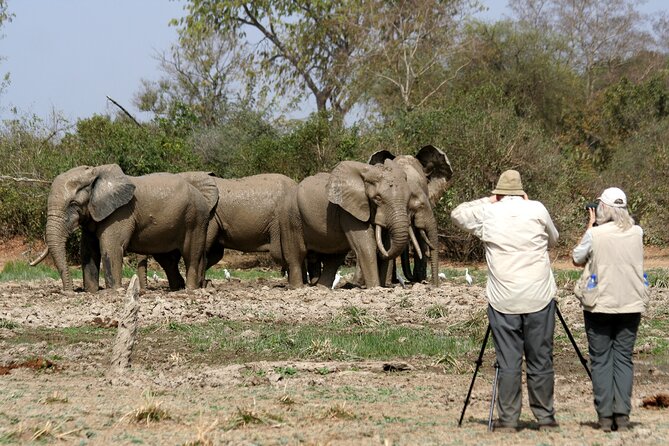
Day 11 is mainly a travel day. After breakfast, you head north, stopping for lunch in Kintampo before continuing to Mole National Park.
The scenery changes as you move from southern forest into drier broad-leaved Guinea woodland and savannah. That habitat shift is central to the tour: you are not visiting one park repeatedly, but crossing much of Ghana to see how wildlife changes from coast to north.
Mole covers about 4,847 square kilometers and protects nearly 100 mammal species and more than 330 bird species. Your accommodation sits on a 250-meter-high escarpment overlooking the park.
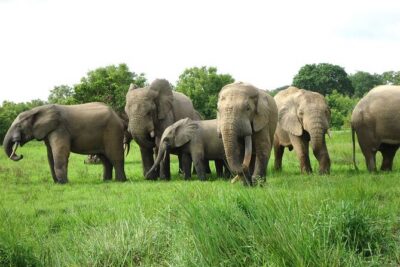
The terrace and pool area offer one of the trip’s most memorable settings. African Savannah Elephants can sometimes be watched bathing below, giving you wildlife viewing even when you are not on a formal drive.
The long road transfer is tiring, and you should plan for a full day in the vehicle. The internal flight from Tamale to Accra at the end helps balance this demanding northbound journey.
Days 12 to 14: Three days of open-country wildlife at Mole
Mole brings a different kind of wildlife viewing. In the more open habitat, African Elephants, Kob, Bushbuck, Waterbuck, Hartebeest, Roan Antelope, Warthog, and Buffalo are all possible.
You search on foot and by vehicle, which gives the three days a useful variety. Olive Baboons, Patas Monkeys, and Yellow-winged Bats add smaller targets to the larger mammals.
The evening outings turn attention to nocturnal life. Spotlighting may produce Hedgehog, Galago, Mongoose, Civet, Genet, Duiker, Hare, Aardvark, Porcupine, rodents, and bats. None is guaranteed, but three nights give you a much better chance than a single quick visit.
The tour description refers to four nights in Ghana’s premier wildlife park, while the day-by-day schedule gives three full days after arrival. I would ask the operator to confirm the exact number of Mole nights and the room arrangement before departure.
Mole is likely the easiest place on this route for regular large-mammal viewing. Kakum and Ankasa ask you to work for every glimpse. Mole offers broader views, more visible animals, and the pleasure of sitting above the park with a drink or meal while watching the plains.
Day 15: Tamale, Accra, and the final checklist
After breakfast, you drive to Tamale for the flight south to Accra. The internal flight is a practical choice because the road journey would cost almost two more days.
Near the Accra airport, the group has an early evening meal and completes a final wildlife checklist. You then receive an airport transfer for your international departure.
Meals and transfers are listed through this final day, but because the schedule and inclusions use slightly different meal counts, ask for a final written breakdown. That small check can prevent confusion at the end of a long trip.
Guides, vehicles, and daily comfort
The private format is a major advantage. Only your group participates, so the guide can adjust time at a bat cave, waterhole, canopy platform, or forest trail to match your priorities.
The tour includes an air-conditioned vehicle, an experienced driver, unlimited mileage fuel, airport transfers, and mineral water. Those details matter in Ghana, where the route covers long distances and several remote areas.
Past guests have praised Ashanti’s smooth organization, good accommodation, and safe driving. Bird and wildlife guides such as Philip Senyo, Foster, and Jackson have received especially strong praise for finding and identifying species.
There is one communication point to consider. Philip Senyo has been described as excellent at spotting birds but soft-spoken, with a heavy accent and less effective communication about exact locations. If you use binoculars or a telescope, ask your guide to give clear directions and repeat them when needed.
Who should book this Ghana wildlife tour?
I would choose this trip if you want rare West African mammals more than a relaxed sightseeing holiday. It suits people who are comfortable with early starts, long drives, forest walks, night spotlighting, simple remote camping, and the uncertainty of wildlife work.
It is also a strong fit for photographers, mammal specialists, birdwatchers, and anyone who wants time in several habitat types. The private setup works particularly well for a small group with a shared target list.
I would hesitate if you want guaranteed pangolins, easy animal viewing, luxury lodges throughout, or short transfer days. Dense rainforest can be frustrating, and the price is too high to justify if you are mainly seeking common savannah animals that can be seen on a shorter safari.
The package offers the most value when you care about the full range of Ghana’s wildlife and want local help reaching places that are difficult to organize independently. Confirm the internal flight, Mole-night count, visa process, and accommodation standards before booking.
Should you book the 15-Day Ghana Wildlife Private Tour?
Book it if Egyptian Tomb Bats, pangolins, Hammer Bats, colobus monkeys, anomalures, dwarf crocodiles, and African Elephants sound more exciting than a simple Big Five checklist. The route is ambitious, but it gives you a rare look at Ghana from coastal savannah to rainforest and northern parkland.
Skip it if you dislike uncertainty, night walks, or long transfers. For the right person, this is a serious wildlife expedition with strong local support, not a quick safari package.
FAQ
Where does the tour begin?
The tour begins with pickup at Kotoka International Airport in Accra, Ghana.
How long does the tour last?
The tour lasts approximately 15 days.
Is this a private tour?
Yes. Only your group participates in the activity.
What is the price?
The listed price is $4,995 per person.
Is accommodation included?
Yes. Accommodation is included.
Are meals included?
Yes. The package lists 13 breakfasts, 13 lunches, and 14 dinners.
Are international flights included?
No. International flights are not included.
Is the Ghana visa included?
No. The visa is not included.
What animals might I see at Mole National Park?
Possible species include African Savannah Elephants, Kob, Bushbuck, Waterbuck, Hartebeest, Roan Antelope, Warthog, Buffalo, Olive Baboon, and Patas Monkey.
Can the tour be canceled because of weather?
Yes. If poor weather causes cancellation, you are offered a different date or a full refund. You can also cancel at least three full days before the start time for a full refund.
Most recently reviewed around Accra
- Visit Aburi Garden, Tetteh Quarshie Cocoa Farm & Waterfall★ 4.0 · 4 reviews
- Private 9-Day Tour in Ghana★ 5.0 · 2 reviews
- Wli Waterfalls, Mount Afadjato & Tafi Atome Monkey Sanctuary★ 5.0 · 2 reviews
- Cape Coast and Elmina castle Day Trip★ 5.0 · 2 reviews
- Culinary for Social Change-Cooking Class★ 5.0 · 2 reviews
- Time with Nature★ 5.0 · 2 reviews
- Private Slave Castles and Dungeons Tour in Cape Coast, Ghana★ 5.0 · 3 reviews
- Experience Accra★ 5.0 · 2 reviews
Wildlife, compared.
Private Multi-Day Ghana Tour about Culture History and Wildlife – 7 Days
Read our review →
Browse the lists this tour appears in