Reviewed · ACCRA TOURS
4 Days Cultural and Village Stay Experience
Monkeys share a village with people here. This four-day private tour links Kumasi’s royal museums with Boabeng-Fiema, where Mona monkeys and black-and-white colobus monkeys live under long-standing local protection. I like the unusual mix of Ashanti culture and village life, and I like that the trip includes time with a local family, a farm visit, a shrine caretaker, and a traditional dance.
The main drawback is the amount of travel packed into four days. The experience is listed from Accra, but the main program takes place around Kumasi, Boabeng-Fiema, and Kintampo, with a flight back to Accra on the final day. Good fitness is needed, and the non-refundable booking policy calls for careful planning.
In This Review
- Key points at a glance
- Why this Ghana tour feels different
- Day 1: Ashanti kings and the road to Boabeng-Fiema
- Manhyia Palace Museum
- Prempeh II Jubilee Museum
- Arrival at Boabeng-Fiema
- Day 2: Monkeys, a shrine caretaker, and village traditions
- Watching Mona and colobus monkeys
- Meeting the Monkey Priest
- Community tour and traditional dance
- Day 3: Family farming and Kintampo Water Falls
- Day 4: Handmade souvenirs and the return to Accra
- What the $1,107.70 price means
- Physical effort, timing, and comfort
- Who will enjoy this most
- Should you book this four-day experience?
- FAQ
- Where does the tour begin?
- How long does the experience last?
- Is this a private tour?
- What animals will I see at Boabeng-Fiema?
- Is admission included?
- What happens if bad weather cancels the tour?
Key points at a glance
- Royal Kumasi at the start: Visit Manhyia Palace Museum and the Prempeh II Jubilee Museum, with admission included.
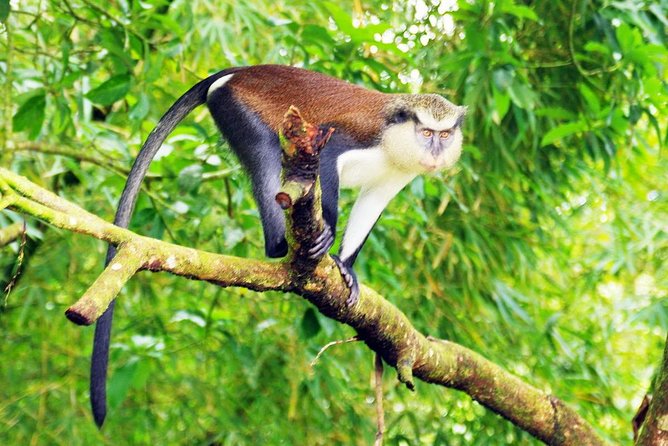
- A village built around monkey protection: Spend several visits in Boabeng-Fiema, learning how the community lives alongside Mona and black-and-white colobus monkeys.
- A rare cultural encounter: Meet the Monkey Priest, the human representative of the monkeys and caretaker of Darrow Shrine.
- Daily village contact: Join a community tour, watch a traditional dance, and visit a family farm growing cashew, cassava, yam, plantain, and vegetables.
- Waterfall time included: The third day combines farm life with Kintampo Water Falls in a six-hour outing.
- Private and personal: Pickup is offered, your group travels privately, and the tour begins at 8:00 a.m.
Why this Ghana tour feels different
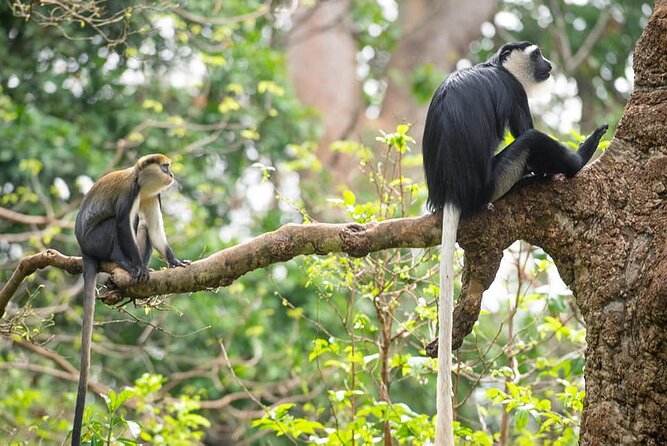
Many Ghana trips focus on major sights, city landmarks, or coastal forts. This one takes a more unusual route inland, pairing Ashanti royal culture with a small community where monkeys are part of local life.
That combination gives you two very different ways to understand Ghana. In Kumasi, you learn about kingship, ceremony, and national history through museums. In Boabeng-Fiema, you see how beliefs, farming, conservation, religion, and everyday village life fit together.
I especially like the fact that the monkey sanctuary is not treated as a quick photo stop. You return to it several times, at different points in the day, and meet people connected to the community. That slower rhythm should help you notice more than you would on a short stop between cities.
This is a private activity, so only your group participates. That matters when you are asking questions about customs or spending time in a village. You are not trying to hear a guide over a large crowd, and the day can feel more personal.
The tour provider is Skyway Safari & Tours Ghana. The names Emmanuel and Sampson appear in the company’s tour responses, and the available comments give particular praise to the guides’ background information, care, and friendly service. One account also describes Boabeng-Fiema as peaceful, orderly, and a welcome break from city noise.
More Accra outings people pair with this:
- The Cape Coast Day Tour
★ 5.0 · 525 reviews - Experience the Beauty, History and the Culture Of Accra in a Day
★ 5.0 · 323 reviews - The Cape Coast Tour
★ 5.0 · 177 reviews
Day 1: Ashanti kings and the road to Boabeng-Fiema
The day begins at 8:00 a.m. with pickup offered. Your first two stops are in Kumasi, the Ashanti cultural center of Ghana, before the route continues to Boabeng-Fiema.
Manhyia Palace Museum
Allow about two hours at Manhyia Palace Museum. The site was the residence of the Ashanti King, so it gives your visit an immediate connection to the royal institution that shaped the region.
This is a useful first stop because it gives context before you reach the village. You can think about Ashanti leadership, tradition, and public ceremony as you later hear about local customs in Boabeng-Fiema.
Admission is included. The two-hour visit is long enough to feel substantial rather than rushed, though anyone who prefers a quick museum visit may find the first day fairly full.
Prempeh II Jubilee Museum
The second stop is the Prempeh II Jubilee Museum at the Kumasi Cultural Centre. You spend another two hours learning about Prempeh II, an important Ashanti king.
Having two museums on the same day provides a stronger cultural frame than visiting only one. It also means the first day leans heavily toward indoor historical sites before the village portion begins. If royal history is not a major interest for you, this may feel like a lot of museum time.
A few other Accra trips we have written up
- 4 Days Trip in Accra, Cape Coast,Kumasi culture & heritage tours
★ 5.0 · 5 reviews - Ghana 4-day Nature and Wildlife Adventure
★ 5.0 · 2 reviews - A 4 Days Cultural, Historic And Nature Tour Of Ghana’s Southern Side.
★ 5.0 · 2 reviews - 4 Days Safari to Mole park and Wechiau Hippos
★ 5.0 · 19 reviews
Arrival at Boabeng-Fiema
The final stop on the first day is Boabeng-Fiema Monkey Sanctuary. The plan allows about two hours for your first visit, where you begin learning about the village and its relationship with the monkeys.
The important point is that this is also your village stay. You are not simply passing through a fenced attraction, taking a picture, and leaving. The purpose is to understand how local people and monkeys live alongside one another.
You should arrive ready for a community setting rather than a polished resort experience. The available description emphasizes a quiet village, friendly people, nature, and good care. That makes Boabeng-Fiema appealing if you want time away from city noise, but less suitable if you need a highly structured urban hotel environment.
Day 2: Monkeys, a shrine caretaker, and village traditions
Day two keeps you in Boabeng-Fiema, which is one of the strongest parts of the program. Instead of spending the morning and afternoon in a vehicle, you have three separate two-hour activities in the same community.
Watching Mona and colobus monkeys
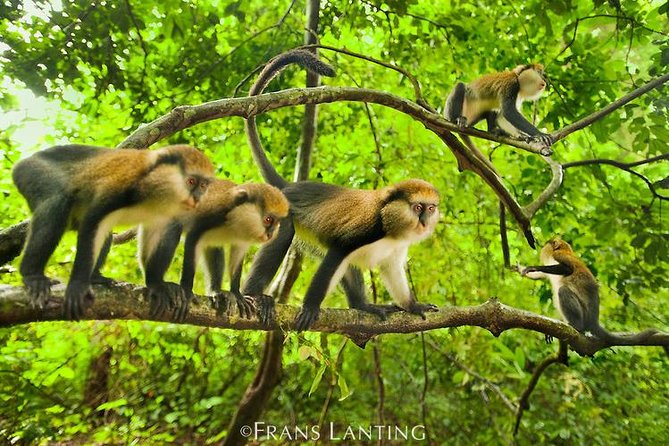
The morning tour focuses on the sanctuary’s Mona monkeys and black-and-white colobus monkeys. You learn how the two types interact and see them in the setting that has made Boabeng-Fiema notable.
The value here is not only the animals. The visit connects wildlife to local custom. You are seeing a place where the monkeys are part of the community’s identity, not just animals displayed for entertainment.
Keep your expectations sensible. The tour promises observation and explanation, not a guaranteed close encounter or a staged animal show. You might find that the best moments come from watching natural behavior and listening to how the sanctuary works.
Meeting the Monkey Priest
In the afternoon, you make a courtesy visit to the Monkey Priest. He is described as the human representative of the monkeys and the caretaker of Darrow Shrine.
This is the most distinctive cultural meeting on the tour. It offers a direct way to learn how spiritual ideas and wildlife protection connect in the village. The word courtesy matters here. Approach the visit with respect, listen carefully, and remember that this is a living local tradition, not a performance arranged solely for tourists.
The information does not specify the language, exact ceremony, or rules for photography, so ask your guide before taking pictures. A private tour should make it easier to get clear guidance.
Community tour and traditional dance
The evening community tour introduces you to local ways of life. You also watch a traditional dance performed by local people.
I like this part because it puts the sanctuary in human context. Farming, religion, village customs, and music are not separate attractions here. They are connected parts of the community you are visiting.
A two-hour evening activity should leave room for conversation, but the exact format may vary. You might see a formal performance, a community gathering, or a smaller presentation. Either way, go with an open mind and avoid treating the dance as a quick show to record and forget.
Day 3: Family farming and Kintampo Water Falls
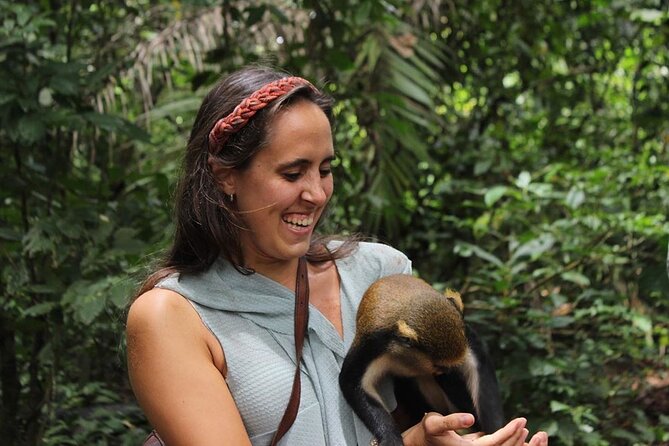
After breakfast, you join one of the village families on a farm visit. The crops listed include cashew, cassava, yam, plantain, and vegetables.
This is one of the best details in the whole experience. A farm visit gives you a practical look at food production and rural work, rather than only hearing broad descriptions of village life. You can ask about the crops, the family’s routine, and how farming fits into the local economy.
The visit is followed by Kintampo Water Falls, with six hours allowed for the combined outing. That is a long block of time, so the day may involve substantial road travel as well as time at the farm and waterfall.
The waterfall adds a change of pace after two days focused on museums, monkeys, and community activities. It also gives you a chance to spend time outdoors. Since the tour requires moderate physical fitness and depends on good weather, wear practical clothing and shoes suitable for a nature visit.
The supplied details do not state the exact walking distance, swimming arrangements, or facilities at the falls. Do not assume that swimming is part of the program. Treat the stop as a scenic outdoor visit unless your guide confirms otherwise.
Day 4: Handmade souvenirs and the return to Accra
The final morning begins at the sanctuary souvenir shop. You can look at monkey masks and paintings made available for purchase.
This is a small stop, but it gives you a chance to support local creative work and take home something tied to the community. A mask or painting may carry more meaning than a generic airport souvenir because it reflects the sanctuary’s central place in Boabeng-Fiema.
Afterward, you leave for Kumasi to catch a flight to Accra. The travel portion is listed at three hours. This is an important detail for planning, especially if you have a separate flight from Accra later that day.
The information says you pick a flight to Accra, but it does not give the flight time or the connection details. If you have an onward international flight, leave a generous buffer. A private tour and arranged transport reduce some uncertainty, but road and flight timing still matter.
What the $1,107.70 price means
At $1,107.70 per person, this is not a bargain-priced short excursion. The value depends on what is included beyond simple sightseeing.
You are paying for four days of programming, private participation, pickup being offered, admission to the listed museums and sanctuary activities, village-based experiences, a farm visit, Kintampo Water Falls, and the return flight arrangement from Kumasi to Accra. The price may make sense if you want a planned cultural trip with several moving parts and do not want to organize the route yourself.
The price is harder to justify if you only want to see the monkeys or visit one Kumasi museum. In that case, a shorter local outing could be more suitable. This experience earns its cost through its range and personal contact, not through luxury features that are described here.
Before booking, confirm exactly what the price covers. The supplied details do not spell out meals, lodging standards, airfare costs, or every transport charge. Those points matter on a four-day trip, so ask for a written breakdown.
Physical effort, timing, and comfort
The tour asks for a moderate level of fitness. That warning is important because the schedule includes museum visits, sanctuary walks, farm activity, a waterfall excursion, village touring, and intercity travel.
The pace is not extreme on paper, with most activities set at two hours. Day three is the exception, with six hours for the farm and waterfall. You should be comfortable spending time outdoors and moving between different types of terrain.
The experience requires good weather. If poor weather causes cancellation, you are offered a different date or a full refund. That is useful protection, but the general cancellation terms are strict: the booking is non-refundable and cannot be changed for any reason if you cancel or request an amendment.
The route also deserves attention. It is presented from Accra, but Kumasi and Boabeng-Fiema are central to the experience. Ask where pickup occurs, how the first transfer is handled, and whether the Kumasi to Accra flight is included in the quoted price.
Who will enjoy this most
I would recommend this experience to you if you:
- Want Ghanaian culture beyond major city attractions
- Are curious about the relationship between people, animals, and local belief
- Prefer a private tour to a large group
- Enjoy village visits, farms, museums, and outdoor stops in one trip
- Have moderate fitness and patience for road travel
- Want a slower stay in a quiet community
It may not suit you if you want a relaxed luxury holiday, a beach-focused trip, or a tightly timed city break. The program has several distinct parts, and the move between Accra, Kumasi, Boabeng-Fiema, Kintampo, and the return flight requires flexibility.
The strongest praise attached to the experience centers on the monkey sanctuary, the peaceful village setting, and the guides’ ability to explain Ghanaian culture. That is where I would place the greatest value. The royal museums and waterfall round out the trip, but Boabeng-Fiema is the reason to choose this particular program.
Should you book this four-day experience?
Book it if the idea of staying in a village where monkeys are part of community life excites you more than staying in a standard city hotel. The meeting with the Monkey Priest, the family farm visit, and the traditional dance give the trip a human focus that is hard to find in a standard sightseeing package.
Think carefully before booking if your dates are uncertain, since the experience is non-refundable and cannot be amended. Also confirm the flight and accommodation details, then allow extra time around the final return to Accra.
For the right person, this is a memorable Ghana trip built around local contact rather than a checklist of famous sights. Go for Boabeng-Fiema, stay curious, and treat the museums, farm, and waterfall as pieces that help explain the place.
FAQ
Where does the tour begin?
The tour has an 8:00 a.m. start time, and pickup is offered. The experience is listed from Accra, although much of the program takes place around Kumasi and Boabeng-Fiema.
How long does the experience last?
The experience lasts approximately four days.
Is this a private tour?
Yes. Only your group participates in the activity.
What animals will I see at Boabeng-Fiema?
The sanctuary visit focuses on Mona monkeys and black-and-white colobus monkeys. The morning tour includes observation of how the two types interact.
Is admission included?
Admission is included for the listed stops, including Manhyia Palace Museum, Prempeh II Museum, Boabeng-Fiema Monkey Sanctuary, and Kintampo Water Falls.
What happens if bad weather cancels the tour?
The experience requires good weather. If it is canceled because of poor weather, you are offered a different date or a full refund.
Most recently reviewed around Accra
- Visit Aburi Garden, Tetteh Quarshie Cocoa Farm & Waterfall★ 4.0 · 4 reviews
- Private 9-Day Tour in Ghana★ 5.0 · 2 reviews
- Wli Waterfalls, Mount Afadjato & Tafi Atome Monkey Sanctuary★ 5.0 · 2 reviews
- Cape Coast and Elmina castle Day Trip★ 5.0 · 2 reviews
- Culinary for Social Change-Cooking Class★ 5.0 · 2 reviews
- Time with Nature★ 5.0 · 2 reviews
- Private Slave Castles and Dungeons Tour in Cape Coast, Ghana★ 5.0 · 3 reviews
- Experience Accra★ 5.0 · 2 reviews
Accra Tours, compared.
Experience the Beauty, History and the Culture Of Accra in a Day
Read our review →
Cape Coast, Elmina Castle & Kakum Park Day Tour
Read our review →