Reviewed · ACCRA TOURS
5 Days Ghana Private Tour
Ghana’s past is never far away. This five-day private tour links Accra’s independence landmarks with slave-trade sites, rainforest bridges, local traditions, and airport transfers. I especially like the mix of serious history and hands-on culture, including a Ghanaian naming ceremony and African clothing. I also like that Nana and his team are praised for warmth, humor, and personal care.
The main tradeoff is pace. You cover a lot of ground in five days, and the journey between Accra and Ghana’s Central Region can make some days feel full. The $2,550 per person price is substantial, so this works best if you value private transport, guides, organized access, and a carefully planned introduction to Ghana over a lower-cost independent trip.
In This Review
- What makes this Ghana tour worth considering
- Five days from Accra to Ghana’s Central Region
- Arrival night: drums, dance, and a gentle welcome
- Accra’s independence story in four stops
- Kwame Nkrumah Memorial Park
- Independence Square and Black Star Square
- Makola Market
- W.E.B. DuBois Center
- Assin Manso and Cape Coast: confronting the slave trade
- Assin Manso Ancestral Slave River Park
- Cape Coast and the dungeons
- Kakum’s canopy walk and Elmina Castle
- Kakum National Park
- Elmina Castle
- Elmina chief palace and naming ceremony
- The final morning in Accra
- What $2,550 per person buys you
- Who will enjoy this five-day program
- Should you book it?
- FAQ
- How long is the Ghana private tour?
- Where does the tour begin?
- What time does the tour start?
- Is this a private tour?
- Is airport transportation included?
- Which Accra attractions are included?
- Does the tour visit Cape Coast?
- Is admission included at every stop?
- Is the Kakum canopy walk part of the tour?
- Can I cancel for a full refund?
What makes this Ghana tour worth considering
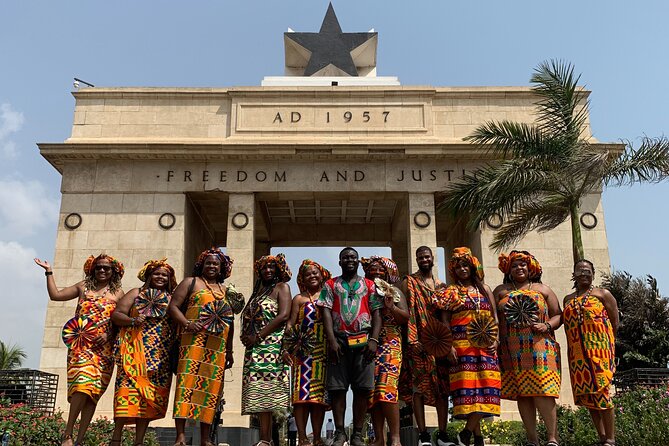
- Nana and his team bring a personal touch: The strongest praise centers on the guides, who are described as respectful, funny, welcoming, and committed to making first-time visits memorable.
- Accra’s key landmarks fit into one focused day: You visit the Kwame Nkrumah Memorial Park, Independence Square, Makola Market, and the W.E.B. DuBois Center.
- The Central Region visits carry real emotional weight: Assin Manso, Cape Coast, and Elmina connect the slave trade to specific places, buildings, and ceremonies.
- Kakum adds a change of pace: The rainforest canopy walk gives you two hours away from museums and memorials.
- The naming ceremony is more than sightseeing: Receiving a name based on your birth day and wearing African clothing gives the cultural program a personal element.
- Airport pickup and drop-off simplify a short trip: You begin with a hotel transfer and finish with a planned airport departure.
Five days from Accra to Ghana’s Central Region
This is a private tour, so only your own group takes part. That matters in Ghana, where a flexible guide can explain a serious site at a pace that suits your group, then shift gears when you need a break, a meal, or time for photographs.
The stated price is $2,550 per person. The tour includes airport pickup, accommodation arrangements implied by the hotel transfer, admission to several attractions, guides, and the structure of a five-day program. The available details do not spell out every included meal, hotel category, vehicle type, or airfare, so I would ask for those specifics before paying.
You start at 7:00 am on the scheduled touring day. Since the final day includes shopping and an airport transfer, confirm your flight time with the operator. The promise is to get you there without much stress, but the practical margin depends on your departure hour and traffic.
More Accra outings people pair with this:
- The Cape Coast Day Tour
★ 5.0 · 525 reviews - Experience the Beauty, History and the Culture Of Accra in a Day
★ 5.0 · 323 reviews - The Cape Coast Tour
★ 5.0 · 177 reviews
Arrival night: drums, dance, and a gentle welcome
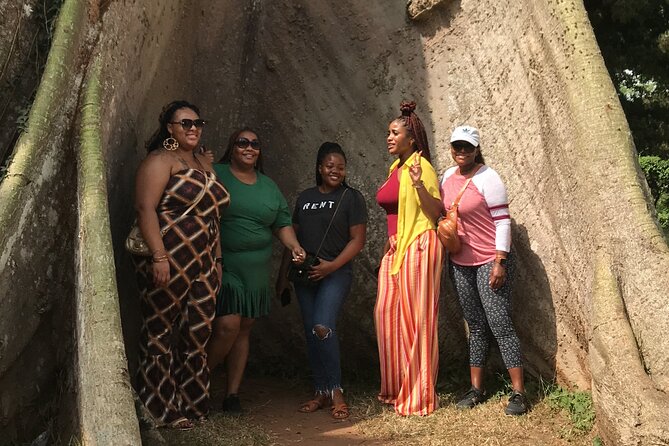
Your first day begins with airport pickup in Ghana and a transfer to your hotel. That is useful after a long flight, especially if you are new to Accra and do not want to negotiate your first ride immediately after landing.
The evening includes a welcome dinner and drinks with African dance and drums. You meet the other people on the trip, along with the in-country leaders. The tone is clearly social, with Nana’s team known for banter and laughter rather than a stiff, formal presentation.
I like this opening because it gives you a human introduction to the tour. You are not simply handed a room key and told to report in the morning. You meet the people who will guide you and begin to get a sense of the cultural focus.
The details do not specify the dinner menu, drink choices, hotel, or arrival time required for participation. If your flight lands late, ask how the welcome evening is handled. That small point could matter more than it seems.
Accra’s independence story in four stops
Day two is the clearest introduction to modern Ghana. The four visits work well together, though each deserves a different mood and amount of attention.
Kwame Nkrumah Memorial Park
The tour begins with the Kwame Nkrumah Memorial Park, the final resting place of Ghana’s first president. You see personal belongings, including the smock Nkrumah wore when declaring independence, along with correspondence and photographs linking him to world leaders.
The value here is personal context. Independence is not presented only as a date on a calendar. Clothing, letters, and photographs help you connect the national story to one person’s public life.
The planned visit lasts one hour, with admission included. That is enough for a focused visit, though anyone with a strong interest in Ghanaian politics may want more time. I would listen closely to the guide here, since the objects will mean more when placed in the wider struggle for independence.
A few other Accra trips we have written up
- Experience the Culture of Ashanti Kingdom in 5days
★ 5.0 · 3 reviews - 5Days Ghana Safari Tour
★ 5.0 · 2 reviews - 5 Days Adventurous Wildlife Safari
★ 4.5 · 49 reviews
Independence Square and Black Star Square
Next comes Independence Square, also called Black Star Square. It is used for Ghana’s Independence Day parade on March 6 and contains the Independence Arch, Black Star Gate, and Liberation Day Monument.
The square is a large ceremonial space, not a small museum where you move from object to object. You have about 40 minutes, which is suitable for seeing the monuments, hearing the story, and taking photographs.
The claim that it is the second-largest city square in the world after Tiananmen Square is part of the supplied tour description. Treat that as a tour fact rather than a measurement you need to verify on site. The important point for your visit is the square’s role in public memory and national ceremony.
Makola Market
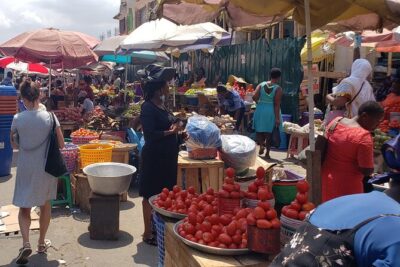
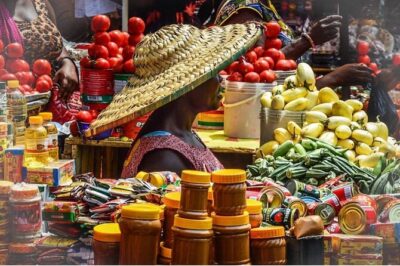
Makola Market changes the rhythm completely. Accra’s largest open-air market is packed with goods, people, scents, sounds, narrow passageways, and vendors carrying large bowls or packages on their heads.
You have one hour here. That is long enough for a guided taste of the market, but not enough to explore every corner. The description suggests that you could spend much longer in the area, so do not expect an exhaustive shopping expedition during the scheduled visit.
I like having a guide at Makola. A market can be confusing when you do not know where the interesting sections are or how to move through tight lanes without getting in the way. Your guide can point out photo positions and help you find useful souvenirs or household goods at reasonable rates.
Bring patience. This is not a quiet, polished shopping center. It is a working market, and the experience depends on accepting its noise, crowds, and close quarters. Ask before taking close-up photographs, and keep your belongings secure as you would in any crowded public place.
W.E.B. DuBois Center
The final Accra stop is the W.E.B. DuBois Center, a memorial and Pan-Africanism center devoted to the American sociologist, socialist, and historian W.E.B. Du Bois.
This visit adds an international dimension to the day. After seeing Ghana’s independence symbols and daily commerce, you consider a larger African and diaspora connection. The planned hour should give you time for an introduction without making the day feel overloaded.
Taken together, these four Accra stops offer a useful balance: a national leader, a ceremonial square, an everyday market, and a Pan-African memorial center.
Assin Manso and Cape Coast: confronting the slave trade
Day three turns south toward sites connected to the forced removal of Africans. This is likely to be the most emotionally difficult part of the trip, and it deserves a slower frame of mind than a typical sightseeing day.
Assin Manso Ancestral Slave River Park
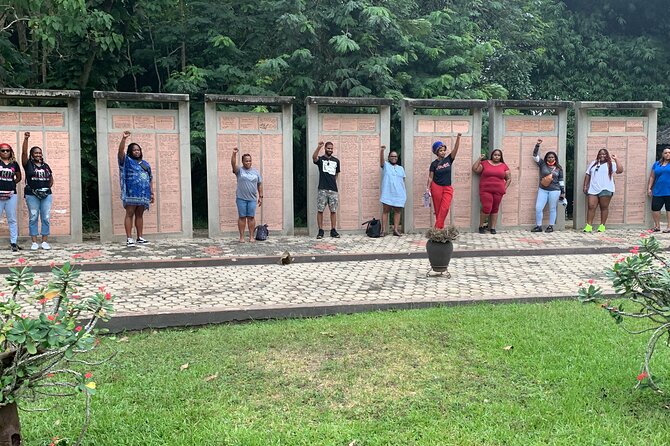
At Assin Manso, you visit the ancestral slave river and market. The site is described as the final place where enslaved people had a last bath before being forced to walk barefoot through forest routes for weeks to the castles, where they were shipped overseas.
The power of this visit comes from its physical setting. You are not only hearing about a broad system of enslavement. You are standing at a place associated with a specific stage in that process.
The stop lasts one hour, with admission included. That is a fairly short visit for such a serious subject, so the guide’s explanation matters. I would not try to rush through this simply to take photographs. Give yourself space to listen and reflect.
Cape Coast and the dungeons
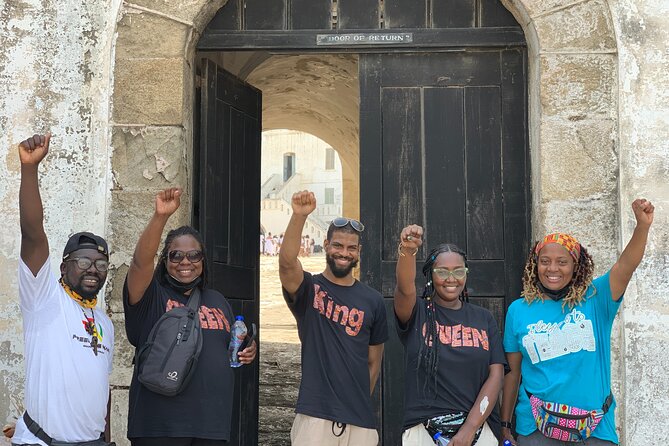
The Cape Coast stop focuses on the dungeons where enslaved people were held while ships waited offshore, as well as the Door of No Return. The planned visit is one hour, and admission is listed as free.
The supplied details do not name the exact site separately, so ask the guide what portion of Cape Coast you will enter and what the one-hour visit covers. The subject itself is clear: confinement, departure, and the human cost of the Atlantic slave trade.
This is a place where a guide can help you avoid reducing the visit to a few dramatic rooms. You will get more from it if you pay attention to how the spaces were used, how people were held, and how the Door of No Return fits into the larger story.
Because day three moves from Assin Manso to Cape Coast, expect a serious and concentrated day rather than a relaxed coastal outing. If you are bringing children or anyone sensitive to difficult historical material, prepare them beforehand.
Kakum’s canopy walk and Elmina Castle
Day four gives you the tour’s biggest contrast. You move from a rainforest canopy to a European castle tied to the slave trade, then finish with a local cultural ceremony.
Kakum National Park
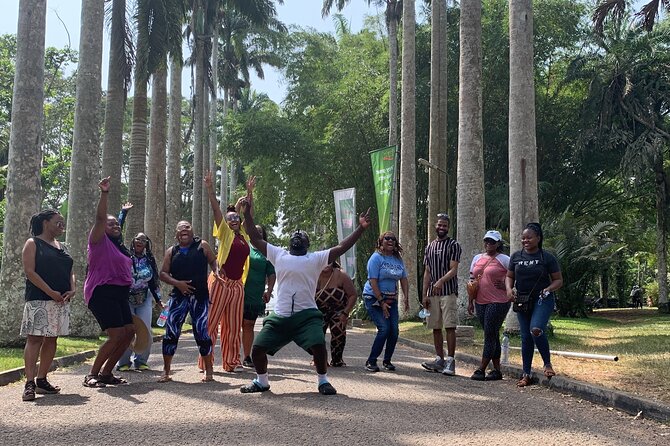
Kakum National Park is known here for its canopy walk, described as one of the few existing canopy walks in the world. You spend about two hours exploring the park and crossing the hanging bridges.
This is a welcome physical change after the previous day’s memorial sites. The bridges provide a different view of the forest, and the stop gives your mind a little room before another major historical visit.
The tour description does not give bridge height, length, accessibility details, or weather backup arrangements. If you are uncomfortable with heights or have mobility concerns, ask before booking. The additional information says service animals are allowed and that most people can participate, but it does not promise that every part of the canopy route suits every mobility level.
Elmina Castle
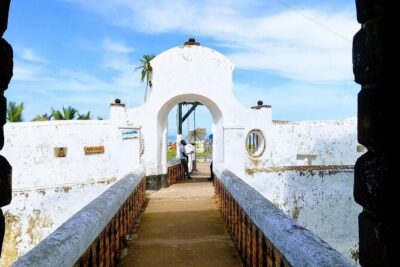
Elmina Castle is described as the oldest and largest European building below the Sahara. The visit includes a guided castle tour lasting about one hour, with admission listed as free.
The castle is not simply an old building to admire. Its rooms and dungeons connect directly with the system discussed at Assin Manso and Cape Coast. Seeing several locations in sequence helps you understand the movement from inland routes to coastal holding sites and then to ships.
One hour is enough for an overview but may feel brief if you want to study architecture, read every display, or ask many questions. I would save your most important questions for the guide and stay attentive during the group explanation.
Elmina chief palace and naming ceremony
The final stop in Elmina lasts about two hours and focuses on the chief palace and local traditions. You take part in a naming ceremony, receive a name based on the day you were born, and wear African clothing.
This is the tour’s most participatory cultural moment. Instead of only looking at buildings or listening to explanations, you take part in a custom. The ceremony can help you see Ghanaian culture as living practice rather than something confined to a museum.
The information does not explain the exact ceremony format, whether clothing is provided or how your birth day is converted into a name. Ask the operator if those details matter to you. You should also approach the ceremony respectfully, since it is presented as a custom with meaning, not merely a costume photo opportunity.
I particularly like the balance here. After a difficult historical morning, the program offers a present-day cultural encounter. It does not erase the earlier history, but it lets you meet Ghana through tradition, welcome, and community.
The final morning in Accra
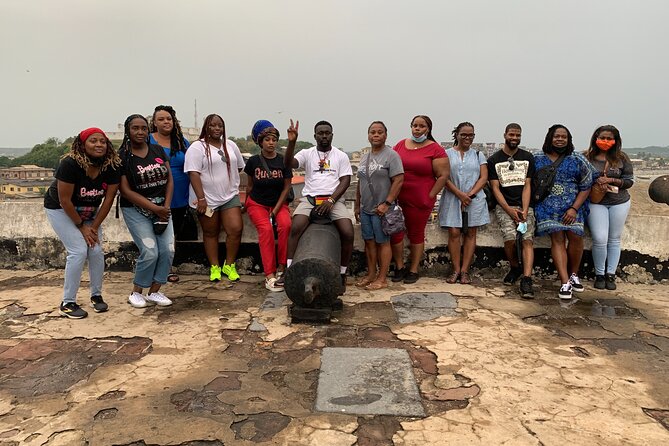
Your last day returns to Accra for two hours at the Accra Arts Center. This is your chance to buy souvenirs before the airport transfer.
The stop is short, so decide in advance what you want: textiles, art, clothing, carvings, or small gifts. The description only says souvenir shopping, so it does not promise specific products or fixed prices. Your guide may help you find the relevant sections, but you should still compare items and confirm prices before buying.
The airport drop-off is planned for the end of the visit. Since traffic and airline check-in needs vary, give the operator your flight details early and confirm how much time is built into the transfer. A tour that ends at the airport can be convenient, but it leaves less room for an unexpected delay.
What $2,550 per person buys you
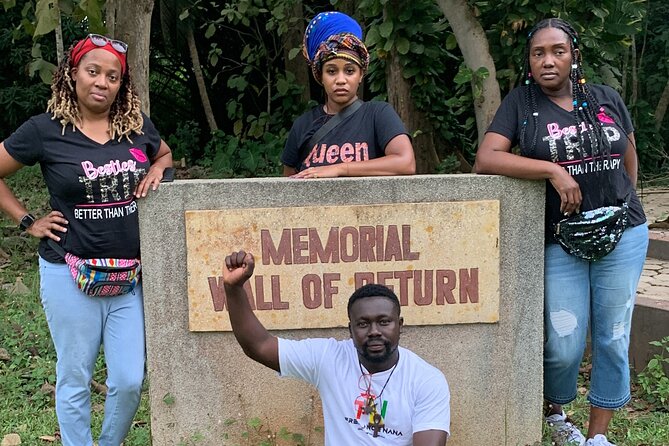
At $2,550 per person, this is not a bargain-priced city tour. The value rests in the private format and the amount packed into five days: airport transfers, hotel arrival support, two tour leaders, guided visits, admission at several locations, transport between Accra and the Central Region, and a cultural ceremony.
Private touring also gives you a better chance to ask questions and spend more time on subjects that matter to your group. Nana and his team are praised for treating people with great respect and making a first visit feel special. That personal care is a meaningful part of the price.
Still, you should request a written list of inclusions. The supplied details do not specify hotels, all meals, drinks beyond the welcome event, vehicle size, or every admission charge. Those omissions make it difficult to compare the price directly with other Ghana tours.
Group discounts are available, which may improve the cost for a larger private party. A mobile ticket is offered, confirmation arrives at booking, and the tour is near public transportation, though airport pickup is the more important practical feature for most people.
Who will enjoy this five-day program
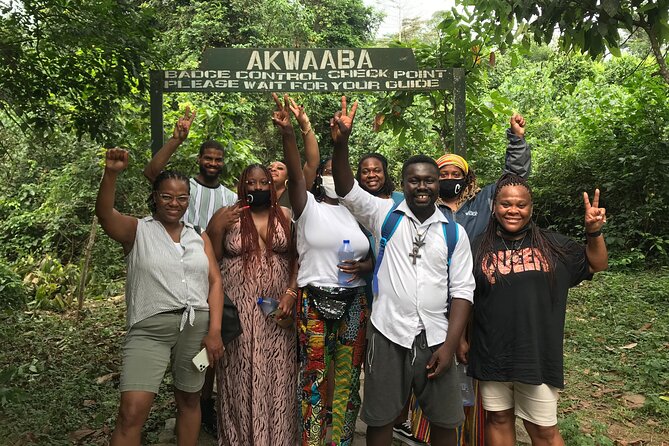
I would recommend this tour to a first-time visitor who wants Ghana’s major cultural and historical themes organized into one private trip. It suits you if you prefer having guides handle the route, explain difficult sites, and arrange the transition from airport to hotel and back again.
It is also a good fit for someone with a personal or family connection to Ghana or the African diaspora. The Nkrumah Memorial Park, W.E.B. DuBois Center, slave-trade sites, and naming ceremony create several points for meaningful reflection.
You may want a slower program if you prefer long museum visits, relaxed beach time, or independent wandering. The five days are active, and day four in particular combines a rainforest, castle, and cultural ceremony.
Most people can participate, and service animals are allowed. Ask about the canopy bridges and transport details if you have mobility limitations, and ask how the ceremony is organized if you want a more detailed cultural explanation.
Free cancellation is available when you cancel at least 24 hours before the start time. Inside that window, no refund is offered, and poor weather may lead to a new date or a full refund.
Should you book it?
Book this Ghana tour if you want a strong first introduction with plenty of structure, serious historical sites, and warm guides. Nana and his team appear to be the heart of the experience, especially for people who want humor, respect, and help navigating Ghana for the first time.
Think twice if $2,550 feels high without a full list of hotel, meal, and transport inclusions, or if you dislike early starts and tightly filled days. Before booking, confirm those costs, your flight timing, the exact Cape Coast visit, and the canopy walk requirements.
For a private group seeking Ghanaian history, culture, and heritage in five focused days, this is an appealing choice. It gives you far more than a quick look at Accra, but you should arrive ready for long days and emotionally demanding history.
FAQ
How long is the Ghana private tour?
The experience lasts approximately five days.
Where does the tour begin?
The tour is based in Accra, Ghana, and airport pickup is offered on arrival.
What time does the tour start?
The stated start time is 7:00 am.
Is this a private tour?
Yes. Only your own group participates in the private tour or activity.
Is airport transportation included?
Airport pickup is offered when you arrive, and the final day includes a transfer to the airport.
Which Accra attractions are included?
The Accra program includes Kwame Nkrumah Memorial Park, Independence Square, Makola Market, the W.E.B. DuBois Center, and the Accra Arts Center.
Does the tour visit Cape Coast?
Yes. The Cape Coast visit focuses on the slave dungeons and the Door of No Return.
Is admission included at every stop?
Admission is listed as included at Kwame Nkrumah Memorial Park, Independence Square, Makola Market, the W.E.B. DuBois Center, Assin Manso, and Kakum National Park. Cape Coast, Elmina Castle, Elmina, and the Accra Arts Center are listed with free admission.
Is the Kakum canopy walk part of the tour?
Yes. You spend about two hours at Kakum National Park exploring the park and its hanging bridges.
Can I cancel for a full refund?
Yes, if you cancel at least 24 hours before the experience start time. Cancellations within 24 hours are not refunded, and poor weather may result in a different date or a full refund.
Most recently reviewed around Accra
- Visit Aburi Garden, Tetteh Quarshie Cocoa Farm & Waterfall★ 4.0 · 4 reviews
- Wli Waterfalls, Mount Afadjato & Tafi Atome Monkey Sanctuary★ 5.0 · 2 reviews
- Private 9-Day Tour in Ghana★ 5.0 · 2 reviews
- Cape Coast and Elmina castle Day Trip★ 5.0 · 2 reviews
- Culinary for Social Change-Cooking Class★ 5.0 · 2 reviews
- Time with Nature★ 5.0 · 2 reviews
- Historical Day Tour to Cape Coast, Elmina and Kakum★ 5.0 · 3 reviews
- Private Slave Castles and Dungeons Tour in Cape Coast, Ghana★ 5.0 · 3 reviews
Accra Tours, compared.
Experience the Beauty, History and the Culture Of Accra in a Day
Read our review →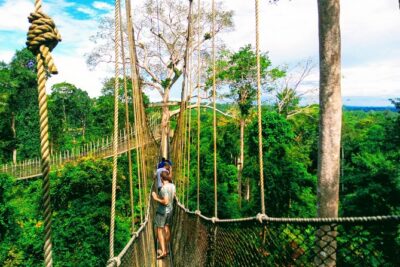

Cape Coast, Elmina Castle & Kakum Park Day Tour
Read our review →