Reviewed · ACCRA TOURS
Accra E-waste and Recycling experience in Agbogbloshie
Waste tells a story. This Accra experience follows discarded electronics from the city to Agbogbloshie, pairing a stop at Makola Market with a guided look at scrap-metal work. I like the direct pickup and the chance to hear practical explanations from guides such as Kwame, Daniel, and Sadik Aweisu. I also like that the tour shows both the environmental problem and the people earning a living from recovered materials.
The main drawback is also the reason this tour matters: the scrap site can be difficult to see. Reports of open fires, plastic fumes, chemical smells, and manual dismantling make this a serious educational visit, not a light sightseeing stop. At $80 per person, the value depends on your interest in sustainability, urban life, and difficult social issues.
In This Review
- Key points to know before booking
- Why this Accra tour is different
- Starting with Makola Market in central Accra
- Reaching Old Fadama and the Agbogbloshie scrap site
- What you actually learn about e-waste recycling
- A private format with pickup from your accommodation
- Is $80 per person a fair price?
- Preparing for a difficult but worthwhile visit
- How the strongest guide experiences shape the tour
- Booking, cancellation, and practical details
- Should you book the Accra E-waste and Recycling Experience?
- FAQ
- How long does the Accra E-waste and Recycling Experience last?
- What places does the tour visit?
- Is pickup from my accommodation available?
- Is this a private tour?
- How much does the experience cost?
- Can I cancel for a full refund?
Key points to know before booking

- Makola Market adds a strong Accra introduction: You pass through the city’s major market district, with time to see local trade and possibly shop.
- The Agbogbloshie visit combines driving and walking: You get a broader view of the area than you would from a vehicle alone.
- The guides are a major strength: Kwame, Daniel, and Sadik Aweisu are praised for clear explanations, patience, and friendly service.
- You see recycling as work, not just waste: Young workers recover copper and other useful materials from unwanted electronics.
- The experience can be physically and emotionally intense: Fires, fumes, noise, and hazardous working conditions are part of the subject.
- Private transport improves the value: Pickup from your accommodation is offered, and only your own group participates.
Why this Accra tour is different
Many city tours show you monuments, beaches, or food stalls. This one asks a less comfortable question: what happens after an electronic item is thrown away?
The answer here is not simple. Old computers, appliances, phones, and other electronics can contain valuable materials, but they may also contain substances that create serious health and environmental risks when handled poorly. At Agbogbloshie, workers manually dismantle electronics and sort materials for resale or reuse.
That contrast gives the experience its force. You are not looking at an abstract recycling chart. You are seeing a local economy built around objects discarded elsewhere, along with the costs of that trade.
I appreciate that the tour does not present the community only as a dumping ground. The description emphasizes young people turning e-waste into useful products and recovering materials through traditional and modern methods. That human element matters. It helps you understand why people work there, rather than reducing the site to a shocking photo opportunity.
The tour is also useful for anyone thinking about consumption. One comment describes the lasting effect on teenagers who buy large amounts of cheap clothing. The same lesson applies to electronics: low prices and constant upgrades may seem convenient, but disposal has a physical destination.
More Accra outings people pair with this:
- The Cape Coast Day Tour
★ 5.0 · 525 reviews - Experience the Beauty, History and the Culture Of Accra in a Day
★ 5.0 · 323 reviews - The Cape Coast Tour
★ 5.0 · 177 reviews
Starting with Makola Market in central Accra
The first stop is Makola Market, a large market and shopping district in central Accra. The visit includes walking past the area, with about an hour assigned to this part of the experience.
Makola gives you a lively first look at Accra’s everyday commerce. Women traders are a prominent part of the market scene, and the walk exposes you to the movement of sellers, shoppers, goods, and vehicles. You may have the chance to buy something and take photographs, though you should follow your guide’s advice about where and when photography is appropriate.
I like this opening because it gives the later visit some context. Waste does not appear in isolation. It is produced by homes, shops, offices, markets, and the constant movement of goods through a city. Seeing a major trading district first helps you connect consumption with disposal.
There is a practical point here: Makola is not simply a scenic stop for photographs. It is a working market. Keep your belongings secure, stay with the guide, and expect a busy urban setting rather than a quiet stroll.
The market section may also feel less tightly focused than the scrap-site visit. If your main reason for booking is e-waste, you may consider the hour at Makola an introduction rather than the heart of the tour. For me, that is a fair trade because it adds a useful city perspective.
Reaching Old Fadama and the Agbogbloshie scrap site
The tour then continues to Old Fadama, identified here with the Agbogbloshie community and scrap-metal site. The drive provides a chance to see more of Accra, while the walking portion brings you closer to the work itself.
The exact route and balance between driving and walking may vary, but the basic shape is clear: you are not confined to a single viewing point. You move through the area with a guide who can explain what you are seeing and answer questions as the visit unfolds.
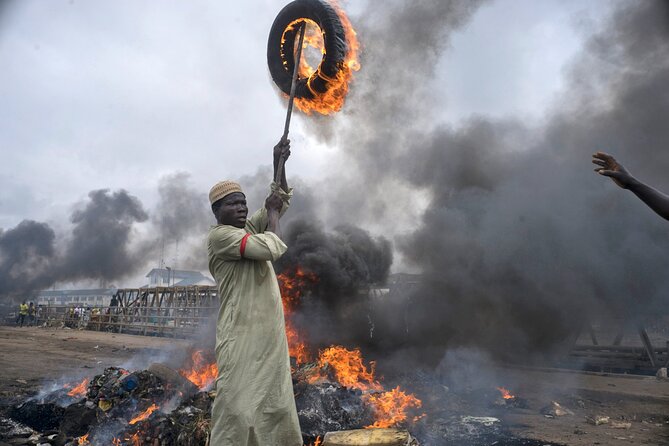
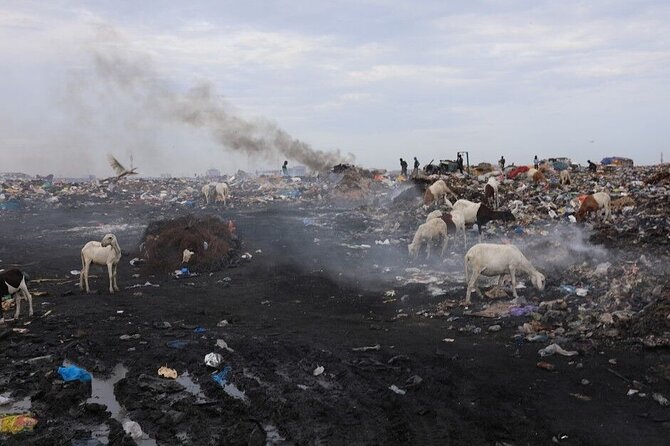
Expect an active work site, not a prepared museum. The descriptions refer to electronics being stripped by hand, copper being extracted, plastic being burned, and workers sorting through scrap. You may see fires and smoke, and you may notice strong chemical odors.
That is where this experience becomes challenging. The conditions are hazardous, and the tour should not be treated as entertainment. The strongest reason to go is to understand the connection between global electronic waste and local labor, while showing respect to the people working there.
A guide is especially important in this setting. Without explanations, you might see piles of metal and damaged machines without understanding the steps involved. With guidance, you can learn why particular parts are removed, how valuable materials are recovered, and how the process supports livelihoods.
The tour’s educational quality appears to depend heavily on the person leading it. Kwame is praised for passion and clear explanations. Daniel is described as responsive, patient, and professional. Sadik Aweisu is noted for being friendly and for explaining how waste from around the world ends up in Accra and is processed.
When booking, I would confirm which guide is assigned if that matters to you. The experience provider is Kwame Tours, and the named guides give the tour a more personal feel than a generic group excursion.
What you actually learn about e-waste recycling
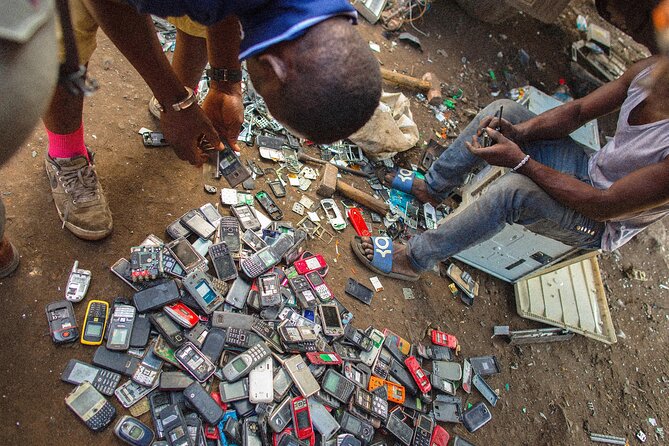
The central lesson is that recycling is not one single process. At this site, workers manually dismantle unwanted electronics to recover materials that still have value.
The supplied descriptions specifically mention computers being stripped and copper being extracted. Other accounts describe electronics being carefully taken apart and materials being turned into useful raw products. These details help you see the skill involved, even when the working conditions are poor.
You also learn about the limits of informal recycling. Burning plastics can expose people and the surrounding area to fumes. Manual sorting may recover valuable metal, but it can also place workers close to hazardous substances and sharp parts.
That tension is worth paying attention to. It is easy to praise recycling in general, but this visit asks what safe recycling should look like and who pays when safe systems are unavailable. The people at the site are not simply choosing between recycling and doing nothing. They are working within the tools and market available to them.
I value the fact that the tour presents innovation alongside danger. The community is described as using both traditional and modern techniques, and young people are finding ways to turn e-waste into useful products. You get a fuller picture than a simple story about pollution.
Still, you should keep your expectations realistic. This is an observational and educational visit. You are not signing up for a hands-on recycling workshop, and the available information does not promise that you will dismantle electronics yourself. One description mentions the chance to participate, but the precise activity is not specified.
Further from Accra, and a different kind of day:
- From Accra: Cape Coast, Elmina Castle & Kakum Park Day Tour
★ 4.6 · 144 reviews - Accra Detailed City Tour
★ 4.5 · 118 reviews - Accra Guided City Tour Experience
★ 4.7 · 88 reviews - Accra Guided City Tour Experience
★ 5.0 · 76 reviews
A private format with pickup from your accommodation
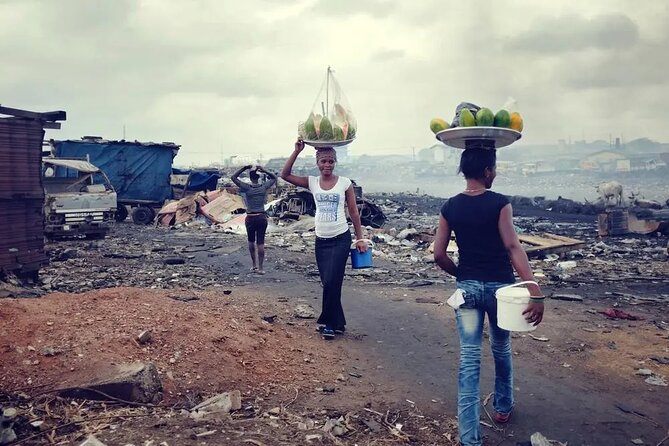
Pickup is offered, and the activity ends back at the meeting point. The tour is private, so only your own group participates.
That private format is one of the clearest reasons the $80 price may make sense. You can ask questions without competing with a large crowd, and the guide can adjust explanations to your group’s interests. A student group may want more detail about sustainability, while a family may focus on consumption and local livelihoods.
The combination of transport and walking is also useful in Accra. You get to move between Makola and Old Fadama without arranging separate transport, and you can focus on listening rather than finding your own way.
The advertised duration is about two to three hours. The two named stops account for roughly three hours in the supplied schedule, including about one hour at Makola and two hours at Old Fadama. Allow some flexibility because city traffic, market activity, and the pace of the private group may affect the day.
Mobile tickets and group discounts are available. Confirmation is received at booking, and the activity is listed near public transportation. Service animals are allowed, and most people can participate, though the physical and environmental conditions at the scrap site are worth considering carefully before you reserve.
Is $80 per person a fair price?
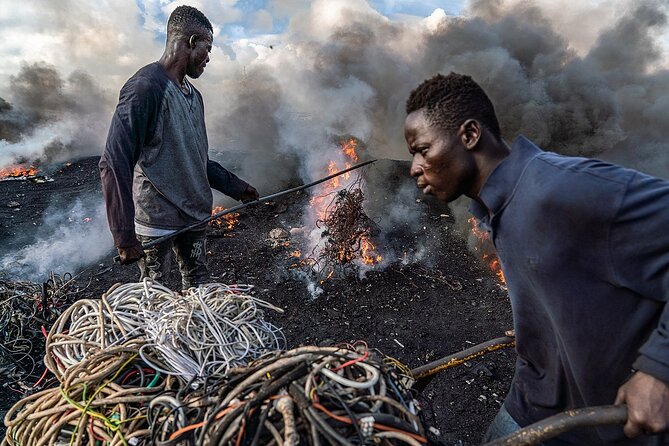
At $80 per person, this is not a cheap short city outing. You are paying for private transport, a guide, a custom group experience, and access to a subject that is difficult to understand from a distance.
The value is strongest if you want interpretation. If you only want a quick look at a famous Accra location, the price may feel high for two to three hours. If you want to ask detailed questions and understand the social and environmental issues, the private arrangement makes more sense.
Pickup also saves you the trouble of organizing transport between your accommodation, Makola, Old Fadama, and the return point. That convenience has real value in an unfamiliar city.
Group discounts may improve the cost for families, friends, students, or colleagues. Since the activity is private, a small group can share the guide and vehicle while keeping the visit more personal.
I would compare the fee with your priorities. This tour is not about luxury, polished facilities, or a long list of attractions. Its value comes from access, explanation, and the chance to connect global waste habits with local work.
Preparing for a difficult but worthwhile visit

Go with a serious frame of mind. The descriptions include burning plastic, chemical smells, workers handling electronics by hand, and smoke in the area. Even if conditions change from day to day, you should be ready for an uncomfortable setting.
Wear practical clothing and shoes suitable for walking. The supplied information does not specify a dress code or equipment, so do not assume that protective clothing, masks, or other gear is provided. If you have particular health concerns, ask Kwame Tours about current conditions before booking.
Photography deserves care. Makola is a working market, and Agbogbloshie is a working community. Ask before photographing people, avoid treating workers as subjects without consent, and let the guide show you what is appropriate.
Your attitude matters as much as your camera. Listen to the explanations, ask respectful questions, and remember that the site is a place of employment and residence, not a stage built for visitors.
The experience may be especially useful for students, families with older children, environmental groups, design students, and anyone interested in global trade. It can also suit people who want to understand Accra beyond the usual sightseeing route.
It may not suit you if you want a relaxed morning, have little tolerance for smoke or strong odors, or are looking for a polished attraction with clear visitor facilities. The tour is educational, but it is not comfortable in the usual holiday sense.
How the strongest guide experiences shape the tour
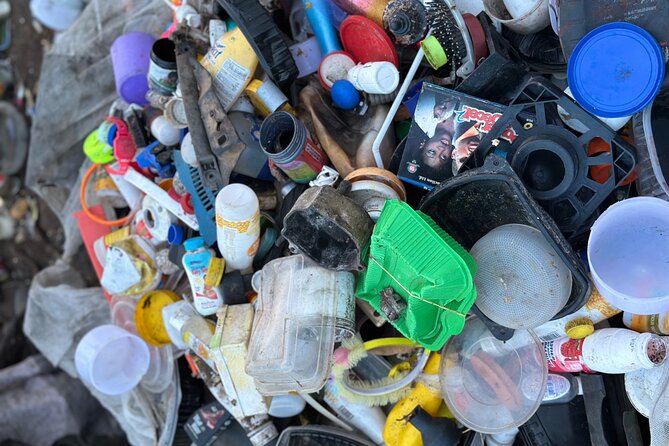
The clearest positive pattern is the quality of the guiding. Kwame is praised for passion and useful environmental explanations. Daniel is described as patient, responsive, and professional. Sadik Aweisu receives praise for friendly service and valuable information.
That matters because the site can be confusing and overwhelming. Fires, tools, metal, plastic, noise, and movement may compete for your attention. A good guide gives the visit structure and helps you understand what you are seeing.
I would use the time to ask specific questions. How are computers dismantled? Which materials have the most value? What happens to the parts that cannot be recovered? How does the work support families? Which safer recycling methods are being introduced?
The available information confirms that guides answer questions, but it does not promise a fixed lecture or a formal educational program. Your own curiosity will help determine how much you gain from the visit.
The high recommendation rate and perfect overall rating suggest strong satisfaction, but the written comments also make the limits plain. The tour is repeatedly called eye-opening, informative, fascinating, and important, while also being described as harrowing, intense, and concerning. Those descriptions fit together. You can find the visit worthwhile and still wish the working conditions were safer.
Booking, cancellation, and practical details
The price is $80 per person, and the experience is often reserved about 23 days ahead. If your Accra schedule is fixed, booking early is sensible.
Free cancellation is available up to 24 hours before the start time for a full refund. Cancellations or changes made within 24 hours are not accepted for a refund, and cut-off times use local time.
The tour currently shows operating hours from Monday, 6:00 AM to 11:00 PM, for the published period ending July 10, 2026. The exact start time should be confirmed when you book, since the experience itself lasts about two to three hours.
Confirmation arrives at booking. The activity returns to the meeting point, and pickup from your accommodation is offered. Since the tour is private, tell Kwame Tours about your group’s needs when arranging the visit.
Should you book the Accra E-waste and Recycling Experience?
Book it if you want a serious, grounded look at waste, labor, and consumption in Accra. The private format, accommodation pickup, and strong guiding make it easier to understand a complicated place, and the mix of Makola Market with Old Fadama gives the visit a useful city-to-scrapyard progression.
I would especially recommend it to people who ask where unwanted electronics go after disposal. You will leave with more than photographs. You will have a clearer sense of the materials being recovered, the ingenuity involved, and the human and environmental costs of unsafe recycling.
Skip it if you want an easygoing attraction or if smoke, fumes, and difficult working conditions would make the visit distressing. For everyone else, this is a memorable and worthwhile addition to an Accra stay, provided you approach it with respect and realistic expectations.
FAQ
How long does the Accra E-waste and Recycling Experience last?
The experience lasts approximately two to three hours. The published schedule assigns about one hour to Makola Market and two hours to Old Fadama, including driving and walking.
What places does the tour visit?
The experience includes Makola Market in central Accra and the Old Fadama, Agbogbloshie scrap-metal community.
Is pickup from my accommodation available?
Yes. Pickup is offered, and the activity ends back at the meeting point.
Is this a private tour?
Yes. Only your own group participates in the activity.
How much does the experience cost?
The listed price is $80 per person. Group discounts are available.
Can I cancel for a full refund?
Yes. You can cancel at least 24 hours before the experience start time for a full refund. Cancellations or changes made within 24 hours are not accepted for a refund.
Most recently reviewed around Accra
- Visit Aburi Garden, Tetteh Quarshie Cocoa Farm & Waterfall★ 4.0 · 4 reviews
- Private 9-Day Tour in Ghana★ 5.0 · 2 reviews
- Wli Waterfalls, Mount Afadjato & Tafi Atome Monkey Sanctuary★ 5.0 · 2 reviews
- Cape Coast and Elmina castle Day Trip★ 5.0 · 2 reviews
- Culinary for Social Change-Cooking Class★ 5.0 · 2 reviews
- Time with Nature★ 5.0 · 2 reviews
- Private Slave Castles and Dungeons Tour in Cape Coast, Ghana★ 5.0 · 3 reviews
- Experience Accra★ 5.0 · 2 reviews
Accra Tours, compared.
Experience the Beauty, History and the Culture Of Accra in a Day
Read our review →

Cape Coast, Elmina Castle & Kakum Park Day Tour
Read our review →