Reviewed · ACCRA TOURS
Explore Accra
Accra comes into focus one stop at a time. This private half-day outing links Independence Square and Jamestown with markets, crafts, and the National Museum, giving you a useful first look at Ghana’s capital rather than keeping you inside a sightseeing bubble. I especially like the mix of major landmarks and everyday city life, plus the included bottled water, soda, snacks, and admission fees. The main concern is pickup reliability, since one booking ended without a pickup and the operator acknowledged it as a mistake.
I also like the private format. Your group is the only group on the activity, so the pace can feel more personal than a large bus tour. At $80 per person, the value depends on how much you appreciate having transport, a guide, entry fees, and several different parts of Accra arranged in one morning. Confirm the pickup details carefully before setting out.
In This Review
- Key points to know before booking
- Why this Accra tour works as a first introduction
- Independence Square and Ghana’s road to self-rule
- Mokola Market, where Accra gets practical
- Center for National Culture and the art of choosing a souvenir
- National Museum of Ghana, a broad look at the country
- Jamestown from the road
- What the $80 price includes
- Timing, pickup, and the private format
- Who will get the most from this tour
- Should you book Explore Accra?
- FAQ
- How long does the Explore Accra tour last?
- What time does the tour start?
- Where does the tour begin?
- Where does the tour end?
- Is hotel or location pickup available?
- Is this a private tour?
- Are admission fees included?
- Is food included?
Key points to know before booking
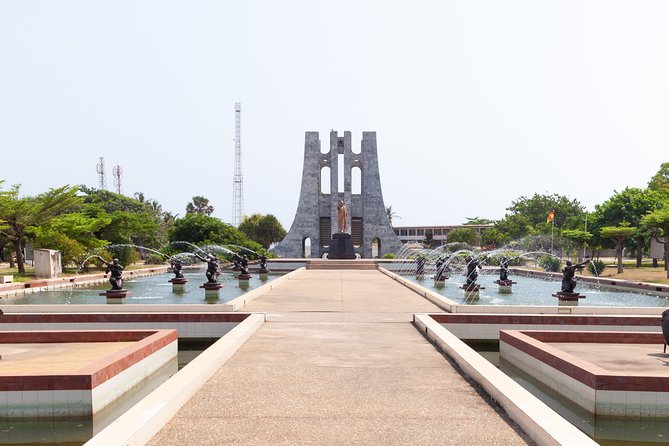
- Independence Square opens the day with Ghana’s independence story, including one hour at the city’s major national monument.
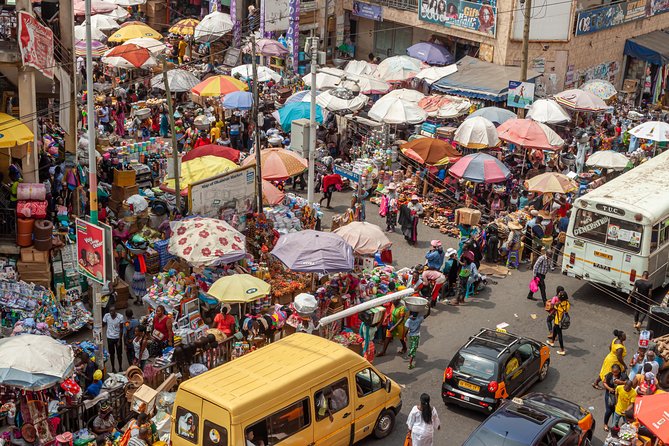
- Mokola Market gives you a look at working Accra, with clothing, textiles, farm goods, beads, and other daily purchases.
- The National Museum covers far more than political history, from gold weights and stools to traditional medicine, architecture, currencies, and presidential gifts.
- Jamestown is seen from the vehicle, with forts, a fishing village, a prison, and a lighthouse along the route.
- The Center for National Culture is a good place for souvenirs, especially sculptures, fabric, jewelry, and clothing.
- The tour lasts about four to six hours, begins at 9:00 a.m., returns to the meeting point, and carries a 4.6 rating from 13 ratings with 92 percent recommending it.
Why this Accra tour works as a first introduction

Accra can feel like a lot to sort out on your own. The city brings together national monuments, busy commercial streets, coastal neighborhoods, museums, craft stalls, and ordinary city routines. This tour puts several of those pieces into one compact outing.
I see its greatest value in the range. You are not spending the whole morning in a museum, and you are not limited to taking photographs from a vehicle. You get a formal public space at Independence Square, shopping and street activity at Mokola Market, handmade goods at the Center for National Culture, and a more structured look at Ghana’s past inside the National Museum.
The private setup matters here. Only your group participates, which should make it easier to ask questions or spend a little longer at a display that catches your attention. The exact pace is not promised, but a private tour generally gives you more room to shape the experience than a fixed large-group outing.
The duration is listed as roughly four to six hours. That is a useful window, but it also tells you not to schedule something tight immediately afterward. Market traffic, time spent browsing, and the drive through Jamestown can all affect the final return time.
More Accra outings people pair with this:
- The Cape Coast Day Tour
★ 5.0 · 525 reviews - Experience the Beauty, History and the Culture Of Accra in a Day
★ 5.0 · 323 reviews - The Cape Coast Tour
★ 5.0 · 177 reviews
Independence Square and Ghana’s road to self-rule
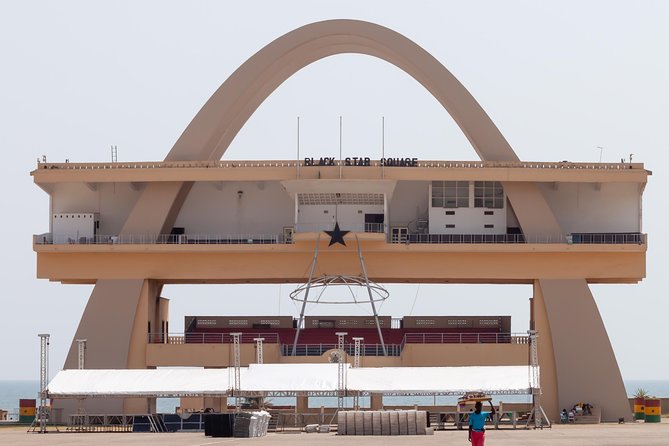
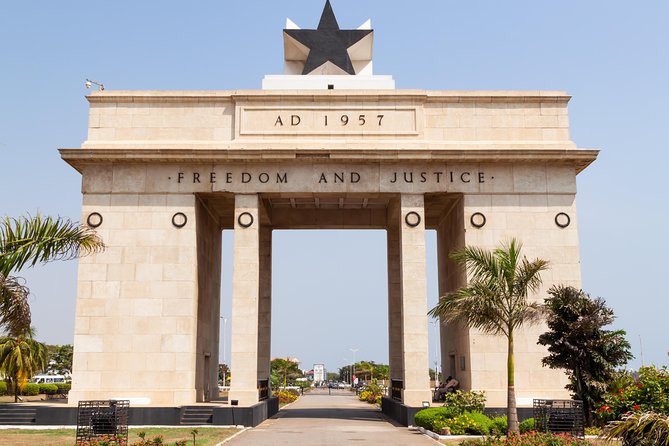
The tour begins at Independence Square, with one hour devoted to the history of Ghana’s independence. This is the best place in the program for setting the national context before you move into neighborhoods, markets, and museum objects.
You can expect the guide to explain the importance of Ghana’s independence and the role this public space plays in the country’s national story. The available details do not specify which monuments or ceremonies are covered, so you should treat this as a guided historical introduction rather than assume a particular list of sights.
The one-hour stop is long enough for a meaningful explanation without taking up the entire morning. I like that the tour places this stop near the beginning. Once you understand the importance of independence, the later museum displays and historic areas have a clearer frame.
This is also a more formal part of Accra. It gives you a pause from the commercial energy that follows at Mokola Market. If you prefer tours that connect places to events and ideas, this will likely be one of the stronger sections.
Mokola Market, where Accra gets practical
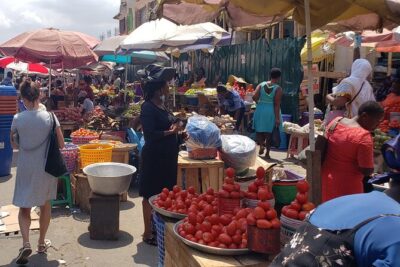
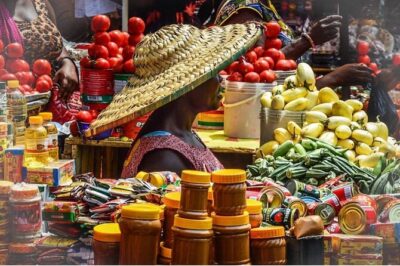
Mokola Market is described as one of the biggest and busiest open markets in West Africa. It operates Monday through Saturday, and the tour presents it as a major center for commercial activity in Accra.
The appeal is not a polished shopping district. This is a working market where you might find imported clothing, local textiles, farm products, beads, and other everyday goods. The market is described as a one-stop place for many of the things people need, so you are seeing commerce as part of daily city life, not just a souvenir display.
No specific stop length is provided for Mokola Market. That matters because market visits can vary more than museum visits. You might spend a short time seeing the main areas, or your group may linger over fabrics, clothing, or beads. Ask the guide how much time is available before you begin shopping.
The market is open Monday through Saturday, but the tour start day is not specified. If seeing Mokola Market is important to you, confirm that your chosen date falls within its operating days. Sunday scheduling could affect this part of the experience.
You should also keep your expectations practical. A large open market can be crowded and visually busy. The listing does not promise specific shopping assistance, price guidance, or a particular vendor. I would treat it as a chance to look, compare, and experience a major Accra market, not as a guaranteed bargain-hunting session.
Center for National Culture and the art of choosing a souvenir
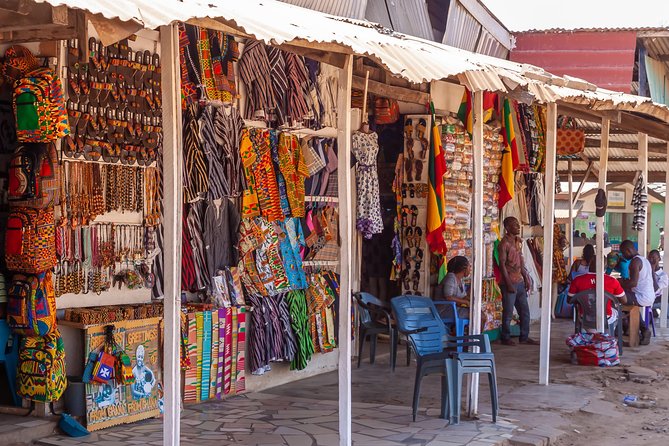
The Center for National Culture offers 45 minutes among stalls selling sculptures, fabric, jewelry, and clothes. Admission is free, so your choices here are about browsing and buying rather than paying to enter.
This stop adds a more focused craft-shopping element after the broad commercial range of Mokola Market. You might find it easier to compare artistic items here, while Mokola is presented as a place for many kinds of goods. The two stops work well together because they show different sides of buying in Accra.
Forty-five minutes is enough for a walk through the stalls and a few purchases, but it is not an unlimited shopping session. If you already know you want fabric, jewelry, or a sculpture, decide what interests you before arriving. If you need time to carefully compare several large pieces, the schedule may feel short.
The tour does not state how purchases are packed, shipped, or priced. You will need to handle those details yourself. Still, this stop is useful for anyone who wants to take home something connected to Ghanaian design rather than a generic item from a hotel shop.
Further from Accra, and a different kind of day:
- From Accra: Cape Coast, Elmina Castle & Kakum Park Day Tour
★ 4.6 · 144 reviews - Accra Detailed City Tour
★ 4.5 · 118 reviews - Accra Guided City Tour Experience
★ 4.7 · 88 reviews - Accra Guided City Tour Experience
★ 5.0 · 76 reviews
National Museum of Ghana, a broad look at the country
The one-hour visit to the National Museum of Ghana is the most content-heavy stop. It is described as the largest and oldest of the eight museums run by the Ghana Museums and Monuments Board, and admission is included.
The permanent exhibition covers a wide range of objects:
- Chiefs’ regalia and stools
- Archaeological artifacts
- Models of indigenous Ghanaian architecture
- Traditional medicines and ethnomedicine
- Indigenous iron technology
- Gold weights and jewelry boxes
- Beads and pottery
- Old currencies
- A traditional kitchen setup
- A chair of state
- Presidential gifts and cars
- Rites of passage
- A children’s corner with hands-on activities
That list gives you a sense of the museum’s breadth. It is not limited to one era or one theme. Instead, the displays connect government, trade, technology, family life, belief, craft, and public ceremony.
The gold weights are especially useful for understanding how objects can carry both practical and cultural meaning. The traditional kitchen setup and models of local architecture shift the focus from national figures to ordinary structures and routines. Presidential gifts and cars then bring you into more recent political history.
The museum’s stated purpose is to show how connected people are despite different cultural forms and traditions. That idea gives the visit a clear thread. You are not simply moving past old objects. You are looking at the ways Ghana’s communities, institutions, and traditions fit together.
One hour will give you an overview, but it will not allow a slow reading of every display. I suggest deciding in advance which subjects interest you most. If you care about political history, look for the state items and presidential material. If you prefer everyday life, focus on the kitchen, architecture, pottery, beads, and rites of passage.
The children’s corner with hands-on activities is a welcome feature for families. The tour is open to most participants, but no specific child age guidance is provided. Families should expect the museum to be educational rather than a full children’s attraction.
Jamestown from the road
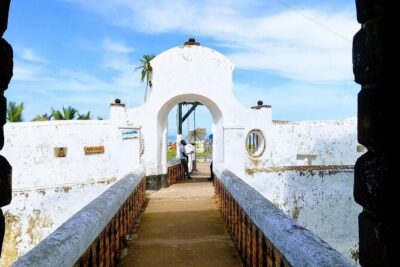
The route through Jamestown adds a historic neighborhood to the day. You will drive through the area and see its forts, fishing village, prison, and lighthouse.
This is an important distinction: the program describes a drive through Jamestown, not a walking tour or interior visits to each site. You should expect to see the area from the vehicle, with explanations along the way, rather than plan on extended time at the lighthouse or forts.
Jamestown brings a different mood from Independence Square and the museum. It is a living neighborhood as well as a place connected to coastal history. The mention of the fishing village is particularly useful because it points you toward present-day life, not only preserved structures.
The available details do not specify how long the drive lasts or which forts are visited. If Jamestown is your main reason for booking, ask for more detail before paying. If you want a broad introduction to Accra, the drive is a sensible way to include the district without turning the entire outing into a single-site visit.
What the $80 price includes
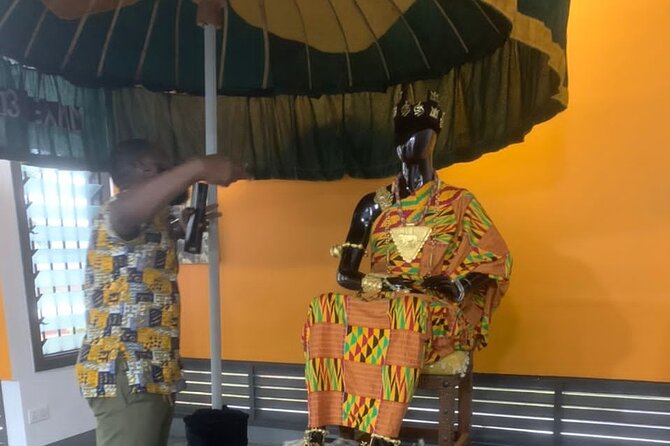
The price is $80 per person. Included are all fees and taxes, bottled water, soda drinks, snacks, and admission to the paid stops. Lunch, breakfast, dinner, and other meals are not included.
The value comes from convenience and variety. You are paying for a private activity that combines several locations, includes museum and Independence Square admission, offers pickup, and returns to the starting point. You also avoid having to arrange separate transport between a monument, market, cultural center, museum, and Jamestown.
The price is easier to justify if you are visiting Accra for a short time or want a structured first day. A private group can also make sense if you are traveling with family or friends and prefer not to share the vehicle with strangers.
The value is less clear if you mainly want a long market visit or a detailed museum tour. The schedule spreads time across many places, and some stops are brief or viewed from the vehicle. You will also need to budget for lunch and anything you buy at the markets or cultural center.
Snacks, water, and soft drinks are helpful during a four to six-hour outing, but they are not a meal. Plan to eat before the 9:00 a.m. start or arrange lunch afterward.
Timing, pickup, and the private format
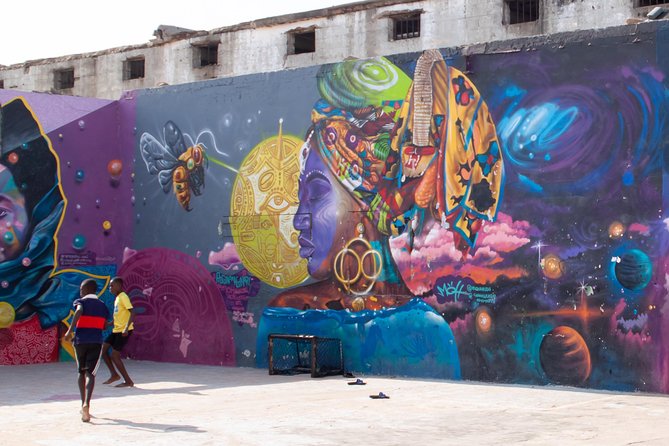
The listed start time is 9:00 a.m. The meeting point is Afrikiko on Liberation Road in Accra, and the activity ends back at that meeting point. Pickup is offered, but the information also gives a specific starting location, so confirm exactly where your group will be collected.
This point deserves attention because one person reported not being picked up and requested a refund. The provider acknowledged that a mistake had occurred and said the team was ready to serve customers at any time. That response does not erase the problem, but it gives you a practical lesson: reconfirm the pickup location, time, and contact procedure before the morning of the tour.
A mobile ticket is provided, and confirmation is received at booking. The tour is near public transportation, which may help if you need to reach the meeting point yourself. The information does not name the guide, identify the vehicle, or explain the exact pickup radius.
The private format is one of the activity’s better features. You can ask questions about the independence story, pause to look at a particular museum display, or make your shopping interests clear. Still, the total time remains about four to six hours, so private does not mean every stop can be extended without limit.
Who will get the most from this tour
I would suggest this outing to a first-time visitor who wants a broad introduction to Accra in one morning. It is also a good fit if you enjoy combining national history, shopping, museum collections, and neighborhood views instead of choosing only one theme.
Families may appreciate the private arrangement and the children’s corner at the National Museum. Shoppers will get two different buying environments, Mokola Market and the Center for National Culture. People with a strong interest in Ghanaian history will value Independence Square and the museum, while Jamestown adds a look at a historic coastal district.
You may want another option if you need an accessible, highly detailed walking program. The information says most participants can take part, but it does not provide specific accessibility details. It also does not promise extended walking time at Jamestown or a long, specialized museum lecture.
This is not the best choice for a leisurely food tour, since meals are not included and no food-focused stop is listed. It is also not designed as a full-day exploration of every major Accra sight. Think of it as a useful orientation, with enough substance to help you decide what to visit next.
Should you book Explore Accra?
I would book this tour if you want a private overview of Accra and value having the main arrangements handled for you. The strongest combination is Independence Square, the National Museum, Mokola Market, and the Center for National Culture, with Jamestown added from the road.
The 4.6 rating from 13 ratings and 92 percent recommendation figure point to a generally strong experience, but the missed-pickup problem is a real practical warning. Confirm your pickup in writing or make a clear plan to reach Afrikiko on Liberation Road.
At $80, the tour makes the most sense for a short visit, a first day in the city, or a small group that wants private transport and a varied schedule. Skip it if you want to spend hours at one museum, shop slowly, or explore Jamestown on foot. For a first look at Accra, though, it offers a sensible mix of national story, local commerce, art, and everyday city scenes.
FAQ
How long does the Explore Accra tour last?
The tour lasts approximately four to six hours.
What time does the tour start?
The listed start time is 9:00 a.m.
Where does the tour begin?
The meeting point is Afrikiko on Liberation Road in Accra, Ghana.
Where does the tour end?
The activity ends back at the meeting point.
Is hotel or location pickup available?
Pickup is offered, but the specific pickup arrangements are not provided. Confirm the exact location and timing before the tour.
Is this a private tour?
Yes. Only your group participates in the activity.
Are admission fees included?
Yes. All fees and taxes are included, along with admission to the included ticketed stops.
Is food included?
Bottled water, soda drinks, and snacks are included. Breakfast, lunch, dinner, and other meals are not included.
Most recently reviewed around Accra
- Visit Aburi Garden, Tetteh Quarshie Cocoa Farm & Waterfall★ 4.0 · 4 reviews
- Private 9-Day Tour in Ghana★ 5.0 · 2 reviews
- Wli Waterfalls, Mount Afadjato & Tafi Atome Monkey Sanctuary★ 5.0 · 2 reviews
- Cape Coast and Elmina castle Day Trip★ 5.0 · 2 reviews
- Culinary for Social Change-Cooking Class★ 5.0 · 2 reviews
- Time with Nature★ 5.0 · 2 reviews
- Historical Day Tour to Cape Coast, Elmina and Kakum★ 5.0 · 3 reviews
- Private Slave Castles and Dungeons Tour in Cape Coast, Ghana★ 5.0 · 3 reviews
Accra Tours, compared.

Experience the Beauty, History and the Culture Of Accra in a Day
Read our review →

Cape Coast, Elmina Castle & Kakum Park Day Tour
Read our review →