Reviewed · ACCRA TOURS
Half-Day Guided Fabric Tour in Ghana
Color, commerce, and cloth tell Ghana’s story here. I like the hands-on batik workshop and the chance to visit Makola Market with Albert, a designer who can explain both textiles and everyday society. The included pickup, private vehicle, drinks, and market time add practical value.
The main drawback is the price: $160 per person is a serious spend for six hours, especially since breakfast and lunch are not included. You also need to walk through a busy market, so this is not a good fit if walking is difficult.
In This Review
- Key Points At A Glance
- Why This Six-Hour Tour Works For Fabric Lovers
- Makola Market: Two Hours In Accra’s Fabric Trade
- Learning What African Prints Say
- Exmac Fabrics: Three Hours Making Batik By Hand
- Albert’s Fashion Background Adds Real Value
- What The $160 Price Includes
- Transport, Timing, And Group Size
- Who Will Get The Most From This Experience
- A Few Smart Ways To Prepare
- Should You Book This Textile Tour?
- FAQ
- How long does the fabric tour last?
- Is hotel pickup included?
- What will I do at Makola Market?
- Will I make my own fabric?
- Is lunch included?
- What is the cancellation policy?
Key Points At A Glance
- Makola Market comes first: Spend about two hours learning how African print sellers and buyers work, then shop for fabric at local or wholesale prices.
- You make your own batik: At Exmac Fabrics, you choose a design and create a hand-made tie-dye or batik piece to take home.
- Albert brings fashion expertise: He is a designer and has 12 years of experience in the fashion industry, giving the tour a useful textile focus.
- Pickup is included within Accra: A private, air-conditioned vehicle takes you from your hotel or residence and returns you afterward.
- The group is capped at 10 people: That keeps the workshop more manageable than a large bus tour.
- Custom clothing comes with a discount: You receive 20% off custom African wear through the tour provider.
Why This Six-Hour Tour Works For Fabric Lovers
Many cultural outings let you look, listen, and take a few photographs. This one gives you something to do with your hands. You see fabric being sold in a major market, learn what different patterns mean, and then make a piece yourself.
I like that progression. Makola Market shows the commercial side of clothing, while Exmac Fabrics shows the work behind it. You are not simply told that textiles matter in Ghana. You get to see the buying process and leave with something you helped create.
The focus is narrower than the broad introduction suggests. Food, music, dance, and national history are mentioned as possible parts of a customizable experience, but the scheduled six-hour program is built around the market and batik workshop. If you want a full city tour, this is not the right choice. If you want fabric, design, and direct contact with artisans, the focus is a strength.
The guide matters a great deal here. Albert is a designer himself, and that gives the experience a professional angle. He can explain fabric beyond its color and pattern, and one customer specifically appreciated his ability to answer questions about Ghanaian society as well as textiles.
More Accra outings people pair with this:
- The Cape Coast Day Tour
★ 5.0 · 525 reviews - Experience the Beauty, History and the Culture Of Accra in a Day
★ 5.0 · 323 reviews - The Cape Coast Tour
★ 5.0 · 177 reviews
Makola Market: Two Hours In Accra’s Fabric Trade
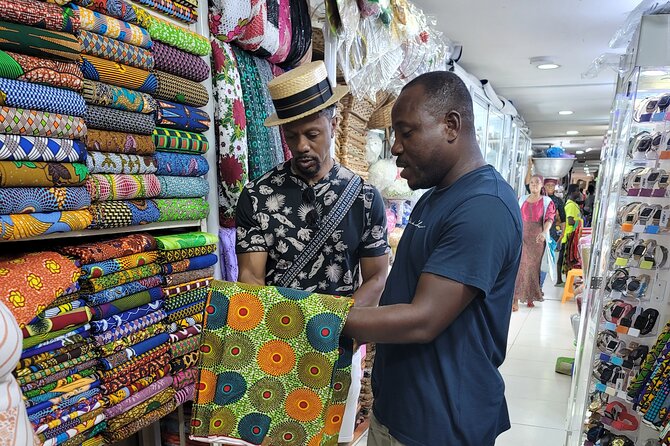
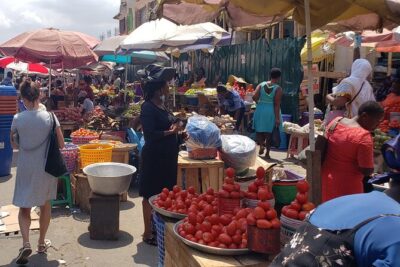
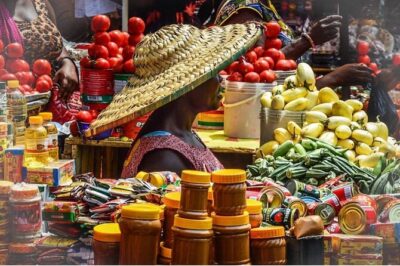
The day begins at Makola Market, described as the largest open market in Accra. The fabric portion takes about two hours, giving you enough time to do more than pass through a row of stalls.
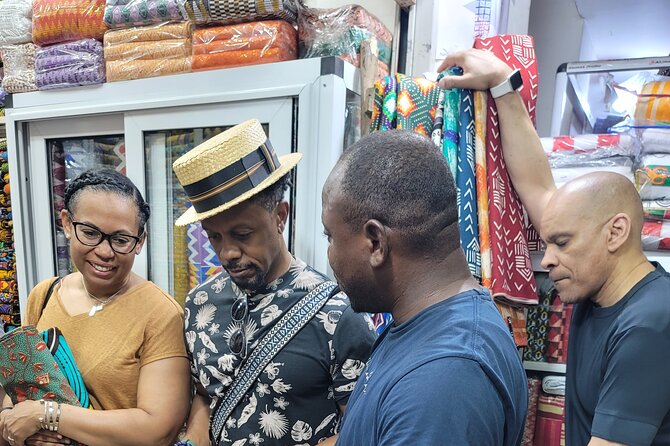
Your guide takes you to African print sellers and explains how buyers and sellers interact. That is valuable because a market visit can otherwise feel confusing. You may see stacks of bright cloth, hear prices discussed, and wonder which designs are commonly worn or saved for special occasions. Here, the buying process becomes part of the lesson.
You learn the names of different fabrics and the meaning behind symbols used in the designs. That small detail can change the way you look at the cloth. A print is not just decoration. It can carry a message, mark an occasion, or reflect a familiar part of local culture.
The market also gives you a chance to shop. Local fabric may be available at affordable prices, with wholesale prices mentioned as another possibility. I would treat this as a useful buying opportunity, but not assume every item or price is included in the tour cost. Your purchases are separate expenses.
Expect the market to require walking. The experience is not recommended for people who have trouble walking, particularly in a market setting. Wear sensible shoes, keep your belongings secure, and be ready for a place where shopping and conversation happen at close range.
The two-hour timing is well judged for a first visit. Less time could feel rushed, while much longer might become tiring if you are not planning to shop seriously. You should tell the guide if fabric buying is a priority, since the experience is described as customizable.
Learning What African Prints Say
The most useful part of the market stop may be the explanation of symbols. Without context, a pattern can look like a simple repeat of shapes and colors. With context, you begin to understand why a particular cloth might be selected for a celebration, a formal gathering, or everyday use.
I like this because it turns shopping into cultural learning. You can ask why a fabric is used for a certain occasion, how its name is connected to its meaning, and what makes one print different from another. The supplied information does not promise a formal lecture or a fixed list of designs, so the depth will depend on your questions and the guide’s discussion.
This is also where Albert’s background helps. As a fashion designer, he can connect market fabrics with clothing design. A customer who traveled with two colleagues enjoyed the shopping and later decided to order custom clothing from the owner’s design business. That option gives the market visit a practical follow-up.
Still, keep your expectations realistic. The tour includes an offer of 20% off custom African wear, but it does not say that clothing design or tailoring is part of the six-hour schedule. Think of the discount as an extra benefit if you want to continue the fashion experience, not as a guaranteed clothing appointment.
Exmac Fabrics: Three Hours Making Batik By Hand
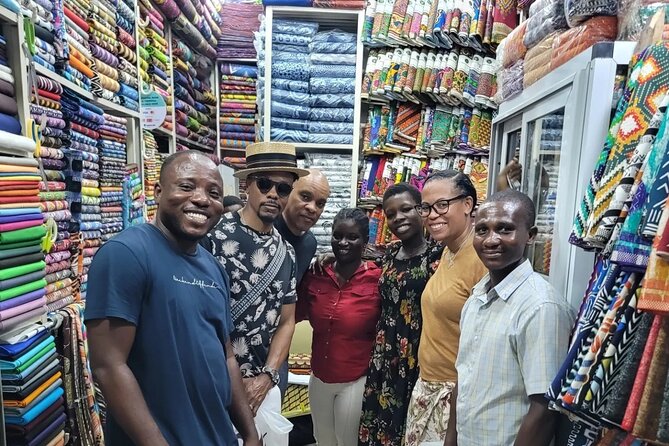
The second stop takes about three hours at Exmac Fabrics. This is the heart of the experience for anyone who wants more than a guided market walk.
You are shown how hand-made batik tie-dye fabric is produced. Then you choose a design and make your own piece by hand. The finished fabric is yours to take home, which gives the activity a clear payoff and a personal connection to the place.
The workshop is described as a one-of-a-kind experience, but the strongest point is simple: you are involved in the process. You are not just watching an artisan work. You choose, design, and create.
Three hours gives the activity room to breathe. You can ask questions, work through the design, and take care with the final piece instead of rushing through a short demonstration. Since the exact steps and materials are not specified, you should not assume a particular pattern, size, or drying method. The important promise is that the activity cost is included and that you take home the fabric you create.
This part should suit people who enjoy crafts, fashion, and practical cultural activities. It can also work well for a small group. One customer went with two colleagues and found it enjoyable both alone and with company. The group limit of 10 people should help keep the work manageable, although the experience is not described as strictly private for every booking.
The workshop may be less appealing if you want a passive sightseeing day. Making fabric takes attention. You may need to stand, work with your hands, and accept that your finished design will be handmade rather than perfectly uniform. That is part of the point, but it is worth knowing before you book.
A few other Accra trips we have written up
- Half-day Accra Guided Tour
★ 4.5 · 8 reviews - Half-day Accra Safari Tour
★ 4.5 · 6 reviews - Half-Day Private African Drumming Lessons with Pick Up
★ 5.0 · 3 reviews - Half-Day City Tour of Accra
★ 5.0 · 3 reviews
Albert’s Fashion Background Adds Real Value
A guide with a direct connection to clothing can give this experience a different shape from a standard city excursion. Albert is identified as a designer, and the provider’s tour leader has 12 years of fashion industry experience.
That background is especially useful at both stops. At Makola Market, you can ask about fabric names, symbols, and occasions. At Exmac Fabrics, you can get help thinking through your own design.
Albert also answered questions about Ghanaian society during one customer’s tour. That detail matters because the best textile conversations often lead to broader questions about daily life, dress, celebrations, and social customs. The information supplied does not list a fixed set of historical topics, so you should bring your own questions if that side interests you.
I would contact the provider before booking if you have a very specific design goal or want custom clothing afterward. The tour is advertised as fully customizable, but no detailed menu of alternate stops or workshop choices is provided. A quick request can help confirm what can be adjusted within the six-hour period.
What The $160 Price Includes
At $160 per person, this is not a bargain market outing. Its value comes from combining transportation, a guide with fashion experience, two substantial activities, and a finished piece of fabric.
The package includes hotel or residence pickup and drop-off within Accra, private transportation, and an air-conditioned vehicle. Bottled water and soda are included, along with all fees and taxes listed for the experience. The activities at Makola Market and Exmac Fabrics are also covered.
That makes the price easier to understand for visitors who want a guided day without arranging local transport themselves. Pickup is particularly helpful if you are staying somewhere in Accra and do not want to negotiate your own route to the market.
The price does not include breakfast or lunch. Plan to eat before pickup or after the tour, unless you arrange something separately. Other activities not listed are also extra.
The finished batik fabric improves the value for craft-minded people. You are paying for an activity and taking home a personal result, rather than only receiving information. If you have no interest in making or buying fabric, however, the same price may feel high.
The 20% discount on custom African wear is another possible saving. It is useful only if you decide to order clothing, and the discount should not be confused with clothing being included in the tour.
Transport, Timing, And Group Size
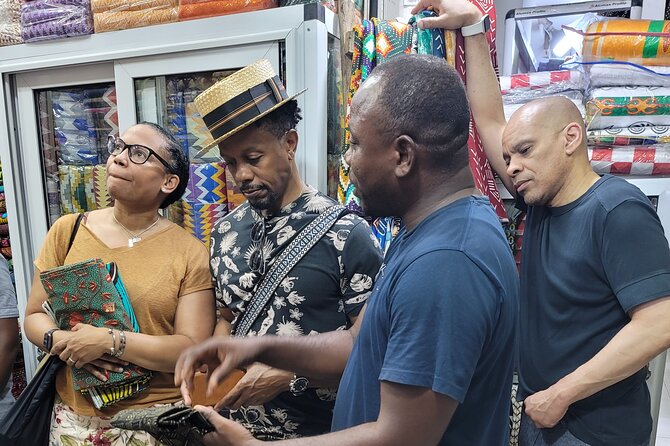
The experience lasts approximately six hours. The stated schedule gives two hours at Makola Market and three hours at Exmac Fabrics, leaving roughly one hour for travel, pickup, drop-off, and movement between activities.
Pickup and return are offered within Accra. Since private transportation is included, you do not need to arrange separate transport between the market and workshop. The air-conditioned vehicle is a welcome feature in a warm city, especially after walking and working at the market.
The group maximum is 10 people. That is small enough to make questions possible and should be more comfortable than a large coach group. It does not guarantee a one-on-one tour, so anyone seeking a fully private experience should confirm that before paying.
Confirmation is provided at booking, and the experience is available with a mobile ticket. It is also near public transportation, although the included pickup means you may not need to use it.
The tour is free to cancel up to 24 hours before the local start time for a full refund. Changes or cancellations made less than 24 hours before the start are not accepted for a refund, so check your schedule before the cutoff.
Who Will Get The Most From This Experience
I would recommend this tour to you if you enjoy:
- Clothing, fabric, and fashion
- Hands-on craft work
- Local markets with guided context
- Small-group cultural activities
- Taking home something made during your visit
- Asking questions about design and Ghanaian society
It is a particularly good match for friends, colleagues, couples, and solo visitors who prefer doing an activity rather than only seeing sights. The small group limit also makes it a sensible option for people who want more personal attention.
Families may appreciate the creative workshop, though the provided information does not state a minimum age or specific child arrangements. If you are booking for children, ask the provider first.
I would hesitate to recommend it if you dislike markets, cannot walk comfortably, or want a broad tour covering many parts of Accra. The experience gives you a close look at textiles, not a general overview of the city.
You should also think about the food plan. Lunch and breakfast are excluded, and no meal stop is specified. The tour can be a good morning-to-afternoon activity, but you will need to handle food on your own.
A Few Smart Ways To Prepare
Wear comfortable shoes. The market requires walking, and sensible footwear will make the first two hours easier.
Bring room for your finished fabric. The workshop includes a piece you create and take home, while the market may tempt you to buy more. A small bag with space for cloth is more useful than arriving with an overstuffed day bag.
Think about what you want to learn before you arrive. You might ask about symbols, names, fabric uses, and the occasions connected with particular prints. Good questions will help you get more from Albert’s experience.
If custom clothing interests you, mention it early. The 20% discount on custom African wear can be useful, and one group chose to continue with clothing after enjoying the textile activity. The available information does not promise that measurements or tailoring will happen during the tour, so ask what can be arranged.
Finally, remember that the workshop is hands-on. You are choosing and making a design, not ordering a factory-perfect product. The irregularities are part of having made it yourself.
Should You Book This Textile Tour?
Book it if you want a focused, practical introduction to Ghanaian fabrics and you like the idea of making your own souvenir. The strongest features are the two-hour market visit, the three-hour batik activity, and Albert’s experience as a designer who can connect clothing with wider questions about society.
The $160 cost is fair for people who value private transport, included activities, drinks, and a personal fabric piece. It is harder to justify if you only want to browse a market or if your main goal is sightseeing around Accra.
Before booking, confirm any customization requests, ask about clothing plans if you want to use the discount, and make sure you can manage the walking. For a craft-focused half-day with a real result to take home, this is a well-targeted choice.
FAQ
How long does the fabric tour last?
The experience lasts approximately six hours. About two hours are spent at Makola Market and about three hours at Exmac Fabrics, with the remaining time covering transport and movement between stops.
Is hotel pickup included?
Yes. Pickup and drop-off are included from hotels or residences within Accra. Private transportation in an air-conditioned vehicle is provided.
What will I do at Makola Market?
You will visit African print sellers, learn how buyers and sellers interact, and hear about fabric names, symbols, and the occasions when different fabrics are worn or used. You can also buy local fabric at local or wholesale prices.
Will I make my own fabric?
Yes. At Exmac Fabrics, you will learn about hand-made batik tie-dye production, choose a design, and make your own fabric by hand. You can take the finished fabric home.
Is lunch included?
No. Lunch and breakfast are not included. Bottled water and soda are provided.
What is the cancellation policy?
You can cancel at least 24 hours before the experience start time for a full refund. Cancellations or changes made less than 24 hours before the start are not accepted for a refund.
Most recently reviewed around Accra
- Visit Aburi Garden, Tetteh Quarshie Cocoa Farm & Waterfall★ 4.0 · 4 reviews
- Wli Waterfalls, Mount Afadjato & Tafi Atome Monkey Sanctuary★ 5.0 · 2 reviews
- Private 9-Day Tour in Ghana★ 5.0 · 2 reviews
- Cape Coast and Elmina castle Day Trip★ 5.0 · 2 reviews
- Culinary for Social Change-Cooking Class★ 5.0 · 2 reviews
- Time with Nature★ 5.0 · 2 reviews
- Historical Day Tour to Cape Coast, Elmina and Kakum★ 5.0 · 3 reviews
- Private Slave Castles and Dungeons Tour in Cape Coast, Ghana★ 5.0 · 3 reviews
Accra Tours, compared.
Experience the Beauty, History and the Culture Of Accra in a Day
Read our review →

Cape Coast, Elmina Castle & Kakum Park Day Tour
Read our review →