
Reviewed · CITY TOURS
6-Hour Private Guided Accra City Tour
Accra tells its story in layers. This private city tour connects museums, markets, colonial forts, independence monuments, and the beach in one long, useful day. I like the wide mix of places and the chance to shape the tour around your interests. I also like that a local driver-guide stays with you to explain customs, food, art, and daily life rather than simply dropping you at each stop.
The main drawback is pace. Seven stops, traffic, walking, shopping, and a beach break can fill six hours quickly. Heavy Accra traffic may also mean using Uber, Bolt, Yango, or a local taxi instead of the company vehicle, especially for groups of fewer than three. That is practical, but it may feel less polished than a dedicated private car.
In This Review
- Key points to know before booking
- What this private Accra tour is really designed to do
- Starting at Accra Mall and dealing with city traffic
- Ghana’s past inside the National Museum
- Makola Market, where Accra gets practical
- Black Star Square and Ghana’s independence story
- Shopping and drumming at the Centre for National Culture
- Walking through old Jamestown
- W.E.B. DuBois Center and the wider Pan-African connection
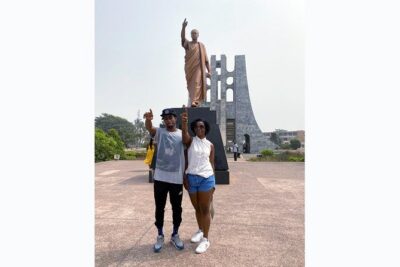
- Kwame Nkrumah Memorial Park
- Labadi Beach, the cool-down at the end
- What $100 per person buys you
- Guide style and the human side of the day
- Who should book this Accra city tour?
- Should you book the 6-hour private Accra tour?
- FAQ
- How long does the Accra city tour last?
- Where does the tour start?
- Where does the tour end?
- Is this a private tour?
- Is hotel pickup offered?
- What is included in the price?
- Are meals included?
- Can the vehicle change during the tour?
- Is the tour suitable for most people?
- What is the cancellation policy?
Key points to know before booking

- Seven Accra stops in roughly four to six hours: You cover the National Museum, Makola Market, Independence Square, the Centre for National Culture, Jamestown, the W.E.B. DuBois Center, Kwame Nkrumah Memorial Park, and Labadi Beach.
- A private guide keeps the day personal: Only your group participates, and the guide can focus on cuisine, customs, art, history, or everyday life.
- The National Museum admission is included: Allow about an hour for archaeology, gold weights, textiles, musical instruments, pottery, beads, and other objects.
- Makola Market brings real city life into the tour: You have about 45 minutes to browse, take pictures, meet women vendors, and bargain.
- Labadi Beach provides a welcome finish: After the heat and traffic of central Accra, you get about an hour to sit, eat, drink, and cool down.
- Clinton, Daniel, and Enoch have received praise for their care: Past feedback highlights personable guiding, strong logistics, and an energetic approach to Accra.
What this private Accra tour is really designed to do

This is a first-look tour, not a slow study of one neighborhood. In one half-day, you move from Ghanaian archaeology and traditional arts to independence monuments, Pan-African memory, street commerce, and the Atlantic coast.
That broad reach is the tour’s best feature. You can begin the day learning about Stone Age objects and end it with your feet near Labadi Beach. The changes in setting help you understand Accra as a living capital, not just a collection of attractions.
The guide is important here. The written route gives you the sites, but the local driver-guide gives them meaning. You can ask about food, social customs, local art, daily routines, and Ghanaian history as the day unfolds. The company says its guides tailor the experience to your interests and help you navigate at a comfortable level.
Because this is private, you avoid waiting for a large group to finish shopping or photography. You can spend more time at a favorite stop, within the limits of traffic and the day’s schedule. The tour is suitable for solo customers, couples, families, and small groups, with group discounts available.
More Accra outings people pair with this:
- The Cape Coast Day Tour
★ 5.0 · 525 reviews - Experience the Beauty, History and the Culture Of Accra in a Day
★ 5.0 · 323 reviews - The Cape Coast Tour
★ 5.0 · 177 reviews
Starting at Accra Mall and dealing with city traffic
The listed meeting point is Accra Mall, at Plot C11, Tetteh Quarshie Interchange on Spintex Road. The tour ends back at that same point.
Accra traffic is not a minor detail. It can shape the whole day. The tour lasts about four to six hours, but the exact pace depends on road conditions and how much time you spend walking, shopping, or asking questions.
For groups of fewer than three, the company may use air-conditioned Uber, Bolt, Yango, or a local taxi when traffic is heavy. This is meant to keep the route moving and protect the time available for the sights. You still receive transport, bottled water, and WiFi on board, but the vehicle arrangement may change.
I would begin with a clear plan. Tell the guide if the National Museum matters most to you, if you want time at Makola Market, or if the beach is your priority. A private format gives you a better chance to make those preferences count.
Ghana’s past inside the National Museum
The National Museum of Ghana is the most substantial indoor stop, with about one hour set aside and admission included. It opened on March 5, 1957, the year Ghana became independent, and it is the oldest and largest of the six museums administered by the Ghana Museums and Monuments Board.
The archaeology section reaches from the recent past back to the Stone Age. That range gives you a useful starting point for the rest of the tour. You are not looking at independence monuments in isolation. You first get a sense of the people, objects, beliefs, and technologies that came before modern Ghana.
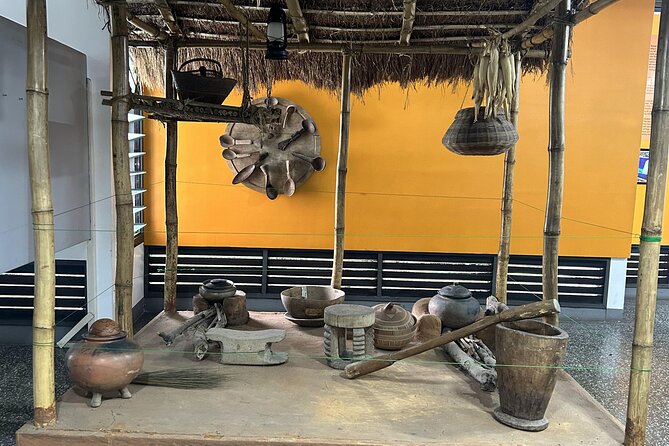
The ethnography gallery includes chiefs’ regalia, indigenous musical instruments, gold weights, beads, textiles, stools, and pottery. Gold weights are especially useful for understanding the importance of trade and measurement in the old Gold Coast. Traditional stools and textiles also offer clues about authority, ceremony, and identity.
The collection includes objects from other African countries acquired through trade, including Senufo masks from Côte d’Ivoire, wooden Zulu figures, and beaded items from southern Africa. The museum is not a quick photo stop. If you enjoy objects and cultural context, this may be the most rewarding part of the morning.
The limitation is time. One hour lets you see the main galleries, but not study every display. Ask your guide to point out the objects that best connect with the rest of your Accra route.
Makola Market, where Accra gets practical
Makola Market sits in the heart of Accra and includes indoor and outdoor shopping areas. The tour allows about 45 minutes, with no admission fee.
This is where the city’s daily trade comes into view. You can meet women vendors, look at goods, take pictures where appropriate, and shop for local items. Bargaining is part of the experience, and your guide can help you understand how to approach it with good manners.
Do not expect a quiet browsing session. Makola is a working market, and the energy comes from people buying and selling rather than from displays prepared for sightseeing. That makes it a strong contrast with the museum and memorials.
Forty-five minutes is enough for an introduction, but it may pass quickly if you find something worth buying. Keep track of your belongings and stay close to your guide. If shopping is central to your plans, ask at the start if the market time can be adjusted.
More City Tours in Accra:
- Accra Detailed City Tour
★ 4.5 · 118 reviews - Accra Guided City Tour Experience
★ 4.7 · 88 reviews - Accra Guided City Tour Experience
★ 5.0 · 76 reviews - Know Ghana in 4 hrs – Accra City Tour
★ 4.5 · 47 reviews
Black Star Square and Ghana’s independence story
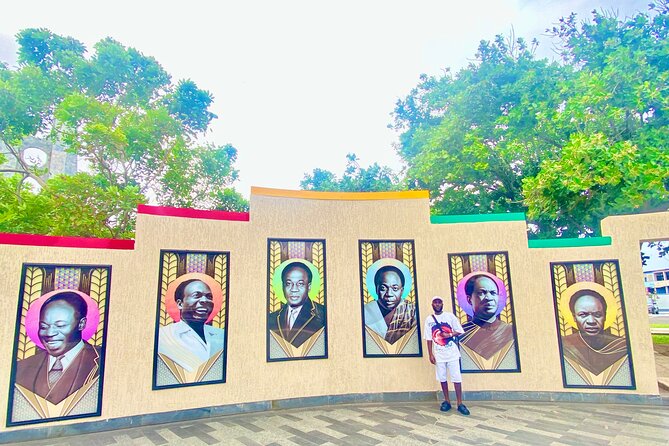
Independence Square, also called Black Star Square, receives about 30 minutes. Admission is free.
Kwame Nkrumah built the square to mark Ghana’s independence from Britain in 1957. Construction was completed in 1961, during a visit by Queen Elizabeth II. The site includes the Independence Arch, Black Star Gate, and Liberation Day Monument.
The square is also the setting for Ghana’s Independence Day parade. Your guide can help connect the large open space and its monuments with the political events that shaped the country. The stop is mainly about orientation and explanation, rather than a long indoor visit.
Half an hour should work for photographs, a walk around the main monuments, and a short talk. In strong sun, the open setting can feel hot, so the bottled water is useful. This is one place where the guide’s storytelling matters more than the amount of time spent on site.
Shopping and drumming at the Centre for National Culture
The Centre for National Culture is described as the nation’s largest craft market. You receive about 45 minutes here, with no admission charge.
This is the place for souvenirs and handmade goods. You can bargain with vendors and browse items connected to Ghanaian craft traditions. The market also offers a chance to learn how to play an entwene, an extra drum, along with other local instruments.
The shopping experience may be more active than simply walking through stalls. The guide can help you compare items, discuss prices, and decide what is practical to carry home. Since bargaining is expected, avoid rushing into the first price offered.
The short time limit keeps this from becoming an all-day shopping trip, which is helpful if your goal is to see Accra rather than shop only. If you are hoping to buy several gifts, tell the guide early so the route can be managed sensibly.
Walking through old Jamestown
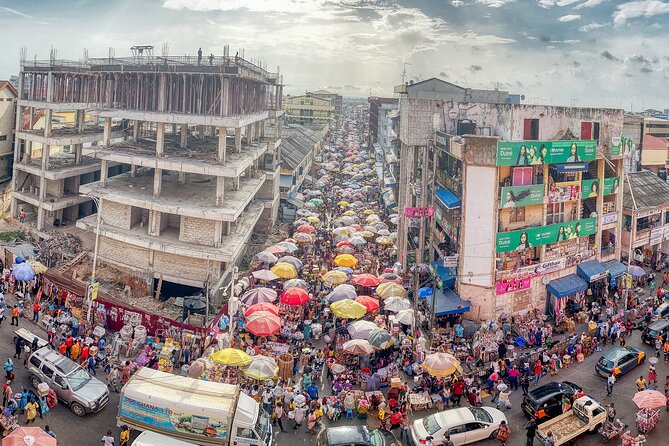
Jamestown is covered on foot as part of the route, with James Fort and Usher Fort among the main colonial-era landmarks. The supplied schedule does not give this stop a separate duration, so its length will depend on traffic, walking conditions, and the rest of the day.
This is an important change of rhythm. After museums and open monuments, you walk through one of Accra’s oldest neighborhoods and see the city at street level. The forts point to the colonial period and the port history of the area.
Wear comfortable shoes. The tour includes several stops, and Jamestown is specifically a walking visit. Ask the guide to explain which buildings and fort structures you are seeing, since the experience depends heavily on local context.
The practical caution is that this is not presented as a long architectural tour. You should expect a guided introduction rather than an exhaustive visit inside every historic structure.
W.E.B. DuBois Center and the wider Pan-African connection
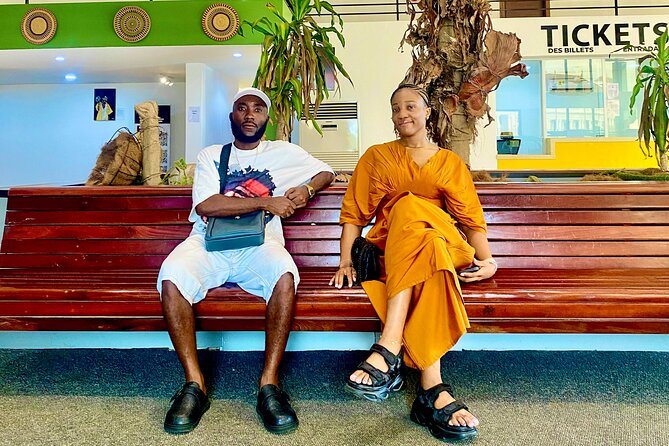
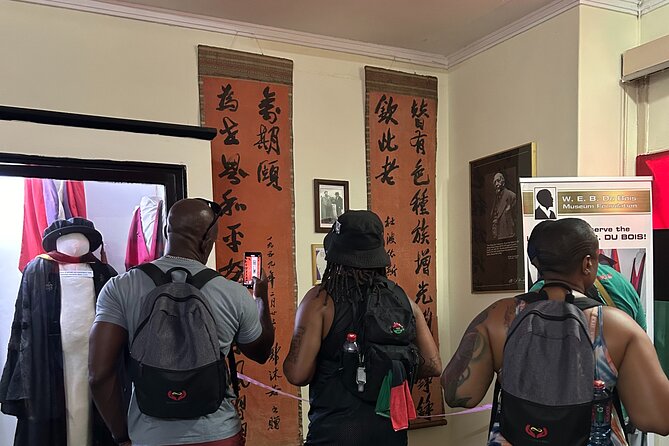
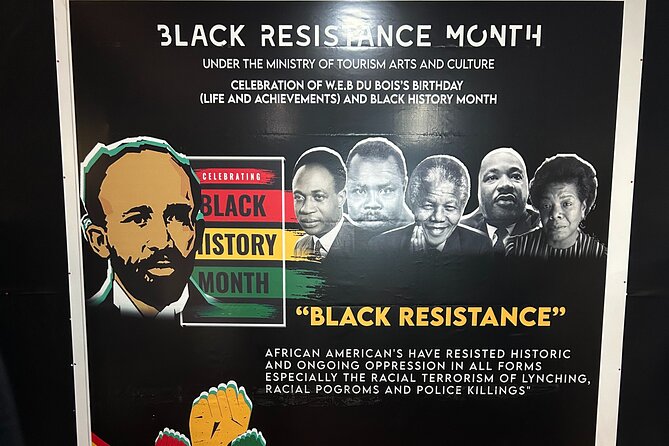
The W.E.B. DuBois Center is scheduled for about 45 minutes, with admission included. It is the home, library, and final resting place of William Edward Burghardt DuBois, the American-born campaigner for social justice.
The center includes a museum, his personal library, and an open-air theatre used for lectures, seminars, workshops, and cultural events. The stop adds an international dimension to the day. Accra’s story is not only local or colonial. It also connects to Pan-African thought and the movement for social justice.
You will probably get the most from this visit if you ask questions about DuBois’s life and his connection to Ghana. Forty-five minutes gives you enough time for an introduction to the museum and grounds, though not a full reading of the library.
Kwame Nkrumah Memorial Park
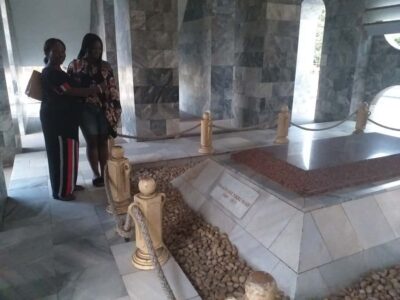
Kwame Nkrumah Memorial Park receives about 45 minutes, and admission is included. It sits in downtown Accra and includes the mausoleum and memorial grounds dedicated to Ghana’s first Pan-African prime minister and president.
Nkrumah was born on September 21, 1909, and died on April 27, 1972. His role in Ghana’s independence gives this stop a natural link to Black Star Square, but the memorial offers a more focused look at the man behind the national symbols.
The two sites work well together. At Independence Square, you see a public setting built to mark a nation’s freedom. At the memorial park, you focus on the leader associated with that political change. Your guide can help you connect the monuments, dates, and ideas.
Again, 45 minutes is an introduction. If political history is your main interest, you may want to spend less time shopping and ask for more explanation here.
Labadi Beach, the cool-down at the end
Labadi Pleasure Beach, also called La Pleasure Beach, is the final stop and receives about an hour. Admission is included.
This is Accra’s busiest beach and one of the city’s popular places to relax after a hot day. You can sit by the coast, have local, continental, or international food, and order drinks. The tour ends here before returning to the meeting point.
I like the placement of this stop. A beach visit in the middle of a museum-and-monument route would interrupt the day, but at the end it gives you space to slow down. It also lets you decide how active you want to be. You can simply rest after the city tour or use the hour for food and the shoreline.
The beach is a public leisure setting, not a private resort experience. Bring a sensible attitude about crowds and keep personal belongings secure. Lunch, breakfast, and dinner are not included, so plan to pay separately for anything you eat or drink.
What $100 per person buys you
At $100 per person, this tour is not the cheapest way to see Accra. Its value comes from combining transport, a private guide, several admissions, bottled water, onboard WiFi, and a route that would be difficult to organize efficiently in a single half-day.
The National Museum, W.E.B. DuBois Center, Kwame Nkrumah Memorial Park, and Labadi Beach include admission. Makola Market, Independence Square, and the Centre for National Culture do not charge admission. Meals are not included.
For one person, the private format may feel expensive unless you value personal attention and help with transport. For a couple or small group, group discounts can improve the calculation. You are also paying for local guidance across several subjects, not just a vehicle and a list of photo stops.
The strongest value comes when you use the guide well. Ask questions, request context, and explain what interests you. If you prefer a slow museum visit or extended shopping, this packed route may feel less worthwhile.
Guide style and the human side of the day
The strongest praise has focused on care, personality, logistics, and information. Clinton and Daniel have been described as personable and attentive, while Enoch and his team received praise for making the day both fun and educational.
That matches what this route needs. Accra can be confusing when you are trying to combine traffic, markets, historic sites, and a beach in one outing. A guide who watches the clock, explains local customs, and answers questions can make the difference between a useful introduction and a tiring race around town.
The company also says its guides work with your abilities and take safety seriously. Since the tour includes market walking and Jamestown streets, tell your guide about any limits at the beginning. Most people can participate, but the day does involve moving between several sites and walking at some stops.
Who should book this Accra city tour?
I would choose this tour if you have limited time in Accra and want a broad first look at the capital. It suits history fans, first-time visitors, couples, families, and anyone who prefers a private guide to a large coach group.
It also works well for people who want more than monuments. Makola Market, the craft center, drumming, Jamestown, and Labadi Beach bring in shopping, music, neighborhoods, food, and leisure.
I would hesitate if you want a slow, specialist visit to one museum or a relaxed beach day. The route covers a lot. Traffic can shorten visits, and the four to six hour estimate is not a guarantee that every stop will receive equal time.
Free cancellation is available when you cancel at least 24 hours before the start time. Changes or cancellations inside that window are not accepted for a refund.
Should you book the 6-hour private Accra tour?
Book it if you want the city’s major themes in one organized outing: archaeology, traditional arts, markets, colonial forts, independence, Pan-African thought, and the coast. The private setting, local guide, included admissions, and final beach stop give you a useful balance of structure and local contact.
Before booking, accept two realities: the day is full, and Accra traffic may change the transport plan. Ask your guide to protect the stops that matter most to you, carry water, wear comfortable shoes, and keep some money aside for food and shopping. If that sounds like your kind of first day in Accra, the $100 price can be fair value.
FAQ
How long does the Accra city tour last?
The experience lasts approximately four to six hours. Traffic and the amount of time spent at each stop can affect the final duration.
Where does the tour start?
The meeting point is Accra Mall, Plot C11, Tetteh Quarshie Interchange, Spintex Road, Accra, Ghana.
Where does the tour end?
The tour ends back at the Accra Mall meeting point.
Is this a private tour?
Yes. Only your group participates in the activity.
Is hotel pickup offered?
Pickup is listed as an available feature, but the specific meeting point provided is Accra Mall. Confirm the pickup arrangement when booking if you need another location.
What is included in the price?
The tour includes bottled water, an air-conditioned vehicle, WiFi on board, and admission to the National Museum, W.E.B. DuBois Center, Kwame Nkrumah Memorial Park, and Labadi Beach.
Are meals included?
No. Breakfast, lunch, and dinner are not included. Labadi Beach offers local, continental, and international food and drinks for separate purchase.
Can the vehicle change during the tour?
Yes. Because of heavy Accra traffic, the company may use Uber, Bolt, Yango, or a local taxi, especially for groups of fewer than three. These alternatives are air-conditioned.
Is the tour suitable for most people?
Most people can participate. The route includes a walking tour through Jamestown and time in a market, so you should tell the guide about any concerns at the start.
What is the cancellation policy?
You can cancel for a full refund if you do so at least 24 hours before the experience starts. Cancellations or changes made less than 24 hours before the start time are not accepted for a refund.
Most recently reviewed around Accra
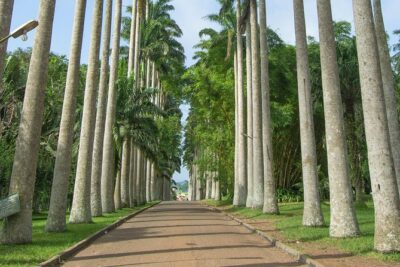
- Visit Aburi Garden, Tetteh Quarshie Cocoa Farm & Waterfall★ 4.0 · 4 reviews
- Private 9-Day Tour in Ghana★ 5.0 · 2 reviews
- Wli Waterfalls, Mount Afadjato & Tafi Atome Monkey Sanctuary★ 5.0 · 2 reviews
- Cape Coast and Elmina castle Day Trip★ 5.0 · 2 reviews
- Culinary for Social Change-Cooking Class★ 5.0 · 2 reviews
- Time with Nature★ 5.0 · 2 reviews
- Private Slave Castles and Dungeons Tour in Cape Coast, Ghana★ 5.0 · 3 reviews
- Experience Accra★ 5.0 · 2 reviews
City Tours, compared.

Escape Accra City to Aburi Gardens and Tetteh Quarshie Cocoa Farms
Read our review →
Browse the lists this tour appears in