
Reviewed · HISTORICAL TOURS
Ghana Adventure , History , Cultural And Heritage Tour
Ghana’s past is never far away. This eight-day Ghana tour links Accra, Kumasi, Lake Bosomtwe, Cape Coast, Elmina, and Kakum National Park, giving you a broad first look at the country’s political history, Ashanti traditions, craft villages, and slave-trade sites. I like the personal airport welcome and the chance to meet guide Edmund, who helped one couple with arrival, departure, and visa-related steps. I also like the mix of major sights and working communities, from Kente looms to fishing boats.
The main thing I would check before paying is the timing and price detail. The package is described as an eight-day tour, yet the booking information also lists a duration of about one to two hours. The stated price is $500 per person, while the package description refers to accommodation, meals, transport, and a guide, but the clearly listed inclusions name bottled water, an air-conditioned vehicle, and entrance fees. Get the full day-by-day schedule and inclusions in writing.
In This Review
- Key points to know before booking
- What this Ghana tour is really offering
- Arrival in Accra and a proper welcome
- Accra: Pan-African ideas and national independence
- James Town, lighthouses, and Afro-Brazilian connections
- Kumasi and the living work of Kente
- Ntonso Adinkra and a keepsake you can make
- Manhyia Palace and the Ashanti royal story
- The Okomfo Anokye Sword Site and brass casting
- Lake Bosomtwe and a change of pace
- Assin Manso and the painful road to the coast
- Cape Coast market, boats, and everyday life
- Elmina Castle and the Door of No Return
- Kakum National Park and the canopy walkway
- Is $500 per person good value?
- Who should book this experience?
- FAQ
- How long is the Ghana tour?
- Where does the tour start?
- Where does the tour end?
- What time does the tour start?
- Is airport pickup offered?
- Which cities and regions does the tour visit?
- Is accommodation included?
- Are meals included?
- Is transportation provided?
- Are entrance fees included?
- Can I cancel for a full refund?
- Should you book the Ghana Adventure tour?
Key points to know before booking
- A full Ghana journey, not a short Accra outing: The route covers Accra, Kumasi, Lake Bosomtwe, Assin Manso, Cape Coast, Elmina, and Kakum.
- Edmund receives you at the airport: The guide is described as assisting with arrival, departure, and visa-process questions.
- Ashanti culture is central: You visit Kente and Adinkra craft villages, Manhyia Palace Museum, the Okomfo Anokye Sword Site, and a brass-casting community.
- The slave-trade sites are serious and emotional: Assin Manso and Elmina Castle require time for reflection, not just quick photographs.
- Hands-on craft stops add value: You may create an Adinkra sash and shop for handmade Kente, Adinkra cloth, brass goods, beads, and jewelry.
- The $500 price needs careful checking: Confirm exactly what accommodation, meals, transport, guiding, and entrance fees cover.
What this Ghana tour is really offering
This experience is best understood as a broad cultural circuit through southern and central Ghana. It is not simply a city tour with a few monuments added on. You move from Accra’s independence story to the Ashanti royal tradition in Kumasi, then to coastal sites linked to forced migration and the transatlantic slave trade.
That range is the strongest reason to consider it. In one trip, you can see the enclosed flame of African liberation, stand near the Golden Stool legend, watch Kente being woven, visit a sacred lake, walk through a former slave castle, and cross Kakum’s canopy walkway.
The route also gives you contact with working communities. Adanwomase still produces Kente on traditional looms. Ntonso is known for hand-stamped Adinkra textiles. Sokoban Krofrom has generations of brass casting. Near Cape Coast, boat builders continue to make colorful fishing boats with traditional tools.
The tradeoff is pace. This is a lot of Ghana in eight days, and some visits are listed at only 20 to 45 minutes. You will gain range, but not always long, quiet time at each site. If you prefer slow travel, ask if the schedule can be adjusted.
More Accra outings people pair with this:
- The Cape Coast Day Tour
★ 5.0 · 525 reviews - Experience the Beauty, History and the Culture Of Accra in a Day
★ 5.0 · 323 reviews - The Cape Coast Tour
★ 5.0 · 177 reviews
Arrival in Accra and a proper welcome
Your trip begins at Kotoka International Airport. After immigration, baggage collection, and customs, you meet the cultural guide for the transfer to your Accra hotel. The welcome is intended to be more than a simple vehicle handoff. You receive an Akwaaba, the Ghanaian welcome, followed by a briefing about the days ahead.
That airport support matters, especially on a first visit. The available feedback gives special praise to Edmund, who handled airport arrival and departure assistance and helped with visa-process questions. I would make sure Edmund is assigned to your group if that personal support is important to you.
The first day leaves time to refresh after the flight. The listed airport and hotel segment takes about 30 minutes and has no admission charge. Since the package is described as including hotel accommodation, confirm the hotel name, room standard, check-in time, and whether the first night is included in the $500 price.
Accra: Pan-African ideas and national independence
The Accra sightseeing begins after breakfast with a drive through the city’s administrative and commercial districts. You see a mix of modern buildings and older colonial-era structures, a useful introduction to how the capital has changed over roughly 120 years.
The W.E.B. DuBois Centre is an important early stop. DuBois, a major Pan-African thinker, chose Ghana as a place to live and work. The center connects Ghana’s independence story with the wider movement for Black political and cultural self-determination.
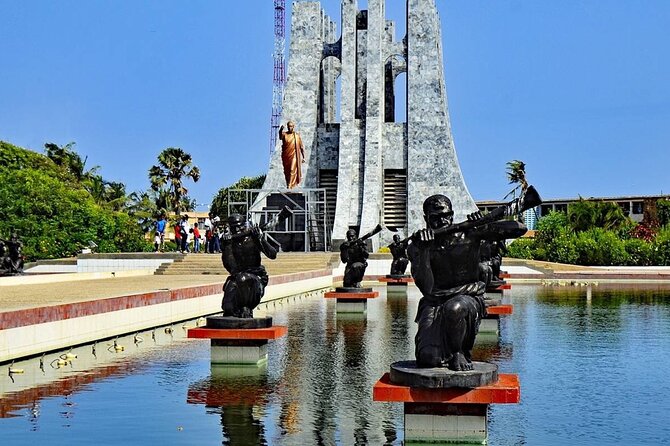
From there, the route includes Independence Square and its enclosed flame of African liberation, lit by Kwame Nkrumah in 1961. The Kwame Nkrumah Memorial Park is also part of the Accra program and serves as the final resting place of Ghana’s first president. These sites are most valuable when your guide explains the political choices behind independence, not just the dates and names.
Allow yourself time to listen. The square and memorial can look formal and monumental, but their meaning is tied to Ghana’s role in the independence movement across Africa.
James Town, lighthouses, and Afro-Brazilian connections
James Town offers a different side of Accra. This old neighborhood is associated with historic buildings, fishing activity, and lighthouses that helped guide trading ships along the Gulf of Guinea.
The first lighthouse was built by the British in 1875. That original structure was later ruined, but a larger lighthouse completed in 1921 still functions. The stop is listed at about 30 minutes, so you may get an overview rather than an extended neighborhood walk.
Brazil House adds another unusual thread. The site relates to seven Afro-Brazilian families who returned to Ghana in 1836. Names such as De Souza, Palmares, Azumah, Amorin, Da Costa, Santos, De Medeiros, and Olympio appear in this part of Accra. I like this stop because it complicates the usual story of movement across the Atlantic. People did not only leave West Africa. Some later returned and built new lives here.
The sightseeing descriptions place the Nkrumah Memorial Park and James Town in adjacent parts of the Accra program, so ask your guide for the exact order. The important point is that you receive both the national story and the neighborhood story.
Other history-led days around Accra:
- Ghana Heritage Tours – Beyond The Return
★ 5.0 · 36 reviews - 10 Days Ghana Cultural and Heritage Trip
★ 5.0 · 31 reviews - Cape Coast Historical Day Tour
★ 5.0 · 24 reviews - Full-Day Private Culture and History Tour of Accra
★ 5.0 · 23 reviews
Kumasi and the living work of Kente
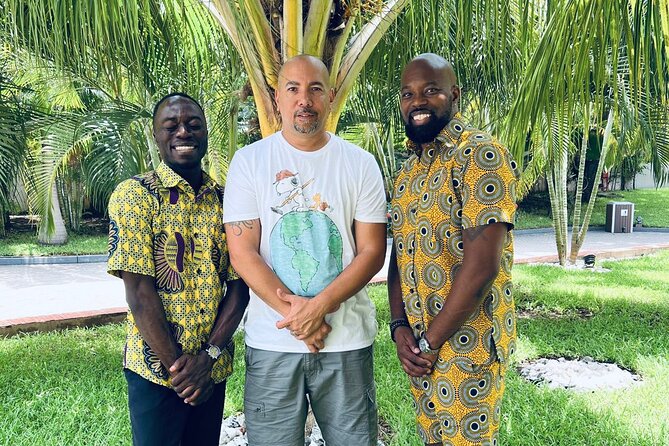
After breakfast and check-out, you travel toward Kumasi through Ghana’s forest zone. Kumasi was the seat of the Ashanti Empire and remains the center of Ashanti culture in this tour.
The first craft village is Adanwomase, near Ejisu. Here you see Kente cloth being made by hand on looms, using a tradition passed through generations. You can look at different styles and purchase cloth directly from the makers. The visit may also include a courtesy call to the paramount chief, with drumming and dancing, or a look at nearby cocoa farms.
This is one of the tour’s best opportunities to understand that Kente is not just a colorful souvenir. The weaving process, patterns, and use of the cloth connect to Ashanti identity and ceremony. Ask before photographing people or looms, and ask what a pattern means before buying it.
The stop is listed at about 35 minutes. That is enough for an introduction, but short if you hope to choose a large piece of cloth or watch every stage of production. If shopping matters to you, tell the guide early so you are not rushed.
Ntonso Adinkra and a keepsake you can make
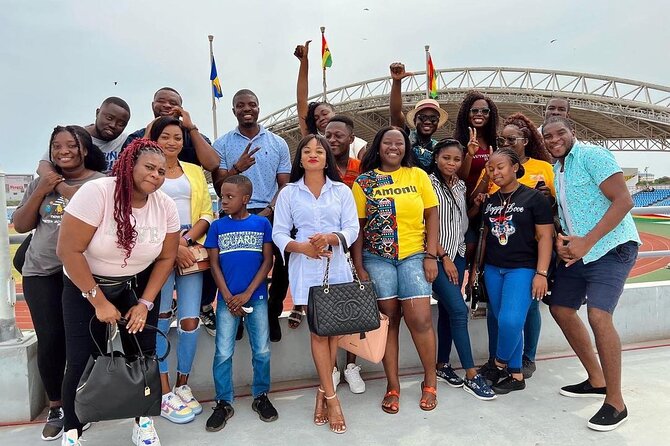
At Ntonso, artisans stamp patterns onto cotton cloth to produce Adinkra textiles. The designs are applied by hand, and the village makes black dye from tree bark.
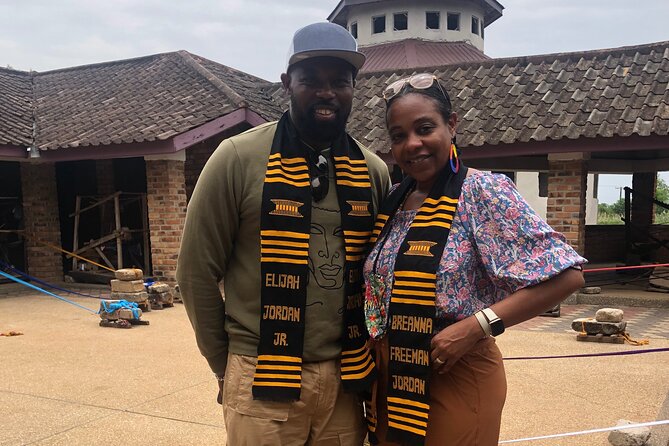
The color choices carry social meaning. Black-on-black and black-on-red Adinkra cloth is used for funerals and other solemn events. You may create your own Adinkra sash, then buy larger handmade pieces if you wish.
This stop is listed at about 45 minutes, making it one of the longer craft visits. I would choose the hands-on sash activity over hurried shopping if time is limited. You leave with a small object connected to a process you actually saw, rather than a generic gift from a shop.
The craft villages also give the trip economic value. Your purchases can support makers directly, though you should still ask about prices and quality before committing to a large textile.
Manhyia Palace and the Ashanti royal story
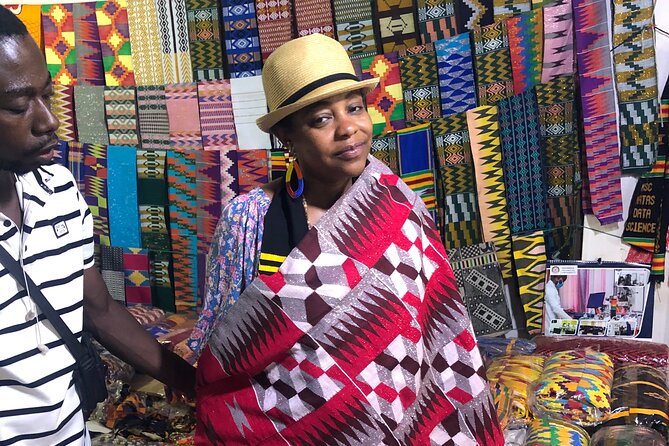
Manhyia Palace was the official residence of Ashanti kings, or Asantehene, until 1974. It is now a museum with objects connected to the Ashanti Kingdom.
The museum helps explain how a unified monarchy shaped the region. A visit here gives context for the other Kumasi stops, especially the Okomfo Anokye Sword Site and the royal traditions still associated with Ashanti identity.
The planned museum visit is about 30 minutes. That is a quick look, so ask your guide to focus on the displays most relevant to the Ashanti monarchy. The description also refers to a possible visit to the ancient Ejisu Ashanti Shrine, where people seek healing and advice connected to spiritual beliefs. Because this appears as part of a festival or evening activity, confirm if it is included on your departure date and what conduct is expected at the shrine.
The Okomfo Anokye Sword Site and brass casting
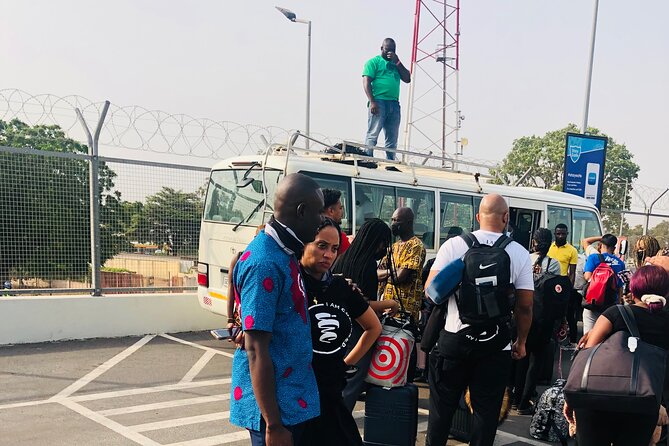
Kumasi’s colonial buildings and city monuments lead to the Okomfo Anokye Sword Site. This is tied to the legend that the Golden Stool descended from the sky and that the Ashanti kingdom would fall if the sword were removed.
You do not need to accept every legend literally to appreciate its political force. Symbols help bind a kingdom together, and this site shows how spiritual belief, royal authority, and national memory overlap.
The visit is listed at about 25 minutes. It is best treated as a focused historical stop, not a long museum visit.
The route may then continue to Sokoban Krofrom, where brass casting has been a family livelihood for generations. You may find beads, jewelry, and other brass items in a wide range of designs. This is another useful shopping opportunity because you see the making of the goods rather than only the finished products.
Lake Bosomtwe and a change of pace
Lake Bosomtwe is Ghana’s largest natural freshwater body and is regarded as sacred by the Ashanti. The setting offers a pause after the city and palace visits.
You can walk along the beach, meet local fishing families, and learn about fishing, swimming, and water sports around the lake. The scheduled visit is about 45 minutes, so expect a short encounter with the area rather than a full resort stay.
I like the balance here. The tour is heavy on monuments and difficult history, so time beside the water can reset your attention. Still, do not expect an extended boat excursion or swim unless your guide confirms one. Those activities are mentioned as available around the lake, not clearly included in the package.
Assin Manso and the painful road to the coast
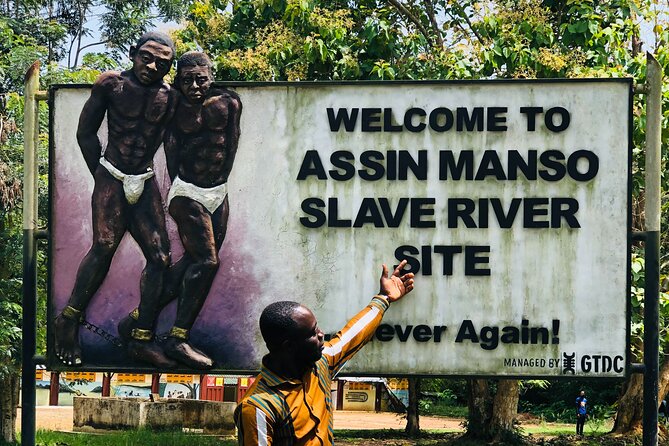
The visit to Assin Manso Ancestral Slave River Park is one of the most important stops. Two former slaves from the United States and Jamaica were re-interred here in August 1998 during Ghana’s first Emancipation Day celebration.
The Slave River, known as Donkor Nsuo, is associated with the washing of captured Africans before they were taken to the castles and held for shipment to the Americas and the Caribbean. The site asks you to confront the human process behind the trade. It is not simply a scenic stop on the way to the coast.
The visit is listed at about 50 minutes. Listen closely to the guide and leave room for silence. You may find this part emotionally difficult, particularly when followed by the castle visits. That is a reason to choose this tour, but also a reason not to pack the day with extra activities.
Cape Coast market, boats, and everyday life
Kotokuraba Market is described as the economic center of Cape Coast. It has served as a major trading point for decades, including during the pre-independence period.
The market visit is brief, about 20 minutes, but it brings you back to ordinary life after the memorial sites. You can see fishing boats bringing in the daily catch and meet people working around the harbor. Nearby boat builders still construct colorful fishing boats with traditional tools and methods.
This is a useful counterweight to castle tourism. Cape Coast is not only a place of historical monuments. It is also a working city with trade, fishing, craft, and daily routines. If you want to buy food or goods, ask the guide what is appropriate and how much time you have.
Elmina Castle and the Door of No Return
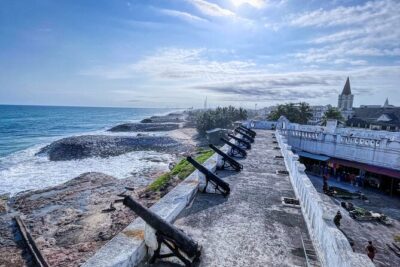
The castle visit is the emotional center of the coastal section. Elmina Castle is a UNESCO World Heritage site connected to the imprisonment and shipment of enslaved Africans.
Inside, you see the dungeons and the Door of No Return, along with a museum explaining the castle and the history of Cape Coast. The schedule allows about 45 minutes, which may feel short for such a serious place. Ask whether the visit includes a guided castle tour and how much time is reserved for the museum.
You can also buy books about Ghana’s forts, castles, customs, and cultural history. I would make room for one if you want to continue learning after the tour.
The castle should not be reduced to a dramatic photograph. The value is in understanding the systems that operated there, the conditions in the dungeons, and the long effects of the slave trade. A good guide can connect the building to Assin Manso and to the wider Atlantic story.
Kakum National Park and the canopy walkway
The final major stop is Kakum National Park, Ghana’s best-known park in this program. You take a short forest-floor walk, where the guide explains how ancestors lived in the forest and points out birds, butterflies, and possible wildlife.
The park is home to more than 40 species of mammals, including monkeys and the reclusive forest elephant. Seeing those animals is not guaranteed, so treat the forest walk as a chance to learn and observe rather than a wildlife drive.
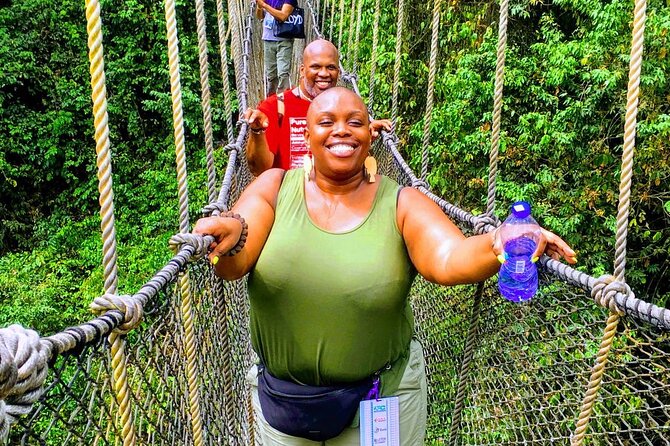
The canopy walkway is the headline attraction. It is about 1,000 feet long, with bridges and viewing platforms more than 150 feet above the ground. The entire stop is listed at about one hour. If heights trouble you, ask for details before arriving. If you enjoy elevated views, this will likely be one of the trip’s most memorable physical experiences.
The route also includes a brief stop at Abandze, described as the ancestral home of American jazz musician Louis Armstrong. Confirm how long you will have there, since it appears to be a short visit connected to the Kakum day.
Is $500 per person good value?
At $500 per person, the tour could offer strong value if the advertised package truly includes eight days of accommodation, meals, private or organized transport, a guide, and entrance fees. Those are costly parts of a Ghana trip, especially when the route covers several regions.
The problem is that the explicit inclusion list is narrower: bottled water, an air-conditioned vehicle, and all fees and taxes. Alcoholic drinks are excluded. Because the package description also promises accommodation, meals, transport, and an expert guide, you should request a written breakdown before booking.
Ask these practical questions:
- How many hotel nights are included?
- Are daily breakfasts, lunches, and dinners included?
- Is the vehicle private or shared?
- Is the guide with you for all eight days?
- Are the Kakum canopy fee, castle entry, museums, and shrine visit covered?
- What does the one to two hour duration refer to?
- Is airport pickup and return included?
The maximum group size is 50 people. That is large for a cultural tour, particularly at a craft village or historic site. If you want more questions, less waiting, and a quieter visit, ask whether a smaller group or private vehicle is available.
Who should book this experience?
I would recommend it to a first-time visitor who wants a structured introduction to Ghana and does not want to arrange long-distance transport, hotels, and site visits alone. It suits people interested in Pan-African history, Ashanti culture, textiles, colonial-era sites, and the history of the slave trade.
It also works well for anyone who values airport support. Edmund’s assistance with arrival, departure, and visa-process concerns is one of the clearest strengths described for the company.
I would be more cautious if your priority is slow travel, long museum visits, or independent exploration. The schedule covers a lot of ground, some stops are short, and a group of up to 50 can limit flexibility. The emotional weight of Assin Manso and Elmina Castle also means you should be ready for serious subject matter.
The company offers free cancellation with a full refund if you cancel at least 24 hours before the start time. Changes or cancellations within 24 hours are not refunded, so keep that deadline in mind.
FAQ
How long is the Ghana tour?
The experience is described as an eight-day package covering Accra and several other destinations in Ghana. The booking information also lists an approximate duration of one to two hours, so you should confirm what that shorter duration refers to before booking.
Where does the tour start?
The tour starts in Accra, with airport pickup at Kotoka International Airport after immigration, baggage collection, and customs.
Where does the tour end?
The activity ends back at the meeting point in Accra.
What time does the tour start?
The listed start time is 8:00 am.
Is airport pickup offered?
Yes. Pickup is offered, and the program begins with a transfer from Kotoka International Airport to your hotel in Accra.
Which cities and regions does the tour visit?
The route includes Accra, Kumasi, Lake Bosomtwe, Assin Manso, Cape Coast, Elmina, and Kakum National Park.
Is accommodation included?
The package description states that hotel accommodation is included. Since the detailed inclusion list does not specify the hotel or number of nights, confirm those details before booking.
Are meals included?
The package description refers to meals as part of the tour. The detailed inclusions do not specify which meals are covered, so ask for a meal schedule.
Is transportation provided?
Yes. An air-conditioned vehicle is included, and the program describes transfers between the listed destinations.
Are entrance fees included?
All fees and taxes are listed as included. This should cover the stated attraction admissions, but confirm whether every museum, castle, shrine, and Kakum activity is included.
Can I cancel for a full refund?
Yes, if you cancel at least 24 hours before the experience start time. Cancellations made within 24 hours are not refunded, and changes within that period are not accepted.
Should you book the Ghana Adventure tour?
Book it if you want a guided first visit that connects Ghana’s independence story, Ashanti culture, craft traditions, coastal slave-trade sites, and forest scenery in one organized trip. The welcome at the airport, the support associated with guide Edmund, and the direct contact with Kente, Adinkra, brass, fishing, and royal traditions add real value.
Before you commit, settle the confusing duration and confirm every promised inclusion. If the $500 price covers the full eight days as described, it is worth serious consideration. If it covers only a short activity, the price and expectations change completely. Ask those questions first, then choose this tour for breadth, structure, and historical depth rather than a leisurely pace.
Most recently reviewed around Accra
- Visit Aburi Garden, Tetteh Quarshie Cocoa Farm & Waterfall★ 4.0 · 4 reviews
- Private 9-Day Tour in Ghana★ 5.0 · 2 reviews
- Wli Waterfalls, Mount Afadjato & Tafi Atome Monkey Sanctuary★ 5.0 · 2 reviews
- Cape Coast and Elmina castle Day Trip★ 5.0 · 2 reviews
- Culinary for Social Change-Cooking Class★ 5.0 · 2 reviews
- Time with Nature★ 5.0 · 2 reviews
- Private Slave Castles and Dungeons Tour in Cape Coast, Ghana★ 5.0 · 3 reviews
- Experience Accra★ 5.0 · 2 reviews
Historical Tours, compared.
Experience the Beauty, History and the Culture Of Accra in a Day
Read our review →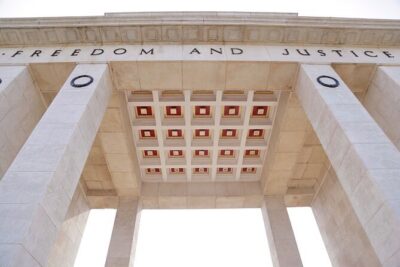

Full-Day Private Culture and History Tour of Accra
Read our review →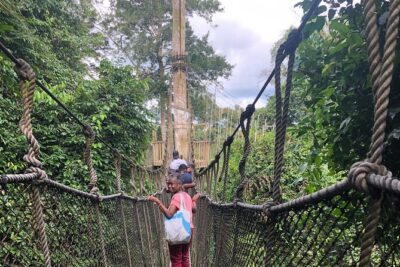
Ghana Private Historic Tour through Castles and Nature
Read our review →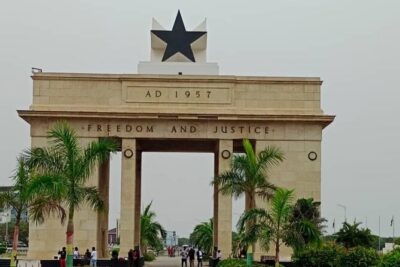
7-Day Private Cultural and Heritage Tour in Ghana
Read our review →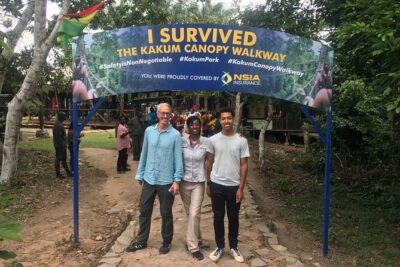
The Historic Cape Coast and Elmina Tour (The Land of History).
Read our review →Browse the lists this tour appears in