
Reviewed · HISTORICAL TOURS
Full-Day Tour to Ashanti Region, Kumasi and Ghanaian History
Kumasi rewards an early start. This private day trip from Accra gives you a rare look at Ashanti culture through royal museums, sacred sites, Kente weaving, craft workshops, and one of West Africa’s largest markets. I like the way the tour connects famous landmarks with living traditions, especially the hands-on cloth and Adinkra activities. I also like having a private vehicle and guide for a demanding route.
The main drawback is the distance. Kumasi is about six hours from Accra by road, so the advertised 12 to 16 hours includes a great deal of driving. Lake Bosomtwe may also compete with the Kumasi stops for time, and optional boat rides or horse riding cost extra. This is a rewarding trip, but it suits an early riser who wants a full cultural day rather than a relaxed outing.
In This Review
- Key points before you book
- Why the Accra to Kumasi road trip matters
- Manhyia Palace Museum and the Asante royal story
- The Okomfo Anokye Sword Site
- Two hours inside Kejetia Market
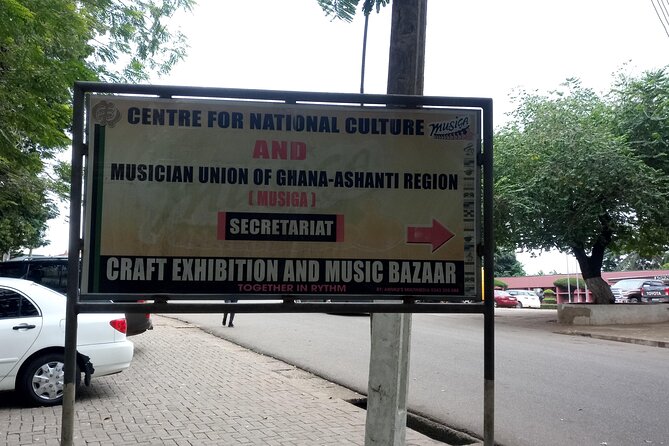
- Craft Center and the Center for National Culture
- Bonwire and the making of Kente cloth
- Ntonso and the Adinkra tradition
- Lake Bosomtwe as a final change of pace
- Guides, driving, and the private format
- Who should book this Kumasi tour?
- Should you book it?
- FAQ
- Where does the tour start?
- Where does the tour end?
- How long does the tour last?
- How much does the tour cost?
- Is this a private tour?
- Is hotel pickup offered?
- Which Kente village does the tour visit?
- Are boat trips and horse rides at Lake Bosomtwe included?
- Can I cancel for a full refund?
Key points before you book
- A very early departure makes the day work: A 5:30 a.m. start has been used successfully, with pickup arrangements confirmed the day before.
- Kumasi’s Ashanti story comes alive at Manhyia Palace: The museum links royal history, colonial-era change, and Asante culture.
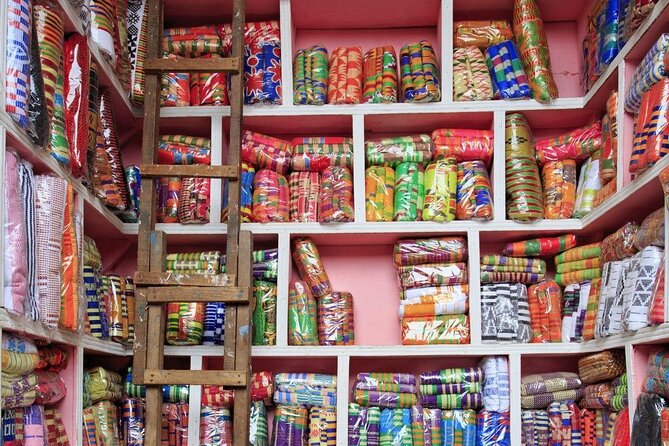
- Bonwire offers more than souvenir shopping: You can watch Kente cloth being made and learn how the process starts from raw materials.
- Kejetia Market needs a guide: It is huge, divided into sections, and easier to handle when you know what you want to find.
- The tour includes practical shopping help: Guides can assist with bargaining at the craft center and market.
- Lake Bosomtwe adds a slower final stop: You can relax by the water, with boat trips and horse rides available for an extra fee.
Why the Accra to Kumasi road trip matters
This is not a quick city tour. Accra and Kumasi are separated by a long road journey, and the drive takes roughly six hours each way according to the tour information. That means your pickup time matters. A 5:30 a.m. departure gives you the best chance of reaching Kumasi with enough daylight for the main sights.
The private format helps. Only your group takes part, so the driver and guide can check on your pace, interests, and comfort. One past group included older people, and the schedule was adjusted with mobility in mind. That is useful here because the day contains market walking, museum visits, village stops, and time in the vehicle.
The tour is listed at $280 per person. That is not a small sum, but the value depends heavily on your group size. You are paying for a private experience, transport from Accra and back, guiding, several included admissions, and local help in places where prices and directions may be confusing.
For a solo visitor, the price feels harder to justify. For a small private group, it can make more sense because the cost covers the vehicle and guide rather than a standard shared excursion. Group discounts are available, so ask about them before paying.
More of Kumasi and the Ashanti country:
- Kumasi Heritage Tours And Naming Ceremony In A Day
★ 5.0 · 11 reviews - 4 Days Trip in Accra, Cape Coast,Kumasi culture & heritage tours
★ 5.0 · 5 reviews - Experience the Culture of Ashanti Kingdom in 5days
★ 5.0 · 3 reviews
Manhyia Palace Museum and the Asante royal story
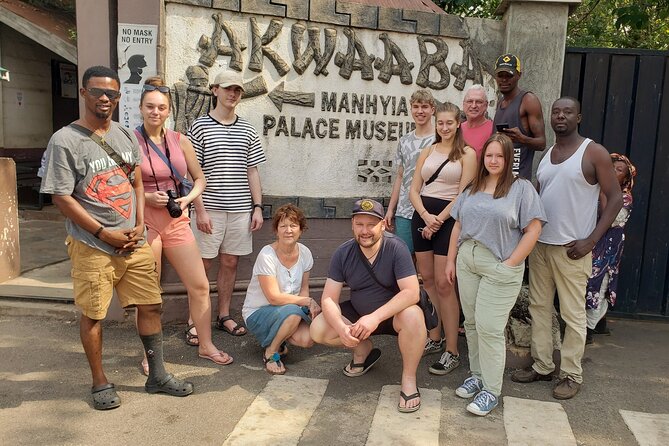
Manhyia Palace Museum is a sensible first major stop in Kumasi. Allow about an hour. The museum presents Asante culture and Ghanaian history through historical objects and video material, including the period before British colonization.
I like beginning here because it gives you a framework for the rest of the day. Afterward, the sword site, market, crafts, and palace area are not just disconnected photo stops. You have some idea of the Asante people, their leadership, and the role Kumasi played as the center of the kingdom.
The museum is not described as a huge institution, so do not expect to spend half a day inside. Its value is in orientation. Pay attention to the explanations, then use the rest of the tour to see how older traditions continue in cloth, symbols, metalwork, and daily commerce.
Manhyia Palace itself is the home of the Ashanti King and the seat of the Asante people. The museum visit offers the public-facing part of that royal setting. Your guide can help explain the connection between the palace, the kingdom, and modern Kumasi.
The Okomfo Anokye Sword Site
The Okomfo Anokye Sword Site is one of the most unusual stops. An old sword is fixed into rock on the grounds of Komfo Anokye Teaching Hospital, and the site is tied to the founding of the Ashanti Kingdom.
The sword is said to have been in place for more than 300 years. The importance here is not the size of the site. It is the story attached to it and the way one physical object represents a turning point in Asante history.
Plan on about an hour. This is a guided stop, and the explanation matters more than simply looking at the sword. Ask your guide to connect Okomfo Anokye’s story with Manhyia Palace and the wider development of the Ashanti Kingdom.
Because the site is on hospital grounds, it does not have the atmosphere of an isolated monument. That is part of the modern reality of Kumasi. The landmark has been protected for future generations, but it sits within an active urban setting.
Two hours inside Kejetia Market
Kejetia Market is the loudest and most demanding part of the day. The refurbished market is described as the largest single market in West Africa, with sections for food, fabrics, footwear, gold and jewelry, pottery, household goods, handcrafts, oils, soaps, and spices.
You should arrive with a clear idea of what interests you. The market is divided into sections, and finding one particular area may take help. Tell your guide if you want beads, fabrics, food products, or household items. That simple step can save time and prevent a two-hour visit from turning into a tiring search.
I like that the guide is expected to help with bargaining. This is practical, not decorative. If you plan to buy souvenirs, ask about prices, quality, and the difference between a handmade item and a mass-produced one. A guide who knows the market can also help you avoid paying more simply because you are unfamiliar with local pricing.
Allow two hours, but understand that the market can feel intense. It is a working market first, not a display designed only for sightseeing. Stay aware of your belongings and agree on a meeting point with your guide if your group separates.
More Accra outings people pair with this:
- The Cape Coast Day Tour
★ 5.0 · 525 reviews - Experience the Beauty, History and the Culture Of Accra in a Day
★ 5.0 · 323 reviews - The Cape Coast Tour
★ 5.0 · 177 reviews - From Accra: Cape Coast, Elmina Castle & Kakum Park Day Tour
★ 4.6 · 144 reviews
Craft Center and the Center for National Culture
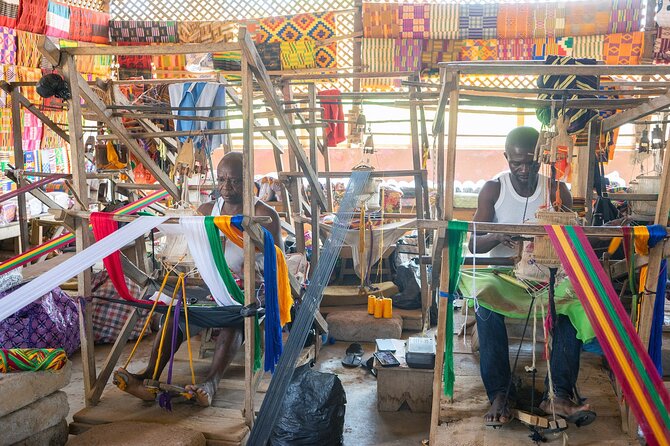
The Kumasi Center for National Culture offers a calmer look at local making. Artisans produce hand-crafted goods, and you may see traditional methods used for Kente cloth, brass items, and pottery.
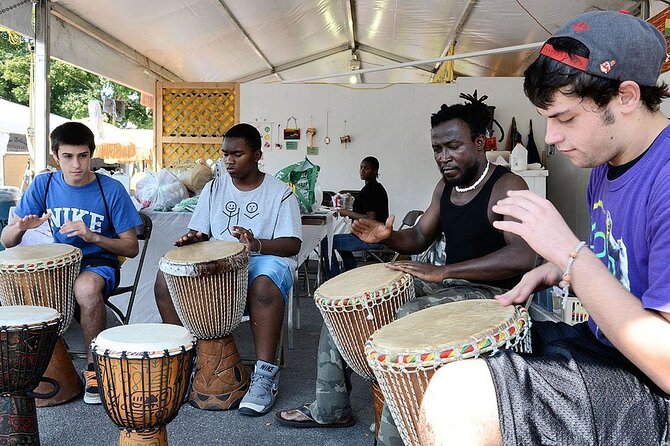
You might also have the chance to learn how to play local drums. The craft center has a gift shop where you can buy handmade items, and the guide can help negotiate. That makes this stop useful if you want something connected to the region rather than a generic souvenir.
The shopping portion deserves a little care. Handmade goods vary in quality, and the lowest price is not always the best value for the person who made the item. Your guide’s role is helpful here, especially if you want to compare pieces or understand what you are buying.
This stop lasts about an hour. It is not a replacement for the village visits, but it gives you another look at Ghanaian craft traditions in a central Kumasi setting.
Bonwire and the making of Kente cloth
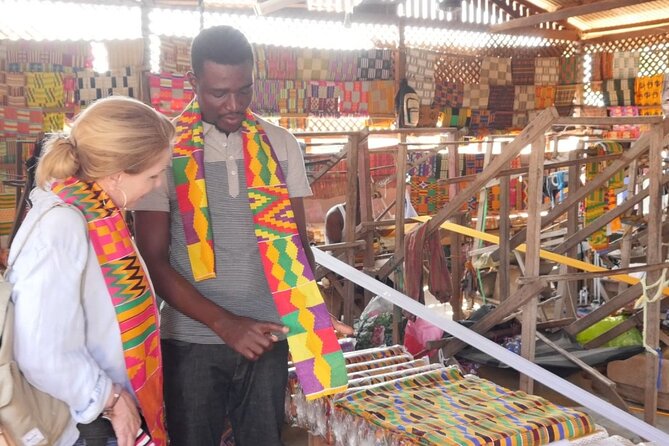
Bonwire is associated with famous Akan Kente cloth, and the visit lasts about two hours. You can watch local weavers explain the process from start to finish, then decide if you want to buy a piece.
The local story says that two friends learned weaving by watching a spider build its web. It is a memorable explanation for a craft based on careful pattern, repeated movement, and patience. The point of the stop is not just to see finished cloth. You get a chance to understand how the work begins and how much labor goes into a completed design.
The tour may visit Bonwire or Adanwomase for Kente weaving. That flexibility is worth noting when you book. Ask which village is planned for your date, since the two locations may offer different demonstrations or shopping arrangements.
This is one of the strongest parts of the day for anyone interested in textiles. You can take photos if permission is given, ask about patterns, and look closely at the weaving process. If you buy cloth, take your time. A guide can help you understand the price and negotiate.
The drawback is that a village workshop can include a strong sales element. That does not make the visit unhelpful, but you should decide in advance how much you want to spend. You are free to appreciate the work without buying a large piece.
Ntonso and the Adinkra tradition
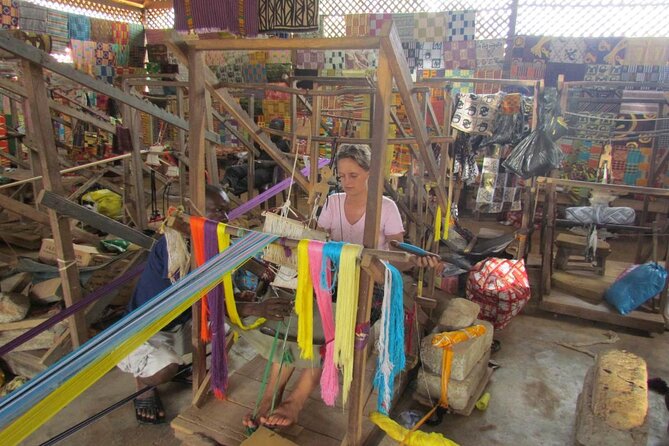
The tour description also includes Ntonso Adinkra Village, described as the only place in Ghana where traditional Adinkra is made locally from scratch. This stop is especially appealing because it can be hands-on.
You may make Adinkra banners of your choice and clothing for yourself. Adinkra symbols carry messages, so the activity is more meaningful than simply stamping a pattern onto fabric. Ask your guide to explain the symbol you choose and how it relates to Akan ideas.
There is a practical scheduling question here. The detailed stop list names Bonwire for Kente, while the main description also names Ntonso for Adinkra. Since the day already includes many stops and a long return drive, confirm before booking whether both villages are included on your date or if the route uses one craft village in place of another.
If both are included, this could be the most creative part of the trip. You leave with a better sense of how local cloth traditions work and may have a handmade item connected to your own choices.
Lake Bosomtwe as a final change of pace

Lake Bosomtwe is Ghana’s only natural lake, and the stop is planned for about two hours. After museums, markets, weaving, and long drives, the water offers a quieter break.
The lake is surrounded by rainforest, and the tour notes views of the area from the mountains along the drive. You may also choose a boat cruise for an extra fee. A horse ranch nearby offers rides through the forest and to seven villages, also for an extra fee.
Swimming and relaxation are possible, so bring a swimsuit if you want to use the beach area. The lake is not simply a scenic photo stop. It gives you a chance to slow down before the return journey to Accra.
Still, this is a packed itinerary. If you want full time at Kejetia, Bonwire, Ntonso, Manhyia Palace, and the other Kumasi sights, Lake Bosomtwe may need to be shortened or omitted. Ask the operator how the day will be arranged. Optional activities also increase the cost beyond the $280 tour price.
Guides, driving, and the private format
The strongest practical feature is the local support. Daniel has been singled out for clear explanations, attention to group needs, and skill at bargaining. Kwame is involved in arranging the tours, while James has handled early-morning driving and checked pickup details in advance. Joseph has also worked as part of the driving and guiding team.
You may not receive the same person on every departure, so treat these names as examples rather than a guarantee. What you should expect is a guide who helps connect the historical stops, manages timing, and assists with shopping.
The private format is especially useful in Kejetia Market and the craft villages. You can spend longer on textiles, skip a purchase stop, or slow down for someone who needs a break. Service animals are allowed, and the tour is near public transport, though the listed meeting point is Kotoka Airport in Accra.
Most people can take part, but the long road journey remains the key physical demand. The remaining hours are travel time between stops. This is not a compact Kumasi walking tour.
Who should book this Kumasi tour?
I would recommend it to you if you have limited time in Ghana and want Kumasi included without arranging transport, local guides, and village visits separately. It is also a good match if you care about Ashanti history, royal traditions, textiles, symbols, craft shopping, and direct contact with working artisans.
Families and private groups may appreciate the flexible format. It can also suit older members of a group if you discuss mobility needs before departure. The tour team has shown that planning ahead can make the day easier for people who cannot move quickly.
I would hesitate if you dislike early starts, long drives, or tightly packed days. I would also hesitate if Lake Bosomtwe is your main goal, since the city and craft stops take up much of the schedule.
Free cancellation is available if you cancel at least 24 hours before the start time. Changes or cancellations inside that window are not accepted for a refund.
Should you book it?
Book this tour if you want a broad introduction to Kumasi and the Ashanti region in one demanding day. The best parts are the royal context at Manhyia Palace, the Okomfo Anokye Sword Site, the scale of Kejetia Market, and the chance to see Kente or Adinkra made by hand.
Before paying, confirm three details: the exact pickup time, which craft village you will visit, and whether Lake Bosomtwe is included alongside Ntonso and Bonwire. If the operator can fit your priorities into the route, the private vehicle and local guidance make the price easier to defend. If you have more time in Ghana, staying overnight in Kumasi would be less tiring, but this day trip is a useful way to reach the city from Accra.
FAQ
Where does the tour start?
The tour starts at Kotoka Airport in Accra, Ghana.
Where does the tour end?
The activity ends back at the meeting point in Accra.
How long does the tour last?
The full experience lasts approximately 12 to 16 hours. The remaining hours include travel between the places you visit.
How much does the tour cost?
The listed price is $280 per person. Group discounts are offered.
Is this a private tour?
Yes. Only your group participates in the activity.
Is hotel pickup offered?
Pickup is offered, and the listed starting point is Kotoka Airport in Accra.
Which Kente village does the tour visit?
The tour may visit Bonwire or Adanwomase Kente Village. Confirm the specific village when booking.
Are boat trips and horse rides at Lake Bosomtwe included?
No. Boat cruises and horse rides are available for an extra fee.
Can I cancel for a full refund?
Yes, if you cancel at least 24 hours before the experience start time. Cancellations or changes made less than 24 hours before the start time are not accepted for a refund.
More Historical Tours in Accra
- Ghana Heritage Tours – Beyond The Return
★ 5.0 · 36 reviews - 10 Days Ghana Cultural and Heritage Trip
★ 5.0 · 31 reviews - Cape Coast Historical Day Tour
★ 5.0 · 24 reviews - Full-Day Private Culture and History Tour of Accra
★ 5.0 · 23 reviews
Most recently reviewed around Accra
- Visit Aburi Garden, Tetteh Quarshie Cocoa Farm & Waterfall★ 4.0 · 4 reviews
- Private 9-Day Tour in Ghana★ 5.0 · 2 reviews
- Wli Waterfalls, Mount Afadjato & Tafi Atome Monkey Sanctuary★ 5.0 · 2 reviews
- Cape Coast and Elmina castle Day Trip★ 5.0 · 2 reviews
- Culinary for Social Change-Cooking Class★ 5.0 · 2 reviews
- Time with Nature★ 5.0 · 2 reviews
- Private Slave Castles and Dungeons Tour in Cape Coast, Ghana★ 5.0 · 3 reviews
- Experience Accra★ 5.0 · 2 reviews
Historical Tours, compared.
Experience the Beauty, History and the Culture Of Accra in a Day
Read our review →

Full-Day Private Culture and History Tour of Accra
Read our review →
Ghana Private Historic Tour through Castles and Nature
Read our review →
7-Day Private Cultural and Heritage Tour in Ghana
Read our review →
The Historic Cape Coast and Elmina Tour (The Land of History).
Read our review →Browse the lists this tour appears in