
Reviewed · NAMING CEREMONY EXPERIENCES
Kumasi Heritage Tours And Naming Ceremony In A Day
Culture comes alive at the loom. This 10-hour private outing links Adanwomase and Ntonso, giving you a close look at Ashanti customs through kente weaving, cocoa farming, Adinkra printing, and a traditional Ghanaian naming ceremony. You are not simply looking at finished crafts. You get to make cloth yourself and receive a local name based on the day you were born.
I like the private format, since your guide can give attention to your group rather than follow a large crowd. I also like the mix of hands-on work and community visits, especially making your own Adinkra cloth and seeing the dedication of the young weavers at the kente center.
The main consideration is the long day. The tour begins at 7:00 a.m. and lasts about 10 hours, with lunch not included. Also, the tour information gives Accra as the location while the activities are described around Kumasi, so confirm your exact pickup point before booking.
In This Review
- Five things that make this day different
- A long day built around Ashanti culture
- Adanwomase, where kente begins at the loom
- A working cocoa farm adds a different side of Ghana
- Your naming ceremony makes the visit personal
- Ntonso and the meaning behind Adinkra symbols
- What the private vehicle changes
- Is $256.42 a fair price?
- Who should book this experience?
- Practical booking advice for your 7:00 a.m. start
- Should you book Kumasi Heritage Tours and Naming Ceremony in a Day?
- FAQ
- How long does the tour last?
- What time does the tour start?
- Is transportation included?
- Is this a private tour?
- What is included in the price?
- Is lunch included?
- What happens at Adanwomase?
- What happens at Ntonso?
- How is the local name chosen?
- Can I cancel for a full refund?
Five things that make this day different
- You receive a Ghanaian name: The naming ceremony assigns a local name according to your day of birth, giving the visit a personal connection to Ghanaian culture.
- You work with traditional textiles: At Adanwomase, you learn how kente is woven, then at Ntonso you make your own Adinkra cloth.
- You visit a working cocoa farm: This adds an agricultural side to the day instead of keeping the experience inside craft workshops.
- Your group travels privately: Round-trip transportation and a private guide make the day easier to manage and more flexible than a shared excursion.
- The strongest human contact is at the weaving center: The workers, including young boys described as highly dedicated, are a major part of the experience’s appeal.
A long day built around Ashanti culture
This tour is best understood as a cultural circuit rather than a standard sightseeing drive. You move between two craft communities, add a cocoa farm visit, and take part in a ceremony that involves you directly.
That variety matters. A trip focused only on kente might leave you with a better idea of cloth production but little sense of the wider community. Here, the farm, weaving center, Adinkra workshop, and naming ceremony create several different ways to connect with local life.
The private setup is especially useful for this kind of day. You can ask questions as they arise, spend more time on a process that catches your attention, and avoid the fixed rhythm of a large group. The tour includes an air-conditioned vehicle and round-trip transportation, which is important for a full-day outing beginning at 7:00 a.m.
The schedule is still demanding. Ten hours is a serious block of time, so I would choose this experience when you want one full cultural day rather than a relaxed half-day activity. Lunch is not included, and the details provided do not say where or when you will stop to eat. Plan to ask about this before departure.
More naming ceremony experiences in Accra:
- The Ancestral Naming Ceremony and Home Coming Experience
★ 5.0 · 30 reviews - Naming Ceremony and Heritage Homecoming Experience for Diasporas
★ 4.5 · 15 reviews - Traditional Naming Ceremony and Boat Cruise Experience
★ 5.0 · 15 reviews
Adanwomase, where kente begins at the loom
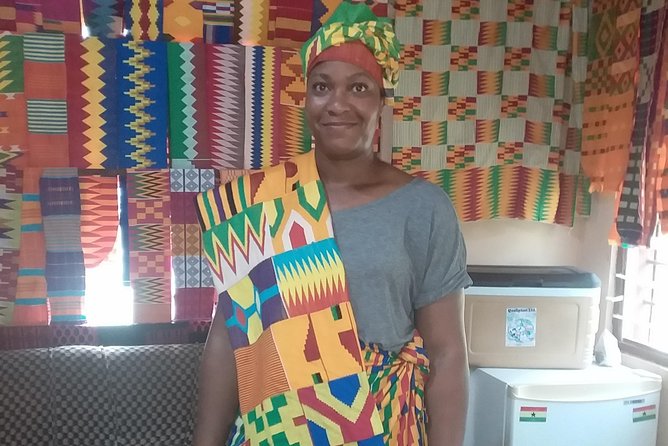
The first stop is Adanwomase, a village known for kente weaving. Kente is one of Ghana’s best-known traditional textiles, but its real appeal is easier to understand when you see the work behind the finished cloth.
At the community weaving center, you learn how the cloth is made. That phrase covers a great deal of patient manual work. The appeal is not just the final pattern hanging on a wall. It is the process, the concentration, and the repeated movements required to build the cloth thread by thread.
The visit has a strong human element. The most praised part of the experience is the people, described as caring, thoughtful, and welcoming. The dedication of the young boys working at the looms is also singled out as impressive. That detail gives you a useful expectation: the weaving center is a working place, not just a display built for photographs.
I like that distinction. You are seeing a craft being practiced by people who are focused on the job. You may find the pace slower than a typical attraction, but that is part of the point. A weaving demonstration rewards attention. Watch the hands, the loom, and the gradual formation of the pattern rather than expecting a quick show.
Because the tour is private, you should have a better chance to ask how the cloth is produced and what you are seeing. The supplied information does not specify how long each demonstration lasts, so your exact time at the center may depend on the day and your guide.
A working cocoa farm adds a different side of Ghana
The Adanwomase stop also includes a visit to a local cocoa farm. This changes the feel of the morning. After textile production, you see another part of local work tied to the land.
The farm visit is valuable because cocoa is not an abstract product here. You are shown a working agricultural setting rather than only hearing about chocolate in a shop or museum. The tour does not provide details about the farm’s size, the crops you will see, or whether there is a tasting, so keep your expectations focused on a visit and explanation rather than a full agricultural workshop.
I would ask your guide questions as you go. The private format gives you room to connect the farm visit with everyday work in the area, instead of rushing through it as a quick photo stop. This is also one reason the tour suits curious adults and families who want more than monuments and viewpoints.
The farm visit may appeal less to anyone seeking a tightly packed list of major sights. It is a working stop, and working places often ask you to observe patiently. That slower rhythm balances the more active cloth-making portions of the day.
Your naming ceremony makes the visit personal
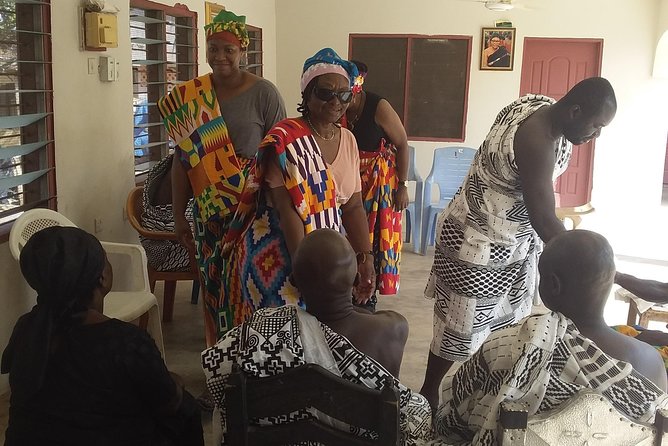
The traditional Ghanaian naming ceremony is the most distinctive feature of the tour. You are given a local name based on the day of your birth, turning the visit from observation into participation.
The supplied details do not explain the full ceremony, the specific names used, or the role of each participant. That is a good reason to let your guide explain the meaning at the time rather than arriving with fixed expectations. The important point is that this is arranged as part of your visit, not something you merely watch from the side.
I like the ceremony because it gives you a personal memory tied to the culture you are learning about. You leave with more than photographs of cloth and symbols. You also have a name connected to the day you were born and to the local tradition presented during the ceremony.
Still, approach it with respect. A naming ceremony should not be treated as a costume moment or a quick photo opportunity. Listen to the explanation, follow the instructions of the people conducting it, and ask your guide if there are customs you should observe.
The ceremony is also one reason this tour may suit people marking a birthday, family occasion, or special trip. The information does not promise a particular style of ceremony or a certificate, so do not assume either unless the operator confirms it.
More of Kumasi and the Ashanti country:
- Full-Day Tour to Ashanti Region, Kumasi and Ghanaian History
★ 5.0 · 8 reviews - 4 Days Trip in Accra, Cape Coast,Kumasi culture & heritage tours
★ 5.0 · 5 reviews - Experience the Culture of Ashanti Kingdom in 5days
★ 5.0 · 3 reviews - 3 Days Accra Historical ,Cape Coast Black Roots ,& Kumasi Culture
★ 5.0 · 2 reviews
Ntonso and the meaning behind Adinkra symbols
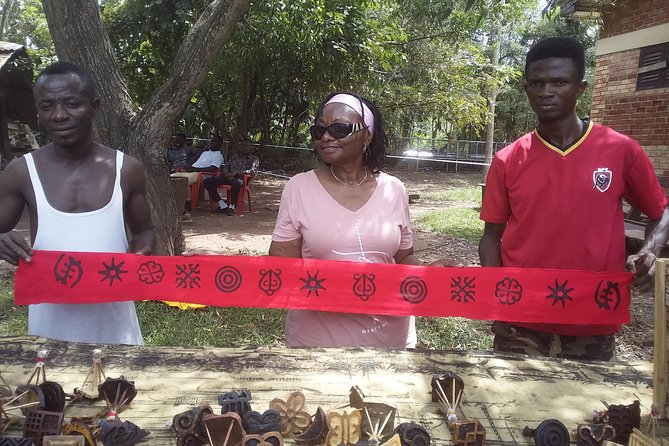
The second major stop is Ntonso, an Adinkra cloth-making village. Here, the focus shifts from woven strips of kente to stamped symbols and the ideas they represent.
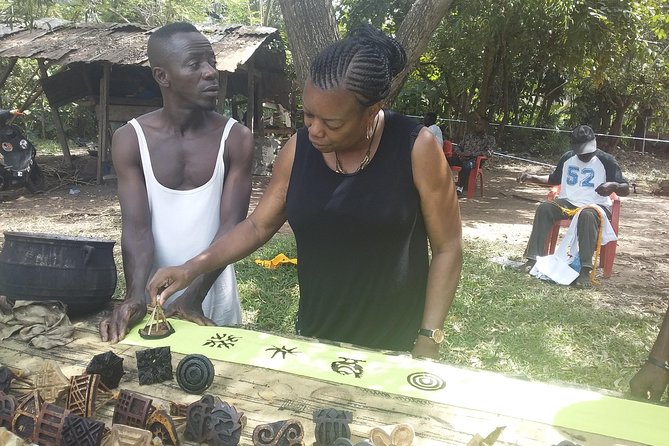
You learn about the history of Adinkra, described as an ancient traditional symbol system, and then make your own Adinkra cloth. This is the most clearly hands-on part of the textile program. Instead of only watching an artisan work, you take part in producing a piece.
That practical step makes the symbols easier to remember. You can ask what the marks mean, see how they are placed on cloth, and leave with a direct connection to the process. The details do not say what size cloth you make, which symbols are available, or whether you keep the finished piece, so ask those questions before you begin.
Ntonso also provides a useful contrast with Adanwomase. Kente shows you the construction of cloth through weaving. Adinkra shows you how cloth can carry messages through symbols and repeated designs. Visiting both communities in one day gives you a clearer picture of the range within Ghanaian textile traditions.
The workshop may be a highlight for children and creative adults, though anyone with limited patience for making things by hand may prefer to watch. The private group arrangement should help if you need extra explanation, but the tour does not promise a specific amount of individual instruction.
What the private vehicle changes
Round-trip transport is included in an air-conditioned vehicle, and that is more than a minor comfort on a 10-hour day. You do not need to work out local connections between the two craft communities or manage the return journey after an early start.
A private tour also means only your group participates. That can make the day feel more personal and gives you a better chance to ask questions. It may also help families or small groups keep a comfortable pace, although the exact flexibility of the schedule is not stated.
There is one important point to clear up. The experience information identifies the location as Accra, while the tour title and listed stops point to Kumasi and nearby Ashanti communities. Since the meeting time is 7:00 a.m., confirm the exact starting place, pickup area, and expected driving arrangements before paying. Do not assume that a pickup in Accra and a start in Kumasi mean the same thing.
The vehicle is air-conditioned, but no other transport details are provided. You are not given a vehicle model, seating capacity, or exact transfer times. If those details matter to you, ask the operator, Bigbentours1gh, directly.
Is $256.42 a fair price?
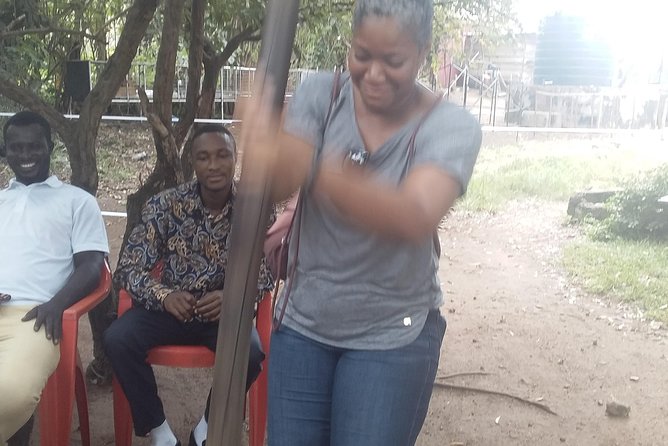
At $256.42 per person, this is not a bargain-priced local outing. The value depends heavily on how many people are in your private group and how much you care about personal instruction.
The price includes the air-conditioned vehicle, all fees and taxes, the private guide, and the listed cultural activities. It does not include lunch. You are paying for a full day of transport, several organized visits, and access to activities that would be difficult to arrange smoothly on your own.
For a solo visitor or a couple, the cost may feel high. For a small private group, the per-person value can look better because the vehicle and guide costs are shared. The strongest value comes from the variety: kente weaving, cocoa farming, a naming ceremony, Adinkra education, and making your own cloth in one outing.
I would not choose this tour simply because it is the cheapest way to see Kumasi. I would choose it because it combines access and participation. If you want a short city tour or only a market visit, this is probably too long and too expensive. If you want a structured cultural day with transport handled, the price is easier to justify.
Who should book this experience?
I would recommend it to you if you want direct contact with traditional crafts and prefer doing something rather than only taking photos. The Adinkra activity and naming ceremony give the day a personal quality that a standard sightseeing route may not provide.
It also suits people who value a private guide. You can ask questions about the symbols, cloth, farm, and ceremony without competing with a large group. Families, small groups, and culturally curious visitors are likely to get the most from the format.
You may want to reconsider if you dislike early starts, long outings, or unhurried craft demonstrations. The day lasts about 10 hours, lunch is extra, and some workshop details are not specified in advance.
The experience has a perfect 5 rating from 11 submitted reviews and a 100 percent recommendation rate. That is a small sample, so I would treat it as encouraging rather than final proof. The praise is specific, though: the warmth of the people and the care shown by the young weavers are central strengths.
Practical booking advice for your 7:00 a.m. start
Confirm the meeting point carefully, especially because Accra and Kumasi both appear in the supplied tour details. Ask how pickup works, where the day begins, and how long the transport portions are expected to take.
Bring a plan for lunch, since it is not included. The tour details do not specify a restaurant, meal stop, or food options, so ask before departure and carry anything you know you will need.
Wear clothing suited to a full day of movement and workshop activity. The information does not give a dress code, but you should be ready to observe and make cloth rather than treat the day as a vehicle-only excursion.
Cancellation is flexible if your plans change early. You can receive a full refund when you cancel at least 24 hours before the local start time. Cancellations or changes made within 24 hours are not accepted for a refund.
Should you book Kumasi Heritage Tours and Naming Ceremony in a Day?
Book it if you want a private, activity-filled introduction to Ashanti culture, especially if kente, Adinkra, farming, and local ceremonies interest you. The strongest reasons are the human contact at Adanwomase, the chance to make your own Adinkra cloth, and the personal naming ceremony.
Think twice if you want a cheap or relaxed outing, or if the Accra and Kumasi meeting details remain unclear. Confirm the pickup location, lunch plan, and workshop details first. Once those practical points are settled, this is a thoughtful choice for a full day built around real community crafts rather than a quick set of photo stops.
FAQ
How long does the tour last?
The tour lasts approximately 10 hours.
What time does the tour start?
The stated start time is 7:00 a.m.
Is transportation included?
Yes. Round-trip transportation in an air-conditioned vehicle is included.
Is this a private tour?
Yes. Only your group participates in the private activity.
What is included in the price?
The price includes the air-conditioned vehicle, all fees and taxes, the private tour arrangement, and the listed activities.
Is lunch included?
No. Lunch is not included.
What happens at Adanwomase?
You visit the kente weaving village, see a local cocoa farm, learn how kente cloth is made at the community weaving center, and take part in a traditional naming ceremony.
What happens at Ntonso?
You learn about Adinkra symbols and make your own Adinkra cloth.
How is the local name chosen?
You are given a Ghanaian name based on the day of your birth.
Can I cancel for a full refund?
Yes, if you cancel at least 24 hours before the experience begins. Cancellations or changes made less than 24 hours before the start time are not refunded or accepted.
More Historical Tours in Accra
- Experience the Beauty, History and the Culture Of Accra in a Day
★ 5.0 · 323 reviews - Ghana Heritage Tours – Beyond The Return
★ 5.0 · 36 reviews - 10 Days Ghana Cultural and Heritage Trip
★ 5.0 · 31 reviews - Cape Coast Historical Day Tour
★ 5.0 · 24 reviews
Most recently reviewed around Accra
- Visit Aburi Garden, Tetteh Quarshie Cocoa Farm & Waterfall★ 4.0 · 4 reviews
- Private 9-Day Tour in Ghana★ 5.0 · 2 reviews
- Wli Waterfalls, Mount Afadjato & Tafi Atome Monkey Sanctuary★ 5.0 · 2 reviews
- Cape Coast and Elmina castle Day Trip★ 5.0 · 2 reviews
- Culinary for Social Change-Cooking Class★ 5.0 · 2 reviews
- Time with Nature★ 5.0 · 2 reviews
- Private Slave Castles and Dungeons Tour in Cape Coast, Ghana★ 5.0 · 3 reviews
- Experience Accra★ 5.0 · 2 reviews
Naming Ceremony Experiences, compared.
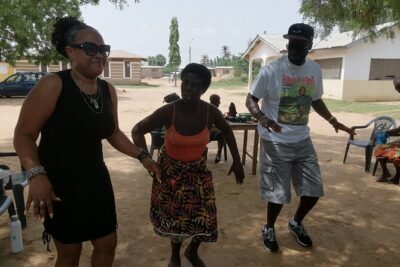
The Ancestral Naming Ceremony and Home Coming Experience
Read our review →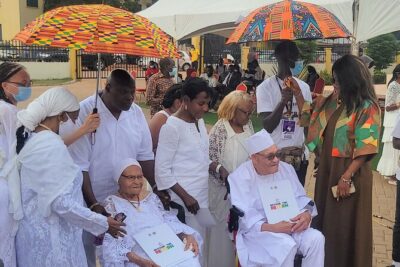
Naming Ceremony and Heritage Homecoming Experience for Diasporas
Read our review →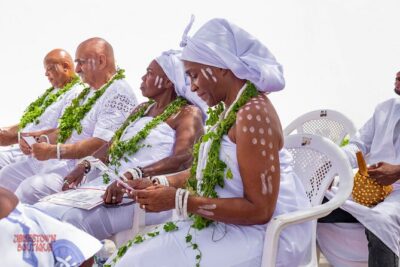
Traditional Naming Ceremony and Boat Cruise Experience
Read our review →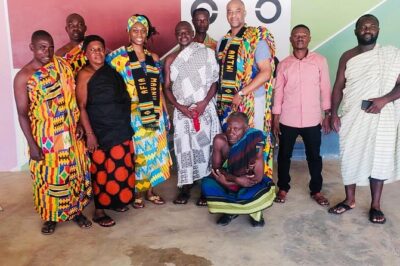
Traditional naming ceremony For African Diasporas in Kumasi
Read our review →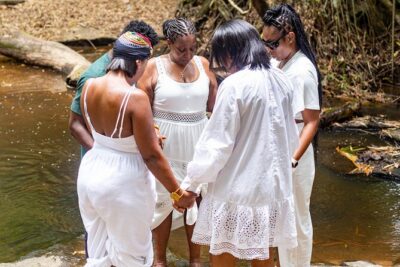
Naming Ceremony, Assin Manso Slave River and Cape Coast Castle
Read our review →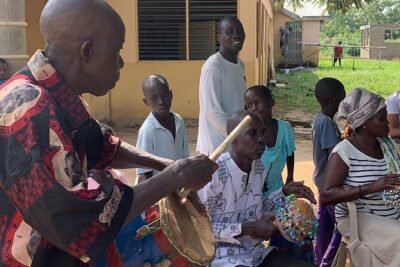
Cultural Village Tour: Traditional Naming Ceremony
Read our review →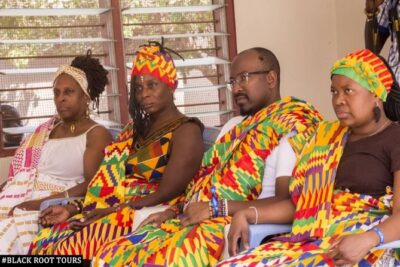
Traditional Naming Ceremony For African Americans In Kumasi
Read our review →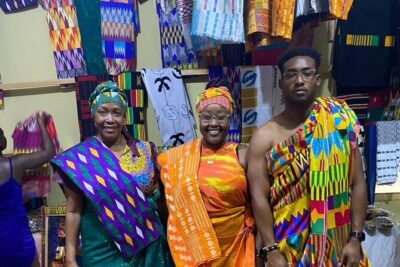
Full Day Tour with Traditional Naming Ceremony in Kumasi
Read our review →Browse the lists this tour appears in