
Reviewed · GHANA
Experience Nzulezu! A village on stilts!
Water changes the way a village lives. This half-day outing from Takoradi takes you across Tadane Lake to Nzulezu, a community built on stilts, where homes, a school, church, and community spaces line a narrow pier. I like the combination of a countryside road trip and a boat journey, since the route is part of the experience rather than mere transport. I also like that the day includes local snacks, fresh coconuts, drinks, village food, and time to learn about canoe fishing.
The main consideration is the price. At $140 per person, this is not a cheap short excursion, especially since all fees and taxes are not included. You are paying for private transport, a boat ride, local access, food, and a rare cultural experience, but you should be comfortable with a rustic setting and a fairly long day on the road and water.
In This Review
- Key details before you book
- From Takoradi to Tadane Lake
- Crossing Tadane Lake by boat
- Walking along Nzulezu’s narrow pier
- Canoe fishing and time on the water
- Fresh food, coconuts, and local snacks
- Souvenirs and the local economy
- Is $140 a fair price?
- Who should book this experience?
- Practical booking advice
- Should you book Nzulezu?
- FAQ
- Where does the Nzulezu tour start?
- Where does the tour end?
- How long does the experience last?
- How much does the tour cost?
- Is transportation included?
- Is the boat ride included?
- Are meals and drinks included?
- Is this a private tour?
- What happens if the weather is poor?
Key details before you book
- Nzulezu is built entirely on stilts: Homes sit on one side of the pier, while the school, church, and community centers occupy the other side.
- The journey begins in Takoradi: Pickup is available, and the trip uses an air-conditioned SUV with an experienced driver.
- Tadane Lake is the gateway: You leave the road behind for a boat ride into the village.
- The visit includes local activities: You can go boat riding, learn about canoe fishing, and see how daily life works in a water village.
- Food and drinks are included: Expect bottled water, fresh coconuts, plantain chips, local pastries, and meals made with freshly grown crops.
- This is a private experience: Only your group participates, which gives the outing a more personal feel.
From Takoradi to Tadane Lake
The tour begins at the lorry park in Sekondi-Takoradi, with accommodation pickup available. The road trip takes you out from the city toward Tadane Lake, and the drive is handled in an air-conditioned vehicle. That matters in Ghana’s heat, particularly when you are combining several hours of driving with time outside on the lake.
I like this first section because it gives you a gradual change of pace. City traffic and ordinary errands give way to countryside scenes before the main attraction appears. The drive is not just a transfer to the pier. It helps set up the contrast between urban life and Nzulezu’s quiet water-based routine.
The vehicle is described as an SUV, and the driver is experienced. The tour is private, so you are not being folded into a large group with strangers. That can make the day easier to manage, especially if you want to pause for a view, ask questions, or keep the outing relaxed.
The overall experience lasts about six hours, though the village visit itself is listed at roughly two hours. You should allow the full half-day rather than thinking of Nzulezu as a quick stop. Road conditions, time at the lake, boat transfers, and the pace of your private group all shape the day.
What readers look at next on a Ghana trip:
- The Cape Coast Day Tour
★ 5.0 · 525 reviews - Experience the Beauty, History and the Culture Of Accra in a Day
★ 5.0 · 323 reviews - The Cape Coast Tour
★ 5.0 · 177 reviews
Crossing Tadane Lake by boat
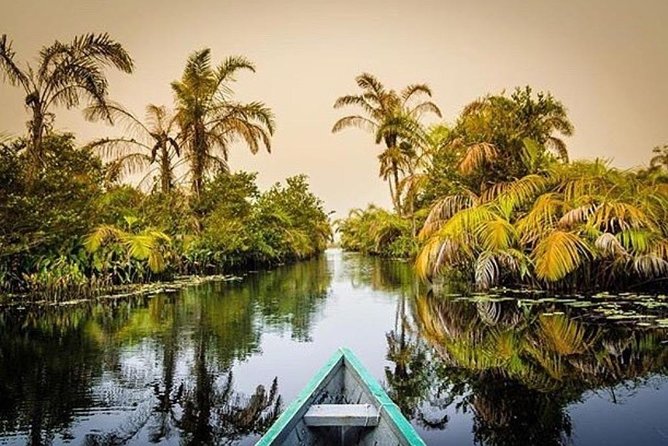
At Tadane Lake, the trip changes completely. You leave the SUV and board a boat for the ride to Nzulezu. The water crossing is the key transition, because the village cannot be understood in the same way from a road. You approach it as part of the lake, with the stilts and pier defining how people move from one place to another.
The boat ride also gives you a calm stretch away from city noise. The experience is designed around a serene setting, and the water journey provides that pause. I would treat this as a time to watch the village come into view rather than rush toward the next activity.
Boat transport does mean weather matters. The experience requires good weather, and poor conditions can lead to a new date or a full refund. That is sensible for an outing built around open water, but it is worth remembering when arranging the rest of your Ghana itinerary.
You should also expect a simple, local setting rather than a polished attraction. The appeal is the community itself, not elaborate visitor facilities. If you want a quiet ride and a close look at a different way of organizing daily life, the crossing is a strong part of the day. If you prefer a tightly scheduled sightseeing tour with plenty of built infrastructure, this may feel basic.
Walking along Nzulezu’s narrow pier
Nzulezu is built solely on stilts, with the structures separated by a pier. The arrangement is especially interesting because the two sides serve different purposes. One side is residential, while the opposite side includes the school, church, and community centers.
That layout tells you a great deal without needing a long lecture. The pier is not just a walkway for visitors. It is the spine of the village, connecting homes and shared spaces above the water. You get a direct look at how the community is arranged and how ordinary functions take place in a setting where the lake is part of daily life.
The tour includes a walk through the village and an introduction to the rustic lives of the people who live there. A visit on Sunday may mean the elementary school is closed, as happened during one visit, but you can still see the school building and the rest of the community spaces. The school is an important detail because it shows that Nzulezu is a living village with its own local institutions, not a display created only for sightseeing.
The human side of the visit is likely to be the most memorable part. Children, women, and older men may be present around the village, while some younger able-bodied people may be away in the city for work or to sell goods. That observation gives you a more realistic picture than a simple claim that everyone lives exactly the same life on the lake.
You should approach the village with respect. This is someone’s home, school, church, and community center. Keep your attention on the setting and the explanations provided, and remember that the people you see are not performers put there for an audience.
Canoe fishing and time on the water
The experience includes more than a ride to Nzulezu. You can go boat riding again and learn about canoe fishing. The available information does not promise a full fishing lesson or a guaranteed catch, so you should think of this as an introduction to the method and the role of canoes in local life.
That is still valuable. A canoe is not simply a sightseeing prop here. It connects the village with the lake and helps explain how people move, work, and obtain food in a water-based community. Seeing this beside the stilt homes makes the whole visit easier to understand.
The pace is meant to be calm. You are not being rushed through a series of unrelated stops. The water activities, village walk, and food all support the same theme: how a community functions away from city life.
For this reason, the tour suits you if you enjoy observation and conversation more than high-energy entertainment. It is a poor match if you want a packed list of dramatic activities. The lake ride and fishing demonstration are meaningful because of their setting and context, not because they are extreme.
Further from Ghana, and a different kind of day:
- From Accra: Cape Coast, Elmina Castle & Kakum Park Day Tour
★ 4.6 · 144 reviews - Accra Detailed City Tour
★ 4.5 · 118 reviews - Accra Guided City Tour Experience
★ 4.7 · 88 reviews - Accra Guided City Tour Experience
★ 5.0 · 76 reviews
Fresh food, coconuts, and local snacks
Food is included, which improves the value of the day. You receive bottled water, fresh coconuts, local pastries, and plantain chips in sweet and savory varieties. The tour also includes meals made with crops described as freshly grown and organic.
I like this part because food gives you another way to connect with the place. A meal made from local crops tells you more about the area than a standard packaged lunch would. Fresh coconuts are also a welcome treat after time in the heat, while the plantain chips and pastries make practical snacks during the outing.
The phrase organic crops should not be treated as a detailed menu or a formal dietary promise. Specific dishes are not provided, and all food details may depend on what is available that day. If you have dietary restrictions, ask Carmen’s Travel and Tours before booking rather than assuming every need can be met.
Drinks are included, including bottled water, but bring sensible expectations. This is village-based food in a rustic environment, not a restaurant meal with a broad menu. That is part of the appeal for some people and a possible limitation for others.
Souvenirs and the local economy
You have the opportunity to buy souvenirs and keepsakes from the village before returning to Takoradi. This is a small feature, but it gives you a chance to take home something connected to the visit rather than an ordinary airport item.
I would treat purchases as a way to support local sellers, not as a required part of the tour. The available details do not specify what items are sold or how much they cost, so bring the right attitude and ask about prices before buying.
The souvenir stop also fits the wider purpose of the outing. You are not only looking at the village from a boat. You are meeting a place where people live and work, and buying locally can make your visit feel less one-sided.
Is $140 a fair price?
At $140 per person, the price is high for a six-hour outing in Ghana. Still, the cost covers several elements that would be difficult to arrange independently: pickup availability, private SUV transport from Takoradi, an experienced driver, the lake boat ride, a village tour, water activities, snacks, bottled water, and meals.
The private format is important. Your group participates alone, rather than joining a larger shared excursion. If you are traveling with family or friends, that privacy may make the cost easier to justify. You get a more flexible setting and avoid the impersonal feel of a crowded group.
The value also depends on what you want from a tour. If you are looking for a rare cultural experience and a visit to a village built on stilts, Nzulezu offers something very different from a standard city tour. If you mainly want transport and a quick photo stop, the price will feel harder to defend.
All fees and taxes are not included, so ask for the final cost before confirming. That is the one financial detail I would clarify directly. The tour does include free cancellation up to 24 hours before the start time, with no refund for cancellations or changes made inside that window.
Who should book this experience?
I would recommend this tour to you if you want to see a living community in an unusual setting and are happy with a slow, simple day. It suits people who enjoy local food, boat rides, countryside travel, and cultural encounters that do not come with polished staging.
Families may appreciate the boat ride and the unusual village layout, though the tour data does not provide specific child facilities or age guidance. Most people can participate, but you should be ready for time in a boat, a walk along the pier, and a rustic village environment.
The private format also makes it a good choice for couples, small groups, and visitors who want to ask questions at their own pace. Solo visitors can participate too, but the per-person price may feel less attractive without companions sharing the private arrangement.
I would think twice if you need a detailed menu, guaranteed fishing activity, extensive facilities, or a fully predictable schedule. The experience is weather-dependent, and the village is a real community rather than a purpose-built attraction.
Practical booking advice
Book ahead if your schedule is fixed. This experience is commonly reserved about 38 days before the date, which suggests that advance planning is wise, especially if you have only a short stay in Takoradi.
Confirm your pickup details and ask for the final price, since all fees and taxes are not included. Also clarify the meal arrangement if you have food allergies or dietary restrictions.
The activity ends back at the meeting point in Sekondi-Takoradi. Pickup is offered, but the stated start point is the lorry park at W7MP+RG3, so make sure you know whether your accommodation pickup has been confirmed.
Bad weather can cancel the outing. In that case, you are offered another date or a full refund. If the minimum number of participants is not met, you are offered a different date or experience, or a full refund.
Should you book Nzulezu?
Book it if you want a thoughtful, unusual day built around water, village life, and local food. The strongest feature is not one single activity. It is the way the road trip, lake crossing, stilt village, school, church, canoe fishing, and meal fit together.
At $140, this is best viewed as a private cultural excursion rather than a bargain day trip. I would choose it for the chance to see Nzulezu as a functioning community and to slow down beside Tadane Lake. I would skip it only if your budget is tight or you want a more polished attraction with a fixed menu and a packed schedule.
FAQ
Where does the Nzulezu tour start?
The stated meeting point is the lorry park at W7MP+RG3 in Sekondi-Takoradi, Ghana. Accommodation pickup is also available.
Where does the tour end?
The activity ends back at the meeting point in Sekondi-Takoradi.
How long does the experience last?
The full experience lasts approximately six hours. The village stop is listed at about two hours.
How much does the tour cost?
The price is $140 per person. All fees and taxes are not included.
Is transportation included?
Yes. Transportation is provided in an air-conditioned vehicle, described as an SUV, with an experienced driver.
Is the boat ride included?
Yes. The tour includes a boat ride across Tadane Lake to Nzulezu and additional boat riding during the village experience.
Are meals and drinks included?
Yes. Included refreshments include fresh coconuts, local pastries, sweet and savory plantain chips, and bottled water. Meals made with freshly grown crops are also included.
Is this a private tour?
Yes. Only your group participates in the activity.
What happens if the weather is poor?
If poor weather causes cancellation, you are offered a different date or a full refund. Free cancellation is also available if you cancel at least 24 hours before the experience begins.
Most recently reviewed around Ghana
- Visit Aburi Garden, Tetteh Quarshie Cocoa Farm & Waterfall★ 4.0 · 4 reviews
- Full Day Tour with Traditional Naming Ceremony in Kumasi★ 5.0 · 4 reviews
- 3 Days Elephants Safari at Mole Park with Round – trip flights★ 5.0 · 3 reviews
- Kumasi City Tour★ 4.5 · 3 reviews
- Kejetia Market Tour and Traditional Food Cooking Class.★ 5.0 · 2 reviews
- Kumasi Culture and Heritage Tours★ 4.5 · 3 reviews
- Discover kumasi Tours★ 5.0 · 3 reviews
- Private Half-Day City Tour of Kumasi with Lunch★ 5.0 · 2 reviews