
Reviewed · HISTORICAL TOURS
Kumasi Culture and Heritage Tours
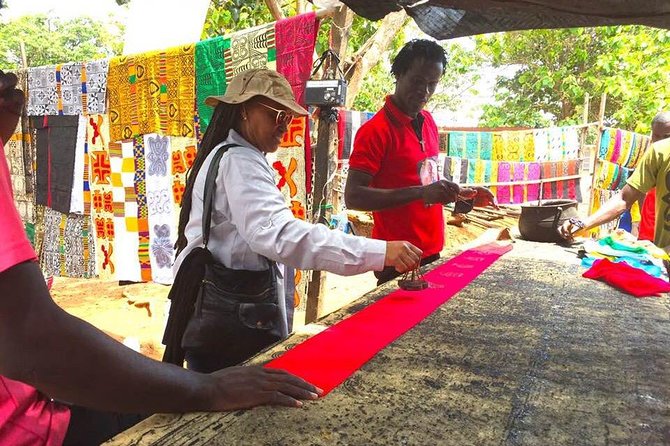
Kumasi’s symbols tell stories. This six-hour private tour connects you with two of Ghana’s best-known crafts: kente weaving in Bonwire and Adinkra stamping in Ntonso. I like the hands-on focus, especially the chance to choose fabric, select a color, and stamp your own design rather than simply watch a demonstration.
I also like that the air-conditioned vehicle, lunch, bottled water, drinks, entrance fees, and guide service are included. That makes the $140 price easier to judge, especially for a private outing. The main consideration is time: six hours gives you a useful introduction, but not a full survey of Kumasi’s museums, markets, and wider Ashanti culture.
The experience is best for anyone who wants cultural context with practical activity. You may be guided by Yaw or Bilson, both named in the tour feedback, and the day begins at 9:30 a.m. at Lancaster Kumasi City before returning there.
In This Review
- Key points to know before booking
- Why this Kumasi tour is worth your time
- Starting at Lancaster Kumasi City at 9:30 a.m.
- Bonwire and the meaning of kente weaving
- Ntonso Adinkra village and the stamping session
- The guide’s role in making the symbols understandable
- Lunch, drinks, and what the $140 includes
- What the private format changes
- The main strengths and possible drawbacks
- Who should book this Kumasi experience?
- Booking, cancellation, and weather details
- Should you book the Kumasi Culture and Heritage Tour?
- FAQ
- Where does the Kumasi Culture and Heritage Tour start?
- What time does the tour begin?
- How long does the tour last?
- Where does the tour end?
- Is transportation included?
- Is lunch included?
- Are entrance fees included?
- Can I cancel for a full refund?
Key points to know before booking
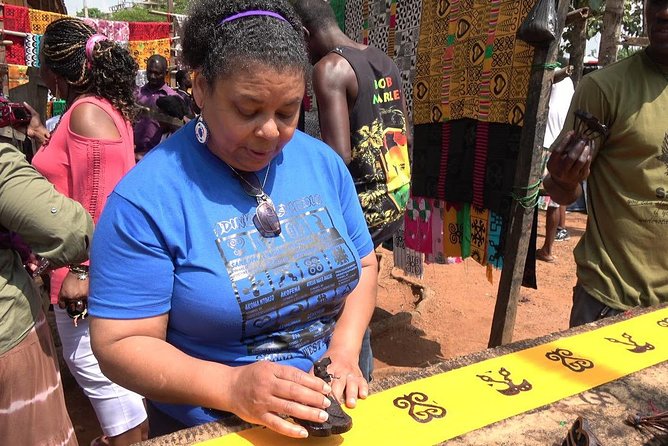
- Stamp your own Adinkra cloth: At Ntonso, you can choose a color, use locally made dye, and print symbols onto fabric yourself.
- Visit Bonwire’s kente tradition: The tour includes a stop connected with the beginnings of kente weaving in Kumasi.
- Learn the meaning behind symbols: Adinkra designs carry messages about wisdom, sorrow, farewell, and other parts of Ghanaian life.
- Travel privately: Only your group participates, with an air-conditioned vehicle and pickup offered.
- Budget for souvenirs: Lunch, drinks, water, entrance fees, and guiding are covered, but anything you buy is extra.
- Allow the full morning and afternoon: The tour starts at 9:30 a.m. and lasts about six hours.
Why this Kumasi tour is worth your time
Kumasi can be hard to understand if you only pass through its markets and monuments. A guide helps connect the visible details, such as woven patterns, stamped cloth, and carved symbols, with the ideas behind them.
That is the real value here. You are not just looking at Ghanaian crafts in a shop. You get a chance to see how some of them are made and try part of the process yourself.
The tour costs $140 per person. That is not a bargain-basement price, but it covers a private vehicle, a guide, entrance fees, lunch, bottled water, and drinks. If you are traveling with family or a small group, the private format can make the price feel more reasonable because your day is not shaped around strangers.
I would also view the price through the lens of convenience. Pickup is offered, the activity begins at one clear meeting point, and the day ends back there. You do not have to arrange separate transport to Ntonso and Bonwire, negotiate several fares, or work out how to fit lunch into a craft-focused day.
The tradeoff is that the itinerary is compact. You will get an introduction to important traditions, but you should not expect every museum, market, and cultural site in Kumasi to fit into six hours.
More of Kumasi and the Ashanti country:
- Bonwire Namimg Ceremony and Kente Tourist Center
★ 5.0 · 40 reviews - Tour Kumasi City Like a Local
★ 4.5 · 34 reviews - Kumasi Heritage Tours And Naming Ceremony In A Day
★ 5.0 · 11 reviews
Starting at Lancaster Kumasi City at 9:30 a.m.
The stated meeting point is Lancaster Kumasi City on Rain Tree Street, Lesley Opoku-Ware Drive. The tour starts at 9:30 a.m. and returns to the same meeting point when the activity ends.
That simple arrangement matters in Kumasi. You know where the day begins and finishes, and pickup is offered. Since the tour is private, your group can focus on the guide’s explanations without a larger crowd setting the pace.
The transport is air-conditioned, which is a practical comfort in Ghana. You will spend part of the day moving between Kumasi-area craft centers, so a comfortable vehicle helps preserve your energy for the visits themselves.
The information does not give exact driving times or a detailed minute-by-minute schedule. I would treat the six-hour duration as approximate and keep your plans after the tour flexible. That gives the day room for demonstrations, questions, and hands-on work.
Bonwire and the meaning of kente weaving
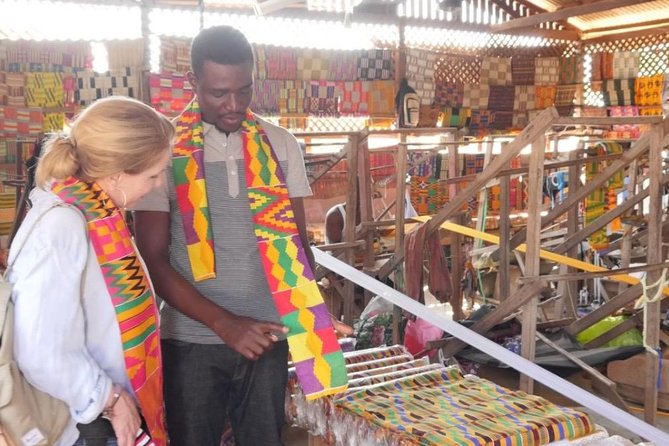
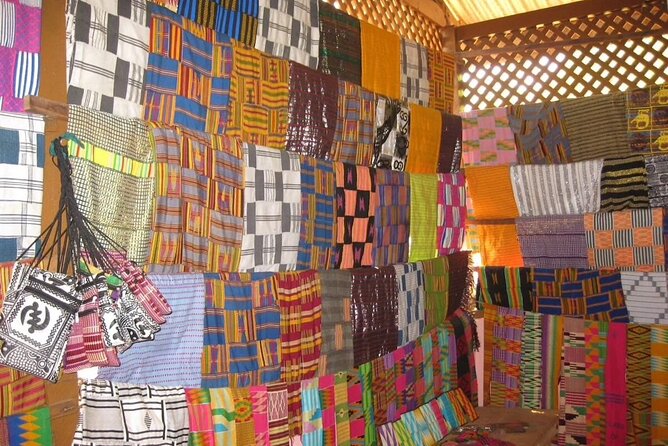
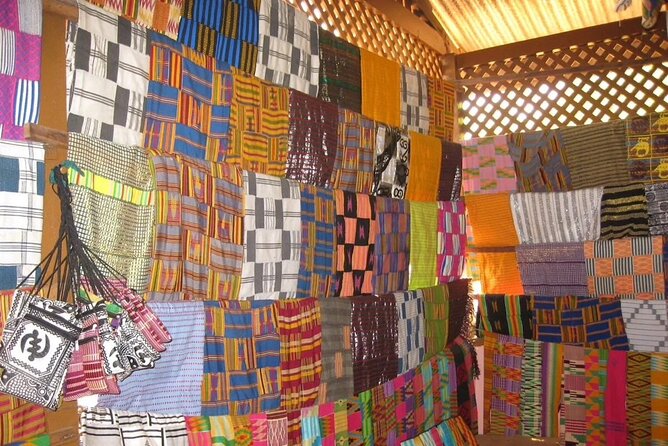
One of the strongest parts of the tour is the visit to Bonwire, the place connected with the beginning of kente weaving in Kumasi. Kente is not simply decorative cloth. Its colors and patterns can carry ideas, status, memory, and identity.
The tour gives you a chance to see the weaving process and, according to the experience details, to learn about the local history of the fabric. One piece of feedback describes the spider web connection associated with kente, along with the memorable chance to weave like a local.
That detail gives the stop a useful human scale. Instead of viewing finished cloth from behind a counter, you can see the skill involved in producing it. The narrow strips, repeated patterns, and careful handwork become easier to appreciate once you understand that the fabric is made through a method rather than produced as a simple printed textile.
If you hope to buy kente, Bonwire is also the place to pay attention. The experience includes the opportunity to see and potentially purchase kente, but purchases are not included in the tour price. I recommend deciding in advance how much you want to spend, since the setting can make a beautiful cloth feel like an unavoidable souvenir.
The tour does not specify how long you stay in Bonwire or whether every participant gets to operate a loom. Ask your guide when you meet if hands-on weaving is part of your particular schedule. The confirmed promise is exposure to the craft and its history, not a full weaving course.
Ntonso Adinkra village and the stamping session
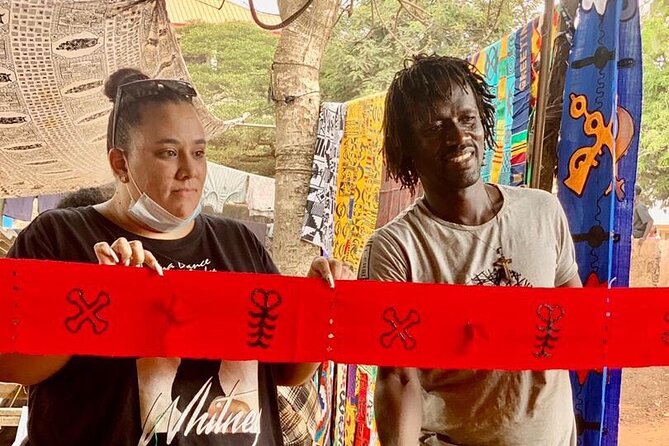
Ntonso is the most active part of the experience. Here, you learn about Adinkra symbols and then take part in the stamping process.
Adinkra cloth uses symbols that communicate ideas and messages. Designs can refer to wisdom, sorrow, farewell, and other themes in Ghanaian culture. The symbols may appear on fabric, furniture, buildings, and pottery, so learning their meanings helps you notice them beyond this single visit.
The process begins with locally made materials. The tour description explains that the bark of the badie tree is pounded to make dye. You can then choose a preferred fabric color and stamp symbols onto the cloth yourself.
That practical step is what makes Ntonso memorable. You are not expected to be an expert. You select a design, place the stamp, and see how a repeated symbol creates a pattern with a message behind it.
The farewell connection deserves special attention. Some Adinkra symbols were used to express sorrow and to bid farewell to someone who had died. That gives the craft a serious emotional purpose. These are not random decorations added to a textile simply because they look attractive.
The experience details use the phrase fare well in describing these symbols. In practice, the important point is that Adinkra can carry messages at moments of loss and remembrance. Your guide can help explain which symbols relate to those meanings and how the designs fit into Ghanaian custom.
The details do not promise that you can take home the exact cloth you stamp, nor do they state its size. Ask before starting if you want to know what happens to your finished piece. Anything you purchase separately is your responsibility, since personal items are not included.
Other history-led days around Kumasi:
- Full-Day Tour to Ashanti Region, Kumasi and Ghanaian History
★ 5.0 · 8 reviews - 4 Days Trip in Accra, Cape Coast,Kumasi culture & heritage tours
★ 5.0 · 5 reviews - Ashanti History Tours
★ 5.0 · 2 reviews - 3 Days Accra Historical ,Cape Coast Black Roots ,& Kumasi Culture
★ 5.0 · 2 reviews
The guide’s role in making the symbols understandable
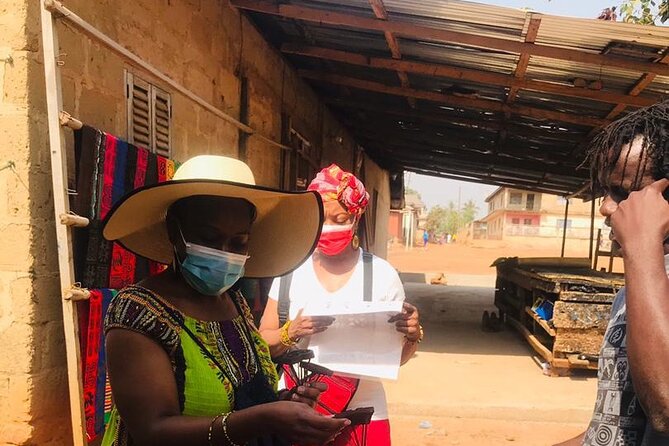
This tour depends heavily on the guide. The subject is not difficult to enjoy, but it is easy to miss the meaning if you only watch the craftwork.
You may hear from Yaw or Bilson, names associated with the guide service in the tour feedback. Yaw is praised for explaining the practical demonstration and the chance to try the work. Bilson is described as caring during the kente and Adinkra outing.
Those comments point to the kind of guidance that matters here: clear explanations, patience during the activity, and enough local context to connect a symbol with its use. I would encourage you to ask questions as you go. Ask why a particular design is used, where it appears, and how people recognize its message.
A guide can also help you understand the difference between buying an attractive pattern and choosing a symbol for its meaning. That distinction is useful if you want to take home cloth that represents something specific rather than simply selecting the brightest color.
The tour is private, so you have a better chance to ask those questions than you would in a large group. This is one of the strongest reasons to choose it over a cheaper shared outing.
Lunch, drinks, and what the $140 includes
Lunch is included, along with bottled water and drinks. That makes the day easier because you do not need to stop and find a meal while moving between the craft centers.
The exact menu is not provided, so you should not book this tour expecting a particular dish. If you have dietary needs, confirm them before the start of the tour. The available information confirms lunch, not special meal arrangements.
Entrance fees are included, as are the vehicle and guide service. These inclusions reduce the number of small costs that can catch you by surprise during a full-day outing.
Your own purchases are not included. Set aside extra money if you want kente, stamped fabric, or another local item. Buying directly from a craft center can be a meaningful part of the day, but the tour price does not cover it.
I also like the fact that water is supplied. Craft demonstrations and vehicle transfers can make a six-hour schedule feel longer, and having water already arranged is a small but useful comfort.
What the private format changes

This is a private tour, meaning only your group participates. That matters most if you want to ask questions, take your time with a demonstration, or travel with family and friends.
A private schedule can also help if your group has different interests. One person may want to study the Adinkra symbols, while another wants to look at kente or shop. The guide can explain both without having to keep a large group moving.
There is a limit, however. Private does not mean completely flexible in every detail. The tour still has a starting time, a stated duration, and a set of cultural stops. The available information does not promise custom changes or extra museum visits.
Most people can participate, according to the activity information. No special fitness requirement is listed. You should still be comfortable spending several hours moving between stops and taking part in a craft activity.
The main strengths and possible drawbacks
The most praised feature is the chance to try the craft yourself. Seeing an Adinkra demonstration is useful, but stamping your own design gives you a better memory of the process.
The second strong point is the explanation. Kente and Adinkra become more meaningful when a guide explains the symbols, the materials, and the customs connected with them. The tour feedback gives particular credit to Yaw and Bilson for their care and explanations.
The third advantage is the mix of traditions. You do not spend the whole day on one textile. Bonwire introduces kente weaving, while Ntonso focuses on Adinkra stamping and symbolism.
The main drawback is limited detail about the schedule. You know the start time, approximate length, meeting point, and main cultural themes, but not the exact order of every stop or the length of each visit.
That uncertainty should not be a problem for most people. It only matters if you need a tightly timed afternoon connection or want to fit several additional Kumasi attractions into the same day.
A second consideration is shopping. The tour may place you close to attractive textiles and handmade items, but purchases are extra. The experience is better suited to someone who wants to look and learn, with the option to buy, than to someone seeking an all-inclusive shopping package.
Who should book this Kumasi experience?
I would choose this tour if you want a private introduction to Ashanti craft traditions and prefer learning by doing.
It suits:
- First-time visitors to Kumasi who want cultural background with their sightseeing
- Couples, families, and small groups who value a private vehicle
- Anyone interested in textiles, symbols, and handmade art
- Visitors who want to buy kente or Adinkra cloth directly from craft centers
- People who appreciate having lunch, water, drinks, and entrance fees arranged
I would think twice if you want a broad city tour with many museums and markets. The overview refers to museums and markets, but the detailed activity focuses most clearly on Bonwire and Ntonso. At six hours, the tour offers a focused cultural outing rather than an exhaustive tour of Kumasi.
It may also be less suitable if your schedule cannot handle a 9:30 a.m. start or if you need exact timing at every stop. The tour runs on local conditions and requires good weather.
Booking, cancellation, and weather details
You receive confirmation at the time of booking. The start point is Lancaster Kumasi City, and the activity ends back there.
You can cancel for a full refund if you do so at least 24 hours before the 9:30 a.m. start time. Cancellations made less than 24 hours before the tour are not refunded, and changes within that period are not accepted.
Good weather is required. If poor weather causes cancellation, you are offered another date or a full refund. Keep that rule in mind if you are arranging a tight itinerary around the tour.
Should you book the Kumasi Culture and Heritage Tour?
Book it if you want more than photographs of Ghanaian textiles. The strongest part of this experience is the combination of explanation and participation: you learn what Adinkra symbols mean, then stamp one yourself, and you see how kente weaving connects to Bonwire.
The $140 price is reasonable for a private six-hour outing with transport, lunch, drinks, water, entrance fees, and a guide. It is less compelling if you want a long list of city attractions, but it offers good value for a focused day centered on living craft traditions.
For the best experience, arrive ready to ask questions and allow extra time for browsing items you may want to buy. If you want a personal, practical introduction to Kumasi’s kente and Adinkra traditions, this is a strong choice.
FAQ
Where does the Kumasi Culture and Heritage Tour start?
The tour starts at Lancaster Kumasi City, Rain Tree Street, Lesley Opoku-Ware Drive, Kumasi, Ghana.
What time does the tour begin?
The scheduled start time is 9:30 a.m.
How long does the tour last?
The experience lasts approximately six hours.
Where does the tour end?
The activity ends back at the meeting point at Lancaster Kumasi City.
Is transportation included?
Yes. An air-conditioned vehicle is included, and pickup is offered.
Is lunch included?
Yes. Lunch, bottled water, and drinks are included.
Are entrance fees included?
Yes. Entrance fees are included in the tour price.
Can I cancel for a full refund?
Yes. You can receive a full refund if you cancel at least 24 hours before the experience start time. Cancellations within 24 hours are not refunded. If poor weather causes the tour to be canceled, you are offered another date or a full refund.
Most recently reviewed around Kumasi
- Full Day Tour with Traditional Naming Ceremony in Kumasi★ 5.0 · 4 reviews
- Kumasi City Tour★ 4.5 · 3 reviews
- Kejetia Market Tour and Traditional Food Cooking Class.★ 5.0 · 2 reviews
- Discover kumasi Tours★ 5.0 · 3 reviews
- Private Half-Day City Tour of Kumasi with Lunch★ 5.0 · 2 reviews
- Ashanti History Tours★ 5.0 · 2 reviews
- Experience the Culture of Ashanti Kingdom in 5days★ 5.0 · 3 reviews
- 3 Days Accra Historical ,Cape Coast Black Roots ,& Kumasi Culture★ 5.0 · 2 reviews
Historical Tours, compared.
Experience the Beauty, History and the Culture Of Accra in a Day
Read our review →

Full-Day Private Culture and History Tour of Accra
Read our review →
Ghana Private Historic Tour through Castles and Nature
Read our review →
7-Day Private Cultural and Heritage Tour in Ghana
Read our review →
The Historic Cape Coast and Elmina Tour (The Land of History).
Read our review →Browse the lists this tour appears in