
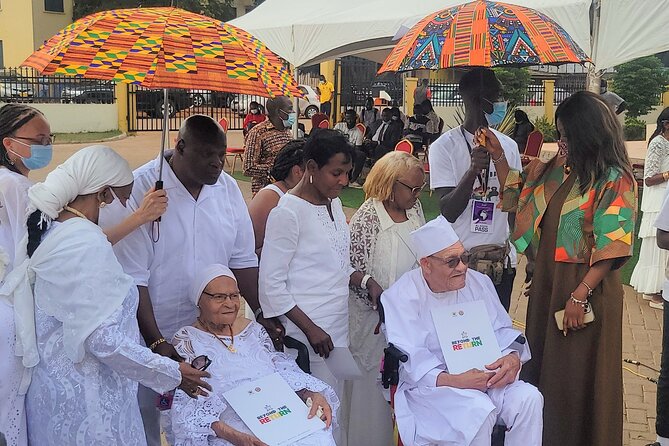
Reviewed · NAMING CEREMONY EXPERIENCES
Naming Ceremony and Heritage Homecoming Experience for Diasporas
Your name becomes a bridge to Ghana. This private heritage experience takes you from Kotoka Airport into a Ghanaian village or Accra community for a traditional naming ceremony. I like the personal focus: you share your birth date, receive a Soul Name and a local Ghanaian name, and take part in a welcome led by a respected elder.
I also like the way the ceremony includes drumming, dancing, Ghanaian cloth, and a certificate of recognition. These details give the day a clear cultural shape instead of reducing it to a quick photo stop. The main point to consider is the setting. If you expect a polished indoor ceremony in central Accra, you may be surprised to find yourself in an actual village, which is exactly what happened to one guest who had imagined something different.
This is a meaningful choice for people from the African American and Caribbean diasporas who want a direct connection with Ghana. It is also open to anyone interested in Ghanaian traditions, but you should come with respect, patience, and a willingness to take part rather than simply watch.
In This Review
- Key points to know before booking
- Why a Ghanaian name matters here
- Starting at Kotoka Airport at 7:00 a.m.
- The journey from Accra to a community welcome
- Taking part in the traditional naming ceremony
- Drumming, dancing, and being welcomed by local people
- Cloth, beads, and your certificate of recognition
- What the $265 price includes in practical terms
- The main drawback: expectations about the setting
- Who will value this experience most
- Booking and cancellation details
- Should you book the naming ceremony?
- FAQ
- Where does the naming ceremony begin?
- What time does the activity start?
- Where does the experience end?
- How long does the experience last?
- Is pickup available?
- Is this a private activity?
- Where is the ceremony held?
- What information do I provide for the naming ceremony?
- What do I receive during the ceremony?
- Can I cancel for a full refund?
Key points to know before booking

- Your birth date guides the ceremony: You provide the day you were born to receive a Ghanaian Soul Name connected to your birth identity.
- The welcome takes place in a real community: The ceremony may be held in a rural Ghanaian village or a community in Accra, not necessarily in a formal city venue.
- A respected elder leads the ritual: The ceremony is conducted by an elder known for strong moral standing in the community.
- Music and movement are part of the welcome: Traditional drumming and dancing help turn the naming into a shared community event.
- You receive physical keepsakes: The welcome may include beads or a Ghana Kente Stole marked with Welcome to Ghana, along with a recognition certificate.
- The tour is private and starts early: Pickup is offered, the day begins at Kotoka Airport at 7:00 a.m., and only your group participates.
Why a Ghanaian name matters here
A name in this ceremony is more than a souvenir. The experience connects your birth date to a Ghanaian naming tradition, giving you what is described as your Soul Name. You also receive a local name with a meaning, helping place your identity within the community welcoming you.
For people tracing African roots, that can carry personal weight. The ceremony is designed as a homecoming, not simply a cultural demonstration. You are being recognized by people in Ghana and given a place in the event, even if your family history is not known in detail.
That distinction matters. Many cultural activities explain customs from a distance. Here, the central activity is directed at you. You provide your date of birth, take part in the naming process, receive the name, and are recognized with a certificate.
The supplied details do not explain how the Soul Name is selected or provide a full translation system for every name. You should therefore treat the ceremony as a personal cultural welcome, not as a genealogical report proving a specific family connection.
More naming ceremony experiences in Accra:
- The Ancestral Naming Ceremony and Home Coming Experience
★ 5.0 · 30 reviews - Traditional Naming Ceremony and Boat Cruise Experience
★ 5.0 · 15 reviews - Kumasi Heritage Tours And Naming Ceremony In A Day
★ 5.0 · 11 reviews
Starting at Kotoka Airport at 7:00 a.m.
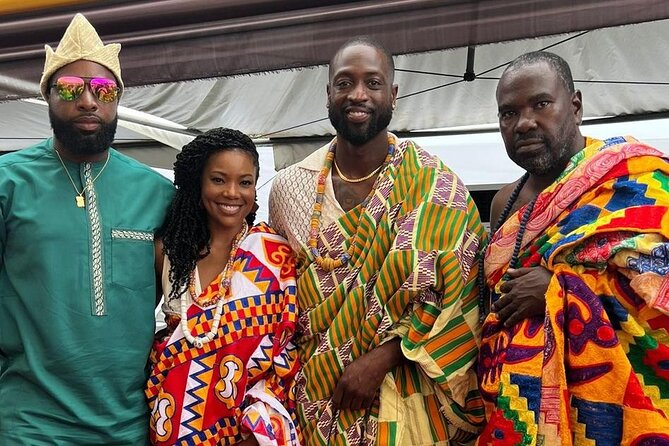
The day begins at Kotoka Airport in Accra, with a listed start time of 7:00 a.m. Pickup is offered, and the activity ends back at the meeting point. That arrangement is useful if you are arranging a private day around an airport arrival or departure, but you should confirm the exact timing before booking flights on the same day.
The total duration is listed as approximately five to eight hours. The ceremonial portion itself is described as about three hours, so the longer estimate likely allows for transport and time spent with the community. Since no precise village location or driving time is supplied, do not plan another tightly timed activity immediately afterward.
The early start may sound demanding, especially after a long flight. Still, it gives the day a clear rhythm and leaves room for the ceremony, dancing, conversation, and the journey back. Ask Kwame Tours to confirm the pickup details, especially if you are not beginning at the airport itself.
The experience is private, meaning only your group participates. That is a useful feature for families, couples, and small groups who want a personal ceremony rather than a large bus outing. It also gives you more room to ask questions and take part at your own pace.
The journey from Accra to a community welcome
The central choice in this experience is the setting. You may be welcomed in a rural Ghanaian village or in a community in Accra. The description places special emphasis on village life, and the provider’s response to one guest makes clear that an actual village ceremony was intentional.
That is important to understand before you pay. The appeal is not a stage-managed room with a short presentation. You may meet older women and elders from the community, see a more direct form of local welcome, and take part in a ceremony connected to everyday Ghanaian social life.
At the same time, a village setting may feel less predictable than an indoor event. The facilities, road conditions, and level of formality are not described. You should wear clothing that allows you to sit, move, and participate comfortably, though the supplied information does not specify a dress code.
The rural setting also changes the emotional tone. You are not only receiving a name from a guide. You are being received by a community, with elders and local people present. For a heritage homecoming, that is likely the feature that gives the day its greatest meaning.
Taking part in the traditional naming ceremony
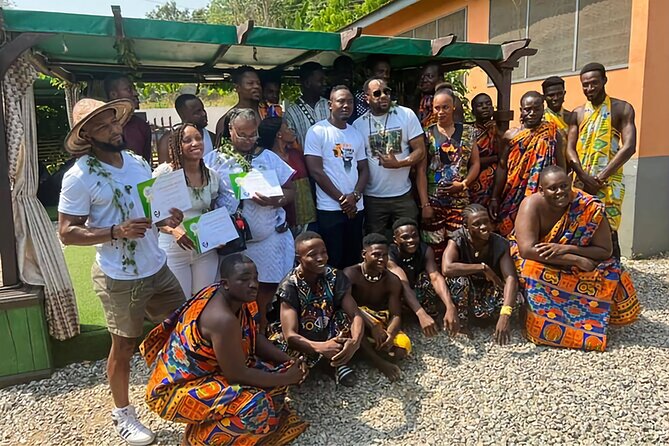
The ceremony centers on your birth identity. You give your date of birth, and the naming process connects that information to a Ghanaian name and the Soul Name associated with the day you were born.
The ceremony is led by a respected elder with a strong moral reputation in the community. That detail signals that the event is intended to be conducted with seriousness, not as a loose performance built only for visitors.
You can expect the event to include spoken recognition, traditional drumming, and dancing with local people. The music is not an optional backdrop. It helps mark the ceremony as a communal occasion, with rhythm and movement forming part of the welcome.
The available details do not spell out every step of the ritual. You should not expect a printed script in advance or assume that every ceremony follows the same order. Cultural events can depend on the community, the elder, and the group being welcomed.
That uncertainty is part of the point, but it also calls for a good attitude. Listen carefully, follow instructions, and allow the elder or local hosts to guide your participation. You will get more from the event if you treat it as a ceremony first and a sightseeing activity second.
More Accra outings people pair with this:
- The Cape Coast Day Tour
★ 5.0 · 525 reviews - Experience the Beauty, History and the Culture Of Accra in a Day
★ 5.0 · 323 reviews - The Cape Coast Tour
★ 5.0 · 177 reviews - From Accra: Cape Coast, Elmina Castle & Kakum Park Day Tour
★ 4.6 · 144 reviews
Drumming, dancing, and being welcomed by local people
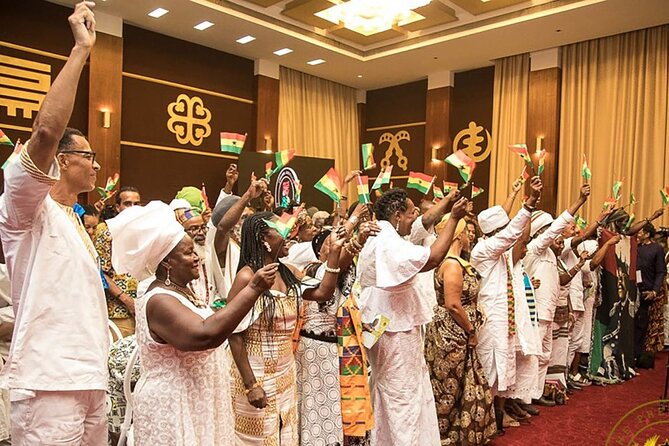
The drumming and dancing give the ceremony a shared, public feeling. You are not simply handed a name and sent on your way. The community takes part in welcoming you.
I would expect the music to be one of the most memorable parts of the day because it turns the naming into a living event. You might be invited to dance or respond to the rhythm. The exact format is not specified, so you should be ready to join in without expecting a choreographed show.
The provider specifically points to meeting elders and older women from the village as a valuable part of reconnecting with Ghanaian roots. That gives the visit a human side. The people conducting the ceremony are not anonymous performers; they are members of the community giving you a place in their gathering.
This is also where the experience may feel most personal for members of the diaspora. A certificate can be kept at home, but hearing a name spoken in a Ghanaian community and sharing music with local people creates a memory tied to place.
Cloth, beads, and your certificate of recognition
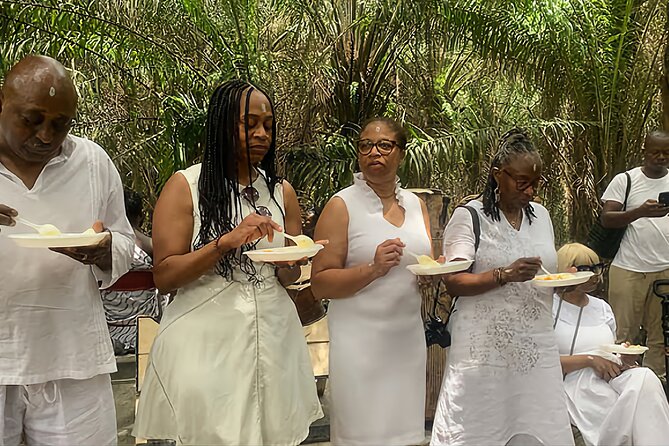
As part of the ceremony, you receive a gift from the community. This may be beads or a Ghana Kente Stole with Welcome to Ghana written and designed on it. You also receive a certificate of recognition.
The Ghanaian cloth is more than a practical item. It serves as a visible reminder of the ceremony and the welcome. If you receive the stole, it may become the easiest way to remember the day and explain it to family members later.
The wording says the cloth may be tailored for you as a child of the earth and your roots. Since the exact gift can vary, you should not book solely because you want one specific item. Beads, a stole, or another community gift may be provided.
The certificate also has a clear role. It records your recognition through the naming ceremony, giving the occasion a formal element. It is not described as a government document, citizenship record, or proof of ancestry. Think of it as a ceremonial memento.
What the $265 price includes in practical terms
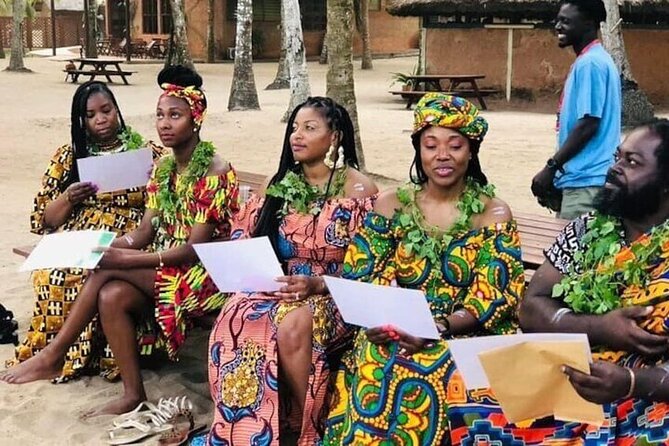
At $265 per person, this is not a low-cost sightseeing trip. The value depends on what you want from Ghana. If you are looking for several attractions, museum visits, or a full day of sightseeing around Accra, this may not be the best use of your budget.
The price makes more sense if the naming ceremony itself is your priority. You are paying for a private experience, transportation support, a community welcome, the involvement of an elder, music and dancing, the naming process, a keepsake, and a certificate. The personal nature of the ceremony is difficult to compare with a standard group tour.
Private participation matters here. A name-giving ceremony can feel awkward in a large crowd of strangers. With only your group involved, the occasion can remain focused on your family or friends.
Group discounts are offered, so the cost may work better for a larger party. That is especially useful for relatives traveling together or for a diaspora group planning a shared homecoming. Ask for the current group rate before assuming a discount applies automatically.
The rating supplied for the experience is 4.6 out of 5 from 15 ratings. That is a positive signal, but the small number means you should still read the description carefully and set realistic expectations about the village setting.
The main drawback: expectations about the setting
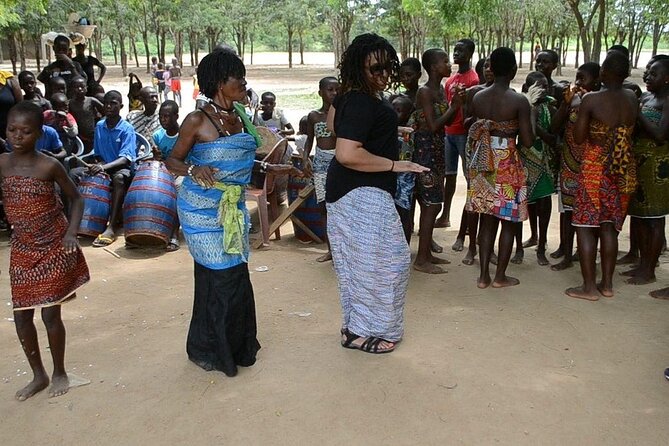
The clearest warning comes from a guest who gave the experience three out of five and said the ceremony was not what they expected because it took place in an actual village. The provider explained that the village setting was deliberate and intended to offer an original naming ceremony with elders and older women from the community.
Both points can be true. The village location may be the strongest part of the experience for someone seeking a genuine community welcome. It may also disappoint someone who expects a formal ceremony in Accra with easy urban access and a polished presentation.
I would treat the setting as a decision point, not a minor detail. Before booking, ask Kwame Tours to confirm where your group will go, how long the transfer may take, and what kind of facilities are available. The supplied information confirms the general setting but not those practical specifics.
You should also remember that five to eight hours is a broad time range. The ceremony may take about three hours, with the remaining time shaped by transport and the pace of the welcome. Build flexibility into your day.
Who will value this experience most
I recommend this for people who want a personal connection with Ghanaian culture and are comfortable taking part in a traditional ceremony. It is especially suited to members of the African American and Caribbean diasporas seeking a symbolic return to African roots.
Families may find it meaningful because several people can receive names together while sharing the day. A private group also makes it easier to include relatives who want to observe quietly or take part at different levels.
You may also enjoy it if you have already seen major Accra sights and want a more community-centered activity. The focus is not on collecting landmarks. It is on being welcomed, named, and recognized.
I would be more cautious if you want a tightly scheduled sightseeing day, a formal indoor ceremony, or a detailed family-history investigation. The experience provides a cultural naming ritual, not a DNA test, archival research, or a guaranteed link to a specific ancestor.
Most travelers can participate, and service animals are allowed. The activity is near public transportation, though pickup is offered. The available details do not describe specific physical requirements, so contact the provider if your group needs particular assistance.
Booking and cancellation details
Confirmation is received at the time of booking. The activity is commonly booked about 11 days ahead, so reserving early is sensible if your Ghana trip has fixed dates.
You can cancel for a full refund up to 24 hours before the local start time. Changes or cancellations made less than 24 hours before the experience are not accepted for a refund. Keep the early 7:00 a.m. start in mind when calculating that deadline.
The mobile ticket is convenient for a private day when you may not want to carry printed paperwork. Still, save the confirmation on your phone before leaving reliable internet access.
Should you book the naming ceremony?
Book this experience if you want a symbolic homecoming rather than a standard Accra excursion. The Soul Name, local name, elder-led ceremony, music, community welcome, and keepsake give the day a clear purpose.
Before paying $265, confirm the ceremony location and transport time with Kwame Tours. If you welcome a rural village setting, the experience may feel personal and memorable. If you prefer a formal city venue, you may find the setting unexpected.
For the right participant, the value is not in the number of sights visited. It is in being received by a Ghanaian community and carrying that recognition home.
FAQ
Where does the naming ceremony begin?
The experience starts at Kotoka Airport in Accra, Ghana.
What time does the activity start?
The listed start time is 7:00 a.m.
Where does the experience end?
The activity ends back at the meeting point.
How long does the experience last?
The total duration is approximately five to eight hours. The ceremony portion is described as about three hours.
Is pickup available?
Yes. Pickup is offered for this experience.
Is this a private activity?
Yes. Only your group participates.
Where is the ceremony held?
The ceremony may take place in a rural Ghanaian village or in a community in Accra. The description places particular emphasis on the village setting.
What information do I provide for the naming ceremony?
You provide your date of birth. This is used in the traditional naming process to identify your Soul Name and local Ghanaian name.
What do I receive during the ceremony?
You receive a local name with a meaning, a certificate of recognition, and a community gift that may include beads or a Ghana Kente Stole marked with Welcome to Ghana.
Can I cancel for a full refund?
Yes. You can cancel at least 24 hours before the local start time for a full refund. Cancellations or changes made less than 24 hours before the start time are not accepted for a refund.
More Historical Tours in Accra
- Ghana Heritage Tours – Beyond The Return
★ 5.0 · 36 reviews - 10 Days Ghana Cultural and Heritage Trip
★ 5.0 · 31 reviews - Cape Coast Historical Day Tour
★ 5.0 · 24 reviews - Full-Day Private Culture and History Tour of Accra
★ 5.0 · 23 reviews
Most recently reviewed around Accra
- Visit Aburi Garden, Tetteh Quarshie Cocoa Farm & Waterfall★ 4.0 · 4 reviews
- Private 9-Day Tour in Ghana★ 5.0 · 2 reviews
- Wli Waterfalls, Mount Afadjato & Tafi Atome Monkey Sanctuary★ 5.0 · 2 reviews
- Cape Coast and Elmina castle Day Trip★ 5.0 · 2 reviews
- Culinary for Social Change-Cooking Class★ 5.0 · 2 reviews
- Time with Nature★ 5.0 · 2 reviews
- Private Slave Castles and Dungeons Tour in Cape Coast, Ghana★ 5.0 · 3 reviews
- Experience Accra★ 5.0 · 2 reviews
Naming Ceremony Experiences, compared.

The Ancestral Naming Ceremony and Home Coming Experience
Read our review →
Traditional Naming Ceremony and Boat Cruise Experience
Read our review →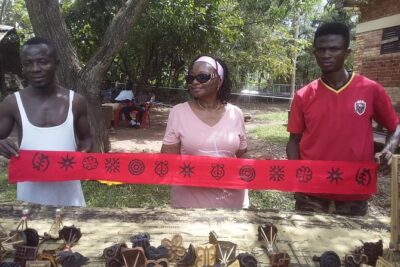
Kumasi Heritage Tours And Naming Ceremony In A Day
Read our review →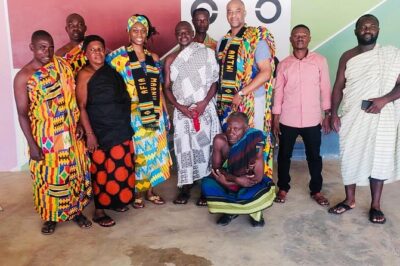
Traditional naming ceremony For African Diasporas in Kumasi
Read our review →
Naming Ceremony, Assin Manso Slave River and Cape Coast Castle
Read our review →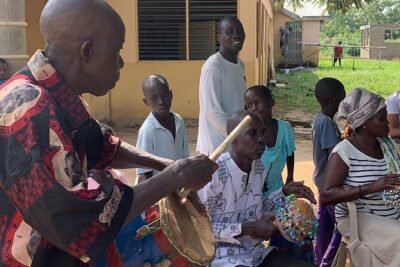
Cultural Village Tour: Traditional Naming Ceremony
Read our review →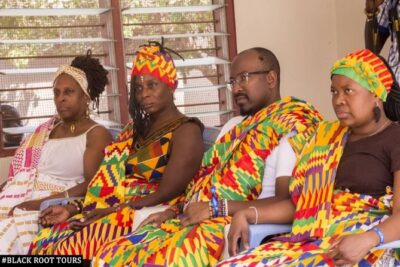
Traditional Naming Ceremony For African Americans In Kumasi
Read our review →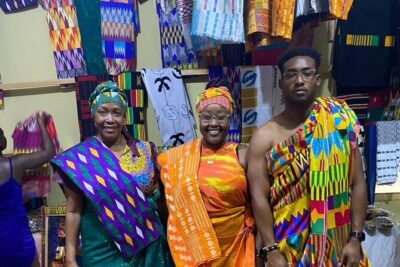
Full Day Tour with Traditional Naming Ceremony in Kumasi
Read our review →Browse the lists this tour appears in