
Reviewed · NAMING CEREMONY EXPERIENCES
Traditional Naming Ceremony For African Americans In Kumasi
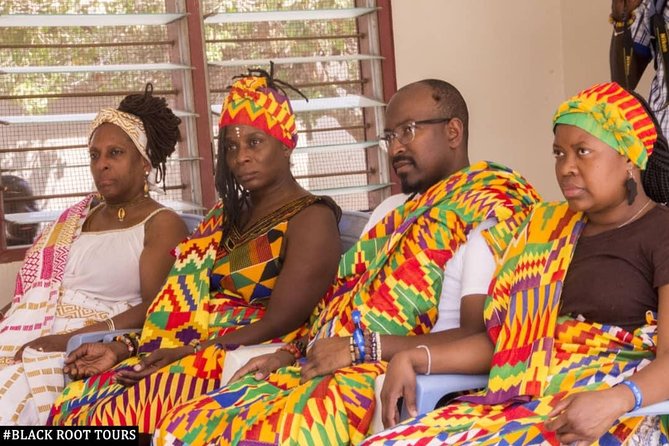
Names can carry a whole family story. This Kumasi experience offers African Americans a personal connection to Asante culture, with a traditional name chosen according to your birth day, a woven Kente script, and a certificate to take home. I like the private format and the chance to visit both Ntonso Adinkra craftsmen and Adanwomase Kente weavers. Lunch and an air-conditioned vehicle also make the four-hour outing easier in Ghana’s heat.
The most appealing part is the ceremony itself, guided by Maclean, whose calm and patient manner receives repeated praise. One participant was named Abena Agyemang after the chief’s late wife, a moment that became deeply emotional. The main consideration is that admission fees at the two cultural stops are not included, and the experience may feel less like ordinary sightseeing and more like a serious personal rite.
In This Review
- Key points at a glance
- A naming ceremony with personal meaning
- Maclean’s role in the four-hour experience
- Ntonso and the marks of Adinkra cloth
- Adanwomase Kente and the cocoa farm
- What the $180 price really covers
- Timing, pickup, and the private vehicle
- The emotional side of the experience
- Who should book this Kumasi activity?
- Practical tips before you go
- Should you book the naming ceremony?
- FAQ
- Where does the traditional naming ceremony take place?
- What time does the tour start?
- Is pickup offered?
- What is included in the price?
- Are admission fees included?
- What do I receive during the ceremony?
- Can I cancel for a full refund?
Key points at a glance
- Your Akan name is selected from your birth day: The naming follows Asante cultural practice rather than a random souvenir choice.
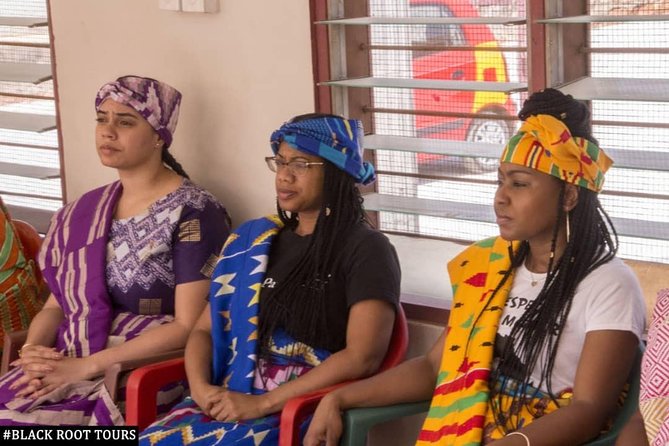
- The ceremony includes keepsakes: You receive a woven Kente script and a certificate showing your new name.
- Two craft villages add context: Ntonso focuses on Adinkra cloth stamping, while Adanwomase is known for Kente weaving.
- A cocoa farm visit is included in the route: This adds an agricultural side to the cultural program.
- The tour is private: Only your own group takes part, which gives the ceremony a more personal setting.
- Lunch and transport are covered: The $180 price includes lunch, an air-conditioned vehicle, and fuel.
A naming ceremony with personal meaning
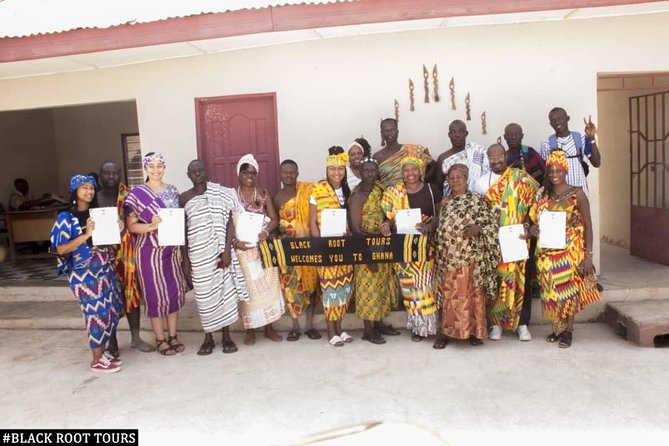
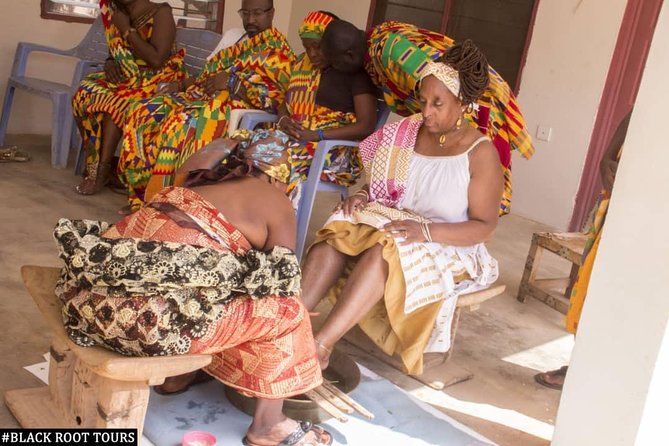
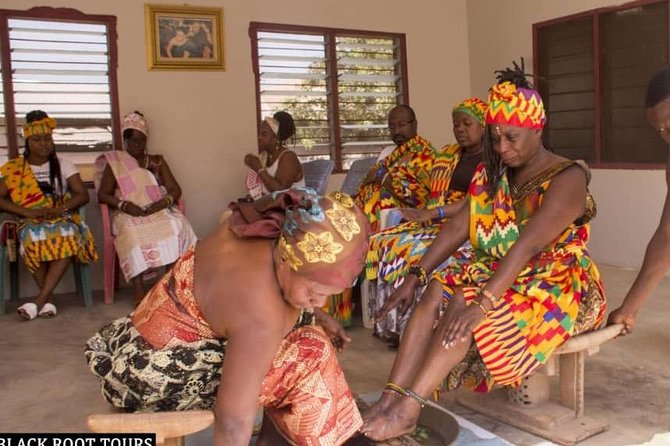
The heart of the experience is the traditional naming ceremony in Kumasi. It is designed especially for African Americans visiting Ghana, including people staying in Kumasi, Cape Coast, or Accra. The ceremony gives you an Akan name selected according to the day you were born.
That detail matters. This is not simply choosing a Ghanaian name from a list. The name connects to a naming custom within Asante culture, giving the ceremony a clear cultural basis. You should have your birth day information ready when booking or before the ceremony, since it is central to the naming process.
You receive a woven Kente script and a certificate with your name. These are useful mementos because they preserve both the sound of the name and the moment when it was formally presented. The certificate is easy to pack, while the Kente item gives you a physical reminder of the ceremony’s setting and purpose.
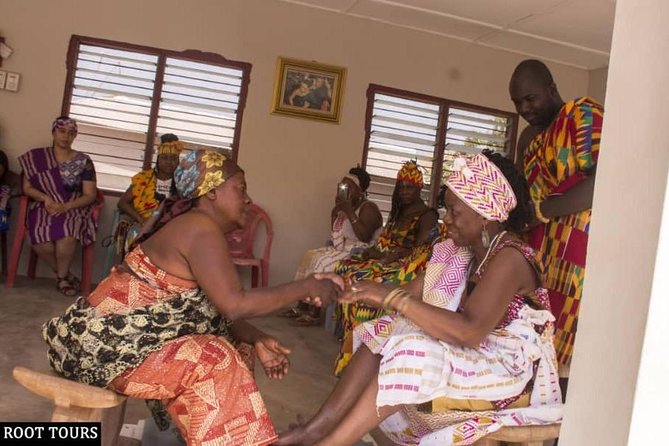
The tone can be emotional. One account describes a participant being named Abena Agyemang after the chief’s wife, who had passed away. That kind of personal connection can make the ceremony much more powerful than a standard cultural demonstration. You should come prepared for something reflective, not just a quick photo stop.
More naming ceremony experiences in Kumasi:
- Kumasi Heritage Tours And Naming Ceremony In A Day
★ 5.0 · 11 reviews - Traditional naming ceremony For African Diasporas in Kumasi
★ 5.0 · 10 reviews - Full Day Tour with Traditional Naming Ceremony in Kumasi
★ 5.0 · 4 reviews
Maclean’s role in the four-hour experience
Maclean is the guide associated with this experience, and his patience is one of its strongest features. He is described as kind, easy to work with, and helpful during a life-changing naming rite. Those qualities matter here because a ceremony tied to ancestry and identity needs clear explanations and a respectful pace.
You are not simply being driven from one stop to another. The guide helps connect the ceremony to the wider Asante setting. If you have questions about the name, the cloth, or the cultural steps, this is the person to ask.
The information provided does not spell out every stage of the naming rite, so you should not expect a fixed script of exact words or rituals beyond the name, Kente presentation, and certificate. Ask for clarification if you want to understand the meaning of each part. That is especially useful if this is your first visit to Ghana or your first formal encounter with Akan naming customs.
Because the tour is private, you can discuss the experience more comfortably with your own group. A private booking also avoids having an important moment interrupted by a large crowd. The tradeoff is that the tour may not offer the lively group energy of a shared excursion.
Ntonso and the marks of Adinkra cloth
The first listed stop is Ntonso Adinkra Craftsmen, a village associated with Adinkra cloth stamping. Adinkra textiles use symbols and stamped designs to express ideas, values, and messages. The stop gives you a chance to see a different textile tradition from the Kente visit later in the day.
This is a worthwhile pairing. Kente is often admired for its woven strips and bold patterns, while Adinkra is built around stamped symbols on cloth. Seeing both in one outing helps you understand that Ghanaian textile traditions are not all the same.
Admission to Ntonso is not included in the $180 price. That means you should set aside extra money for the entry fee, and possibly for personal shopping if you want to buy cloth or crafts. Personal purchases are specifically excluded, so the final cost depends partly on how much you decide to take home.
The stop should suit you if you like craft processes and want more than a ceremony alone. If your main goal is the naming rite, remember that this is an additional cultural visit rather than the central event. Your guide can help place the craft in context, but the exact demonstration details are not specified.
Adanwomase Kente and the cocoa farm
The second stop is Adanwomase Kente Weaving Village, paired with a cocoa farm tour. This gives the outing two distinct sides of local life: textile production and farming.
At Adanwomase, the focus is Kente cloth. The woven Kente script presented during the ceremony connects naturally with this visit. You can see the craft setting behind the cloth and better understand why a Kente piece is more meaningful than a generic fabric souvenir.
The experience description does not state how long you spend at the village or exactly what you see at the cocoa farm. Keep that in mind when planning your expectations. You will visit both locations, but the day’s main purpose remains the naming ceremony, not a full agricultural study or a long weaving workshop.
Admission fees at Adanwomase are also not included. If you are watching your budget, ask for the current entry costs before the day begins. You will also pay separately for any Kente or Adinkra items you purchase. That is not a flaw, but it is an expense worth planning for in a craft-centered outing.
The cocoa farm portion adds useful local context. It shows that the day is not limited to ceremonial culture or textiles. You also get a look at an important part of Ghana’s agricultural life, though the supplied details do not promise a specific farm activity or tasting.
More of Kumasi and the Ashanti country:
- Bonwire Namimg Ceremony and Kente Tourist Center
★ 5.0 · 40 reviews - Tour Kumasi City Like a Local
★ 4.5 · 34 reviews - Kumasi City Tour
★ 5.0 · 8 reviews - Full-Day Tour to Ashanti Region, Kumasi and Ghanaian History
★ 5.0 · 8 reviews
What the $180 price really covers
The listed price is $180 per person. That is not a bargain-priced half-day transfer, but it includes several costs that would otherwise add up: lunch, an air-conditioned vehicle, and fuel.
The private format is the main value point. You are paying for an experience restricted to your own group, rather than joining a large mixed party. For an event connected to family identity, ancestry, and personal emotion, privacy may be worth more than a small saving.
Air conditioning also matters. Kumasi outings can involve time on the road between cultural sites, and a cooled vehicle makes the four-hour schedule more comfortable. Fuel is included as well, so you are not dealing with a surprise fuel surcharge after the trip.
Lunch is included, which keeps the day simple. The meal details are not provided, so you should not book this expecting a particular menu or dietary arrangement unless you confirm it in advance. If you have food restrictions, contact Root Tour Ghana before the tour.
The price does not include personal shopping or admission fees at Ntonso and Adanwomase. Those exclusions prevent the $180 total from being the final possible cost. I would carry extra Ghanaian cedis or confirm accepted payment methods before leaving, although the available information does not specify payment arrangements.
Timing, pickup, and the private vehicle
The tour starts at 9:00 am and lasts about four hours. It ends back at the meeting point, so you should plan the rest of your day around a late-morning or early-afternoon finish rather than treating the activity as an all-day excursion.
Pickup is offered, but the exact pickup area is not stated. Confirm your location and pickup instructions when booking, particularly if you are staying outside central Kumasi. The experience is also near public transportation, which may help if you are arranging your own way to the meeting point.
The air-conditioned vehicle is private and includes fuel. That gives your group a direct ride between the ceremony, Ntonso, Adanwomase, and the cocoa farm. You avoid the need to arrange several separate taxis, and you can keep the cultural stops within one planned morning.
The four-hour estimate is approximate. Road conditions, the length of the ceremony, and time spent at the craft villages may affect the finish time. I would avoid scheduling a flight, long-distance bus, or tightly timed appointment immediately afterward.
Most people can participate, according to the available information. No special physical requirements are stated. Still, the exact surfaces and walking distances at the villages are not described, so anyone with mobility concerns should ask Root Tour Ghana for current details.
The emotional side of the experience
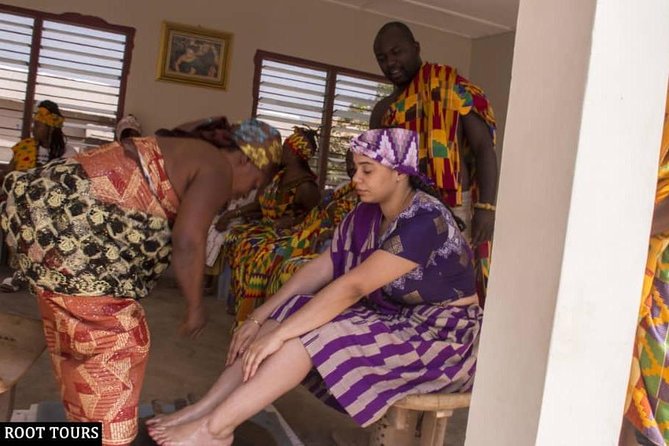
This tour suits you best if you want a meaningful cultural encounter rather than a checklist of sights. The strongest accounts describe the naming ceremony as the highlight of a Ghana visit and, in one case, a life-changing experience.
That language should be understood carefully. The ceremony can be powerful, but emotional impact varies from person to person. Your experience will depend on how you relate to the idea of receiving an Akan name and taking part in a traditional rite.
The ceremony may also raise personal questions about heritage and belonging. You do not need to arrive with a detailed family tree or a fixed idea of what the name must mean. A respectful, open attitude is more useful. Listen closely, ask thoughtful questions, and allow the event to have its own cultural meaning.
Maclean’s patient approach is important here. The available comments describe him as a kind guide who was easy to work with and helped make the rite memorable. If you want the ceremony explained carefully, mention that when arranging the tour.
Who should book this Kumasi activity?
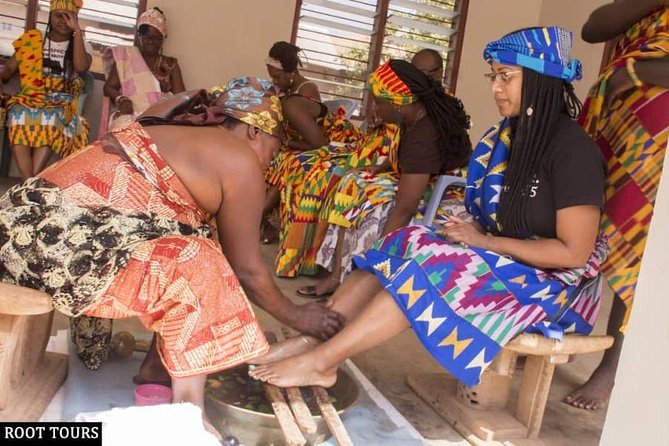
I would recommend it most strongly to African Americans seeking a personal connection with Ghanaian culture. It also suits families, couples, and small groups who prefer a private setting and want a ceremony that feels more personal than a standard museum visit.
It is a good match if you value:
- A formal cultural experience
- A name connected to the day of your birth
- A certificate and Kente keepsake
- Textile traditions and local crafts
- A private vehicle and private group
- Lunch included in the price
I would be more cautious if you want a fast, low-cost sightseeing tour. The $180 rate is easier to justify when the naming ceremony is your main reason for booking. If you are mainly interested in shopping, remember that purchases and village admission fees cost extra.
You should also think about your comfort with a ceremony that may carry emotional weight. The experience is not presented as entertainment alone. It connects identity, family, culture, and remembrance.
Practical tips before you go
Have your birth day information ready, since the Akan name is selected according to the day you were born. If you are booking for several people, collect this information in advance so the ceremony can proceed smoothly.
Confirm the pickup point, especially if you are based in Cape Coast or Accra rather than Kumasi. The activity is located in Kumasi, and the available information does not specify the transport arrangements from those other cities.
Bring extra money for admission fees and personal shopping. Ntonso and Adanwomase both list admission as separate, and cloth or craft purchases are not part of the tour price.
Wear practical clothing for a cultural outing that includes village visits and a cocoa farm. The exact walking conditions are not stated, so comfortable shoes are a sensible choice. Also remember that the experience requires good weather. If poor weather forces cancellation, you will be offered another date or a full refund.
Cancellation is free up to 24 hours before the 9:00 am start time. Changes or cancellations made less than 24 hours ahead are not accepted for a refund, so check your plans before the cutoff.
Should you book the naming ceremony?
Book it if receiving an Akan name feels like a meaningful part of your Ghana visit. The combination of a private ceremony, Kente presentation, certificate, Ntonso Adinkra crafts, Adanwomase weaving, cocoa farming, lunch, and air-conditioned transport gives the morning real substance.
The key question is not simply if $180 is cheap. It is whether you value privacy, cultural guidance, and a formal personal rite. For many African Americans, that may make the price worthwhile, especially with Maclean’s patient support.
Skip it if you want a standard sightseeing trip with every fee included or if shopping is your main goal. For everyone else, this is one of the more personal ways to spend a morning in Kumasi, provided you arrive ready to listen, reflect, and take part respectfully.
FAQ
Where does the traditional naming ceremony take place?
The experience takes place in Kumasi, Ghana. It is designed for African Americans visiting Kumasi, Cape Coast, or Accra.
What time does the tour start?
The tour starts at 9:00 am and lasts approximately four hours.
Is pickup offered?
Yes, pickup is offered. The exact pickup details are not provided, so confirm your location with Root Tour Ghana when booking.
What is included in the price?
The price includes lunch, an air-conditioned vehicle, and fuel.
Are admission fees included?
No. Admission tickets for the Ntonso Adinkra Craftsmen stop and the Adanwomase Kente Weaving Village are not included.
What do I receive during the ceremony?
You receive a traditional name selected according to the day you were born, a woven Kente script, and a certificate with your name.
Can I cancel for a full refund?
Yes. You can cancel at least 24 hours before the experience starts for a full refund. Cancellations or changes made less than 24 hours before the start time are not accepted for a refund.
Most recently reviewed around Kumasi
- Kumasi City Tour★ 4.5 · 3 reviews
- Full Day Tour with Traditional Naming Ceremony in Kumasi★ 5.0 · 4 reviews
- Kejetia Market Tour and Traditional Food Cooking Class.★ 5.0 · 2 reviews
- Kumasi Culture and Heritage Tours★ 4.5 · 3 reviews
- Discover kumasi Tours★ 5.0 · 3 reviews
- Private Half-Day City Tour of Kumasi with Lunch★ 5.0 · 2 reviews
- Ashanti History Tours★ 5.0 · 2 reviews
- Experience the Culture of Ashanti Kingdom in 5days★ 5.0 · 3 reviews
Naming Ceremony Experiences, compared.

The Ancestral Naming Ceremony and Home Coming Experience
Read our review →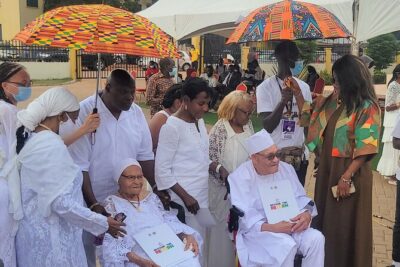
Naming Ceremony and Heritage Homecoming Experience for Diasporas
Read our review →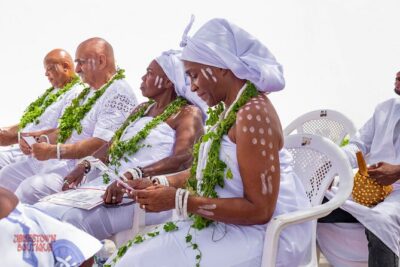
Traditional Naming Ceremony and Boat Cruise Experience
Read our review →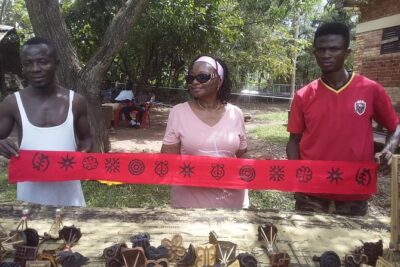
Kumasi Heritage Tours And Naming Ceremony In A Day
Read our review →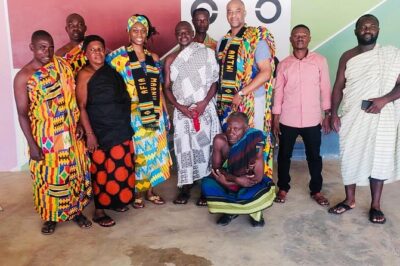
Traditional naming ceremony For African Diasporas in Kumasi
Read our review →
Naming Ceremony, Assin Manso Slave River and Cape Coast Castle
Read our review →
Cultural Village Tour: Traditional Naming Ceremony
Read our review →
Full Day Tour with Traditional Naming Ceremony in Kumasi
Read our review →Browse the lists this tour appears in