
Reviewed · CAPE COAST & ELMINA CASTLE TOURS
3 Days Accra Historical ,Cape Coast Black Roots ,& Kumasi Culture
History here is not behind glass.
This three-day private tour links Ghana’s major cultural sites in one packed route, from the slave castles of the Central Region to Accra’s markets and memorials, then onward to Ashanti weaving and Adinkra craft villages near Kumasi. I especially like the private transfers and included entrance fees, and I like the chance to meet craftspeople rather than simply browse finished souvenirs. The main drawback is the pace: three days covers a great deal of ground, and the long road journeys may feel tiring.
Bilson Tours Gh is also praised for Bilson’s friendly service, photography help, and ability to connect visitors with local guides and transport. You should plan carefully, though, since Kumasi is a long trip from the coast and Accra. This is not a slow holiday. It is a concentrated introduction to Ghana’s past and present.
In This Review
- Key Points Before You Book
- Day One: Elmina Castle and the Painful Coast
- Elmina Castle: Where the Story Becomes Physical
- Kakum National Park: A Walk Above the Forest
- Cape Coast Castle: A Second View of the Slave Trade
- Day Two: Accra’s Museums, Monuments, and Market Life
- National Museum of Ghana: A Useful Starting Point
- W.E.B. DuBois Center: Pan-African Connections
- Independence Square: Ghana’s Public Symbol
- Makola Market: Accra in Full Motion
- Centre for National Culture: Time for Crafts and Bargaining
- Day Three: Kente, Adinkra, and Ashanti Traditions
- Bonwire Kente Weaving Centre: Read the Cloth
- Ntonso: Stamping Adinkra Symbols
- Adanwomase: A Ghanaian Name and a Personal Link
- What the $650 Price Really Covers
- Who Will Enjoy This Tour Most?
- Should You Book the Ghana Three-Day Tour?
- FAQ
- Where does the tour take place?
- How long does the experience last?
- Is pickup available?
- Are entrance fees included?
- How many lunches are provided?
- Is this a private tour?
- What happens if bad weather cancels the tour?
Key Points Before You Book
- A serious history day: Elmina Castle and Cape Coast Castle confront the Atlantic slave trade through dungeons, courtyards, museums, and coastal views.
- Kakum’s 40-meter canopy walk: The approach is steep, and the suspension bridges are not a good match for anyone uncomfortable with heights.
- Accra’s best-known sights: The National Museum, W.E.B. DuBois Center, Independence Square, Makola Market, and the Centre for National Culture fill the second day.
- Hands-on Ashanti traditions: You can weave Kente at Bonwire and stamp Adinkra symbols at Ntonso.
- Good coverage for the price: At $650 per person, the package includes private transfers, a guide, entrance fees, taxes, and three lunches.
- A private experience: Only your own group participates, with pickup offered and a mobile ticket provided.
Day One: Elmina Castle and the Painful Coast
The first day is the emotional center of the tour. Elmina Castle, Kakum National Park, and Cape Coast Castle create a demanding but memorable sequence of history and nature.
Other visits to the Cape Coast and Elmina castles:
- The Cape Coast Day Tour
★ 5.0 · 525 reviews - The Cape Coast Tour
★ 5.0 · 177 reviews - From Accra: Cape Coast, Elmina Castle & Kakum Park Day Tour
★ 4.6 · 144 reviews
Elmina Castle: Where the Story Becomes Physical
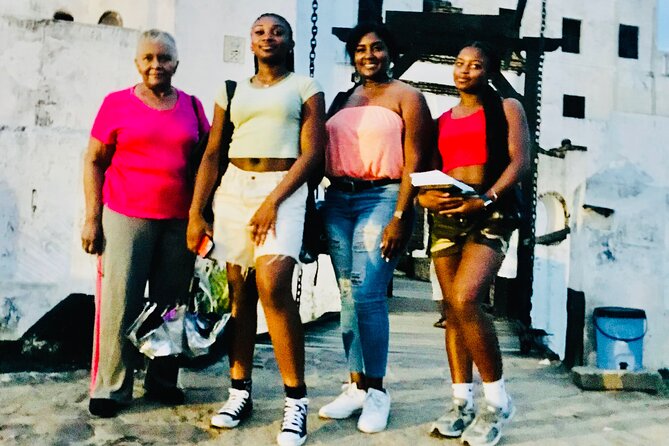
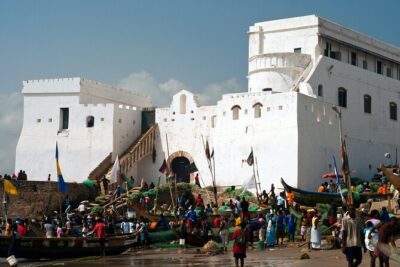
Allow about two hours at Elmina Castle. The whitewashed fortress sits beside the coast, and its striking appearance can feel almost at odds with what happened inside its walls. That contrast is part of the lesson. The building was not simply a scenic old castle. It was tied to the trade and confinement of enslaved Africans.
You will see the rooms and areas connected with captivity and transport across the Atlantic. The visit asks you to think about the thousands of people for whom this was the last sight of their homeland. The tour description encourages you to pay homage to your ancestors, making this stop especially meaningful for people of African and Caribbean descent.
I would not rush this visit. The material is painful, and the value comes from listening, looking closely, and allowing time for reflection. Photography may be possible around the castle, but the focus here should remain on the site and its human cost.
Kakum National Park: A Walk Above the Forest
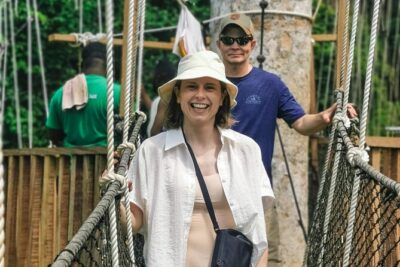
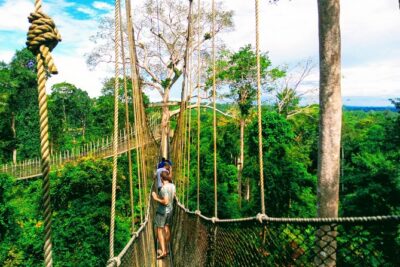
Kakum takes about two hours, including the route toward the canopy walk. The park offers plant and animal life, but the suspension bridges are the main attraction. They rise about 40 meters above the ground, giving you a view across the treetops rather than from a normal forest path.
The walk to the bridges is steep. That detail matters. Most people may be able to participate, but the uphill approach can test anyone who is unfit or not used to walking. Wear sensible shoes and bring patience. The canopy walk itself is described as adventurous and is not suitable for anyone who dislikes heights or swinging bridges.
Kakum gives the day a needed change of mood after Elmina. You move from a site of human suffering to a place focused on Ghana’s natural setting. The experience is not only about scenery. It also shows why forest conservation matters in a country where many cultural traditions depend on local plants, trees, and materials.
Cape Coast Castle: A Second View of the Slave Trade
Cape Coast Castle receives about one hour. It began as a Portuguese trading post in 1555 and later became a major site connected to the Atlantic slave trade. You will visit the dungeons where enslaved people were held before transportation, then see the museum displays and monuments.
The castle’s position by the sea creates a powerful visual connection. From the fort, you can look toward the water that enslaved people were forced to cross. The view is attractive, but it should not soften the subject. This is a place where the setting and the history must be considered together.
The visit includes time for photographs around the castle and views from its fortifications. If you want to understand Ghana’s place in the wider story of the Atlantic slave trade, the two castle visits work well together. Elmina gives you one account, while Cape Coast adds another layer of context.
More of Kumasi and the Ashanti country:
- Kumasi Heritage Tours And Naming Ceremony In A Day
★ 5.0 · 11 reviews - Full-Day Tour to Ashanti Region, Kumasi and Ghanaian History
★ 5.0 · 8 reviews - 4 Days Trip in Accra, Cape Coast,Kumasi culture & heritage tours
★ 5.0 · 5 reviews - Experience the Culture of Ashanti Kingdom in 5days
★ 5.0 · 3 reviews
Day Two: Accra’s Museums, Monuments, and Market Life
The Accra day is more varied and more energetic. You move from formal museum displays to a memorial center, a huge public square, an open-air market, and a craft center.
National Museum of Ghana: A Useful Starting Point
The National Museum takes about one hour and is a sensible place to begin understanding Ghana. It is the country’s oldest museum and presents material connected with Ghanaian culture, history, and local crafts.
The museum can help you place later parts of the tour in context. At Bonwire and Ntonso, you will see living traditions. Here, the focus is on objects and displays that explain the country’s material culture. I would pay attention to the craft sections, since they prepare you to recognize the work and symbolism you encounter later.
One hour is a reasonable introduction, although anyone who likes museums may wish for more time. The stop works best as a clear overview rather than an exhaustive visit.
W.E.B. DuBois Center: Pan-African Connections
The W.E.B. DuBois Center takes about one hour. It honors W.E.B. DuBois, the African American historian and Pan-African thinker who became a citizen of Ghana.
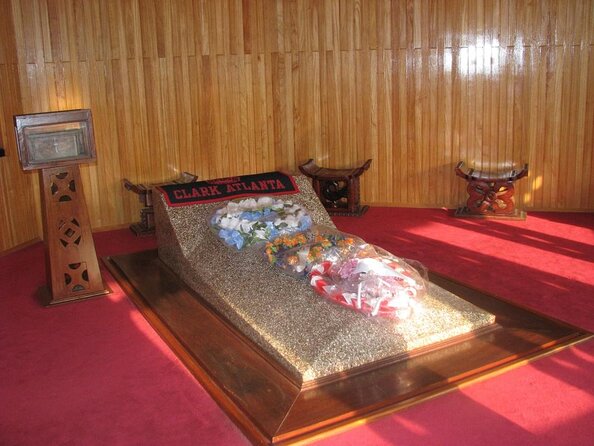
The center includes a small museum, part of DuBois’s personal library, and a collection of his work made available to researchers. An adjacent shrine holds his grave and the ashes of his second wife, Shirley Graham DuBois.
This stop gives the tour a direct connection between Ghana and the wider African diaspora. For African American visitors, it can carry particular weight. It also helps explain why Ghana has such importance in discussions of Pan-African identity, return, and cultural connection.
Independence Square: Ghana’s Public Symbol
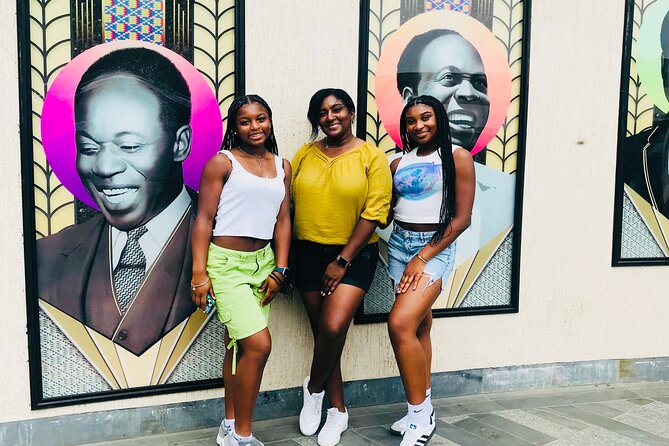
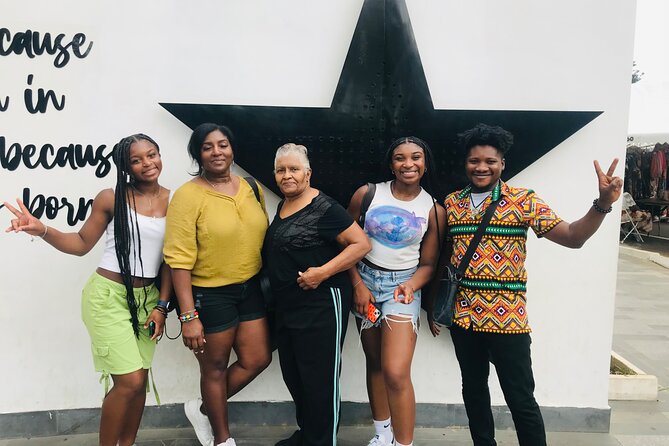
Independence Square takes about an hour. The area includes the Independence Arch, Black Star Gate, and Liberation Day monuments. It is also used for national parades, festivals, and large public gatherings.
The square can feel open and formal after the close rooms of the castles. Its meaning is political rather than commercial or religious. Ghana’s Independence Day falls on March 6, and the square is associated with the country’s national celebrations.
The area is sometimes called Black Star Square and is described as having room for about 30,000 people. The comparison with Tiananmen Square is promotional in tone, but the useful point is simple: this is a major public space where national identity is displayed.
Makola Market: Accra in Full Motion
Makola Market takes about one hour. This is the place to see Accra’s commercial life at close range, with open-air stalls, goods, people, scents, and constant movement.
You may find clothing, food, household items, and other goods, although the exact selection changes from stall to stall. The market is not designed for a quiet stroll. Keep your group together, watch your belongings, and follow Bilson’s advice about where to walk and when to pause.
The market also has social importance. It is a major trading center and an important part of Ghanaian public life, especially for women who earn their living through commerce. A project connected with transport and trade aims to improve the livelihood and security of female market traders. That background makes the visit more than a shopping stop.
Centre for National Culture: Time for Crafts and Bargaining
Set aside about two hours at the Centre for National Culture. This is one of the better places on the tour to look for handmade Ghanaian goods, including Kente cloth, wood carvings, beads, leather bags, earrings, clothing, drums, and other accessories.
The stalls can feel crowded and maze-like. That is part of the experience, but it also means you should not expect fixed museum-style displays. You are entering a working market for art and craft, where prices may require discussion.
The center includes an indoor market and a famous drum market. If you want a keepsake with a clear connection to Ghana, this is the time to shop. You are responsible for purchases, since personal items are not included in the tour price. Ask about the material, origin, and care of anything you buy, especially fabric or carved objects.
Day Three: Kente, Adinkra, and Ashanti Traditions
The final day shifts from national history to hands-on culture around Kumasi. Bonwire, Ntonso, and Adanwomase are not just photo stops. They focus on how objects are made and what their symbols mean.
Bonwire Kente Weaving Centre: Read the Cloth
Bonwire is scheduled for about two hours and is known as the birthplace of Kente weaving. Kente is worn for important occasions and celebrations, and its colors, patterns, and names can carry messages about history, culture, and social practice.
The most useful part is the demonstration and practical lesson. You can see the hand-operated looms and try weaving like a local. Even a short attempt helps you understand the skill behind cloth that can look simple when folded on a market table.
This is also a good place to ask about the meaning of a design before buying it. Kente is not merely colorful fabric. The pattern and use can matter, and a guide can help you avoid treating a meaningful textile as a generic souvenir.
Ntonso: Stamping Adinkra Symbols
Ntonso is allotted about two hours and centers on Adinkra craft. The village is associated with making Adinkra locally from the beginning of the process, including dye preparation and symbol carving.
You will learn how the cloth is divided into sections, how symbols are carved into calabash gourds, and how the stamps are pressed into dye. The practical activity lets you stamp a design yourself.
Adinkra symbols carry messages and wisdom. That makes this stop especially rewarding if you enjoy objects with a story. Look closely at the symbols and ask what each one represents. The finished cloth is attractive, but the message is the point.
Adanwomase: A Ghanaian Name and a Personal Link
Adanwomase is scheduled for about three hours and is designed especially for people from the African diaspora, including African Americans and visitors from the Caribbean.
The activity includes receiving a Ghanaian name based on your date of birth, a certificate of recognition, and an adornment of Ghanaian cloth. The naming ceremony is presented as a way to connect you with Ghanaian culture and the idea of being welcomed as a child of the earth.
The stop also includes practical Kente weaving and a visit to an Adinkra village. A cocoa farm visit is included in the description as well, with an explanation of how cocoa is nursed and harvested. Since the day combines several activities, confirm the exact order and timing with Bilson before setting out.
For visitors with family roots in Africa, this can be the most personal part of the tour. For others, it is still a chance to learn how naming, clothing, farming, and craft fit together in local life.
What the $650 Price Really Covers
At $650 per person, the tour is not a budget sightseeing loop. Its value comes from what is included: private transfers, a guide, entrance fees, taxes, and three lunches. You also get a private group rather than being placed with strangers.
The price makes more sense if you would otherwise need to arrange transport between Accra, Cape Coast, and Kumasi, then organize separate admission and local guiding at each site. The tour gathers many difficult-to-coordinate stops into three days.
It is less attractive if you prefer to set your own pace or spend a full day at one museum or castle. The program is tightly filled, and long transfers are part of the deal. Your personal shopping is not included, so budget separately for Kente, Adinkra cloth, drums, beads, and other items.
Bilson’s role adds practical value. He is praised for taking photographs, connecting groups with local guides, and arranging transport to Kumasi and Cape Coast. That kind of help matters most on a route where distances are substantial and local arrangements can affect the day.
Who Will Enjoy This Tour Most?
I would recommend this tour to first-time visitors who want a broad introduction to Ghana and do not want to plan each transfer alone. It suits people interested in African diaspora history, Ghanaian independence, traditional textiles, markets, and hands-on craft.
It is especially fitting for African American and Caribbean visitors who want to explore ancestral connections. The castle visits, W.E.B. DuBois Center, naming ceremony, and Kente and Adinkra activities create a clear thread between Ghana and the wider diaspora.
You should think twice if you dislike heights, steep walks, long road journeys, or a full schedule. Kakum can be physically challenging, while the castle visits can be emotionally heavy. The tour is private, so you may be able to discuss pacing with Bilson, but the listed program still covers a lot in three days.
Most people can participate, and service animals are allowed. Pickup is offered, and confirmation is provided when you book. The experience depends on good weather, so a weather cancellation may lead to another date or a full refund. Cancellation at least 24 hours before the start time also allows a full refund.
Should You Book the Ghana Three-Day Tour?
Book it if you want maximum cultural coverage in a short visit and value having transport, admissions, lunch, and local coordination handled for you. The strongest parts are the castle history, Bilson’s personal assistance, and the chance to work with Kente and Adinkra makers.
Skip it if you want a restful schedule or prefer independent travel. The route is ambitious, and Kumasi is a long journey from Ghana’s coastal and capital areas. For the right visitor, though, this is a useful and meaningful three-day introduction, with much more substance than a simple list of photo stops.
FAQ
Where does the tour take place?
The tour is based around Accra and includes Elmina Castle, Cape Coast Castle, Kakum National Park, and cultural sites near Kumasi.
How long does the experience last?
The experience lasts approximately three days.
Is pickup available?
Yes. Pickup is offered.
Are entrance fees included?
Yes. Entrance fees, private transfers, guide service, taxes, and lunch are included.
How many lunches are provided?
Three lunches are included.
Is this a private tour?
Yes. Only your own group participates in the activity.
What happens if bad weather cancels the tour?
If poor weather causes cancellation, you will be offered a different date or a full refund. You can also receive a full refund if you cancel at least 24 hours before the start time.
More 3-Day Experiences in Accra
- Volta Region 3 Days 2 nights Nature Private Tour
★ 5.0 · 11 reviews - 3 Days Private Wanderlust Eco Tour in Volta, Ghana.
★ 4.5 · 9 reviews - 3 Days Accra City Tour & Cape Coast Tour
★ 4.5 · 3 reviews - 3 Days Grassroots Safari To Mole
★ 5.0 · 54 reviews
More Historical Tours in Accra
- Experience the Beauty, History and the Culture Of Accra in a Day
★ 5.0 · 323 reviews - Ghana Heritage Tours – Beyond The Return
★ 5.0 · 36 reviews - 10 Days Ghana Cultural and Heritage Trip
★ 5.0 · 31 reviews - Cape Coast Historical Day Tour
★ 5.0 · 24 reviews
Most recently reviewed around Accra
- Visit Aburi Garden, Tetteh Quarshie Cocoa Farm & Waterfall★ 4.0 · 4 reviews
- Private 9-Day Tour in Ghana★ 5.0 · 2 reviews
- Wli Waterfalls, Mount Afadjato & Tafi Atome Monkey Sanctuary★ 5.0 · 2 reviews
- Cape Coast and Elmina castle Day Trip★ 5.0 · 2 reviews
- Culinary for Social Change-Cooking Class★ 5.0 · 2 reviews
- Time with Nature★ 5.0 · 2 reviews
- Private Slave Castles and Dungeons Tour in Cape Coast, Ghana★ 5.0 · 3 reviews
- Experience Accra★ 5.0 · 2 reviews
Cape Coast & Elmina Castle Tours, compared.

Cape Coast, Elmina Castle & Kakum Park Day Tour
Read our review →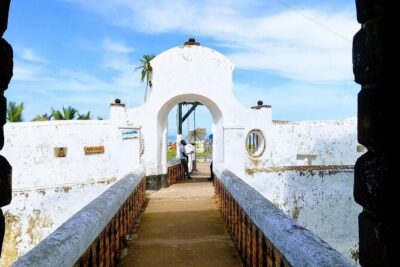
Cape Coast ,Elmina Castle and Kakum Full-Day Tour
Read our review →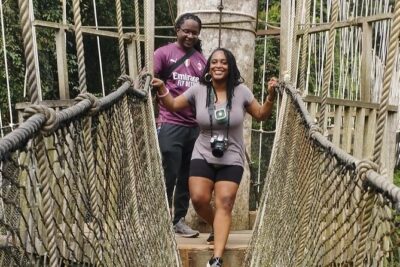
10 Days Trip to Cape Coast and Elmina Castles from Accra
Read our review →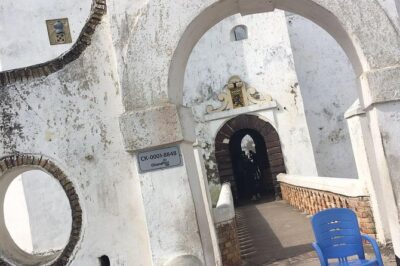
The Homecoming Experience To Cape-coast And Elmina.
Read our review →Browse the lists this tour appears in