
Reviewed · KUMASI TOURS
Bonwire Namimg Ceremony and Kente Tourist Center
Culture becomes personal here. This private Kumasi tour takes you to Bonwire, the village associated with Kente cloth, for hands-on weaving and an Akan naming ceremony led by the chief and Queen-mother. I like the chance to make part of the cloth yourself, and I like that the ceremony ends with a certificate bearing your Akan name.
The tour also offers a quiet break from Kumasi’s city traffic and crowds. The main consideration is the price: at $180 per person, it is not a casual half-day outing, especially for solo visitors. The value improves if you want private transport, a local meal, a guide, and a meaningful cultural experience rather than a quick photo stop.
In This Review
- Key points to know before booking
- From Kwame University to Bonwire village
- Why Bonwire matters to Kente weaving
- Trying the loom yourself
- The Akan naming ceremony at Bonwire Palace
- What the certificate adds
- Lunch, water, and the real value of $180
- Private touring and personal attention
- Who will enjoy this experience most
- Timing, weather, and booking advice
- Is the tour accessible and easy to join?
- Should you book the Bonwire naming ceremony?
- FAQ
- Where does the Bonwire naming ceremony and Kente tour take place?
- How long does the experience last?
- What happens during the Kente weaving visit?
- Who leads the Akan naming ceremony?
- Do I receive proof of my Akan name?
- Is lunch included?
- Is this a private tour?
- What is the cancellation policy?
Key points to know before booking
- Bonwire is linked with Kente cloth, and you can try weaving it yourself rather than only browsing finished fabric.
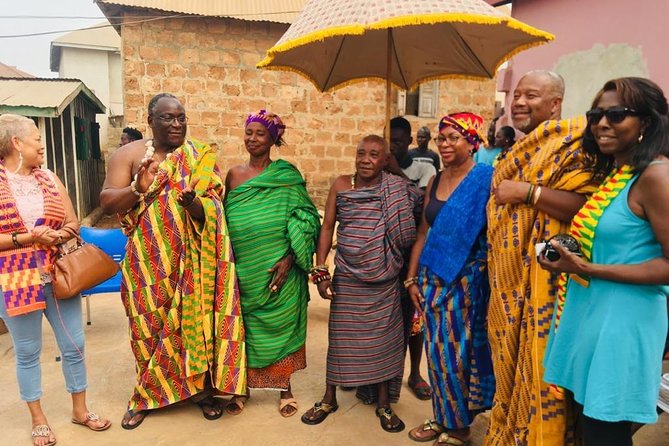
- The Akan naming ceremony is led by the village chief, Queen-mother, and other leaders, giving the visit a formal cultural setting.
- You receive a certificate with your traditional Akan name, a useful keepsake that gives the ceremony lasting meaning.
- The tour is private, so only your group participates and the pace is not set by a large coach party.
- Pickup, an air-conditioned vehicle, bottled water, and a local lunch are included, which helps explain part of the cost.
- The advertised total duration is about 5 hours 30 minutes, while the Bonwire stop itself is listed as about three hours.
From Kwame University to Bonwire village
The day begins with pickup and a drive from the Kwame University area toward Bonwire. The tour includes an air-conditioned vehicle, which matters in Kumasi’s warm climate and makes the ride easier than arranging separate transport.
The total experience lasts about 5 hours and 30 minutes. The Bonwire portion is described as three hours, so the remaining time likely allows for the drive, pickup, lunch, and the transition between activities. I would still confirm the exact pickup time and schedule before setting other plans for the day.
Private transport changes the feel of the outing. You are not joining a large group that must wait for late arrivals or follow a rigid route. Since only your party participates, you can ask questions as you go and give the weaving lesson and naming ceremony the attention they deserve.
One practical detail is worth noting: the experience is listed as starting around the Kwame University area, while pickup is also offered. Confirm the exact meeting point when booking so you know if the guide will collect you at your accommodation or expects you at a set location.
More of Kumasi and the Ashanti country:
- Tour Kumasi City Like a Local
★ 4.5 · 34 reviews - Kumasi Heritage Tours And Naming Ceremony In A Day
★ 5.0 · 11 reviews - Traditional naming ceremony For African Diasporas in Kumasi
★ 5.0 · 10 reviews
Why Bonwire matters to Kente weaving
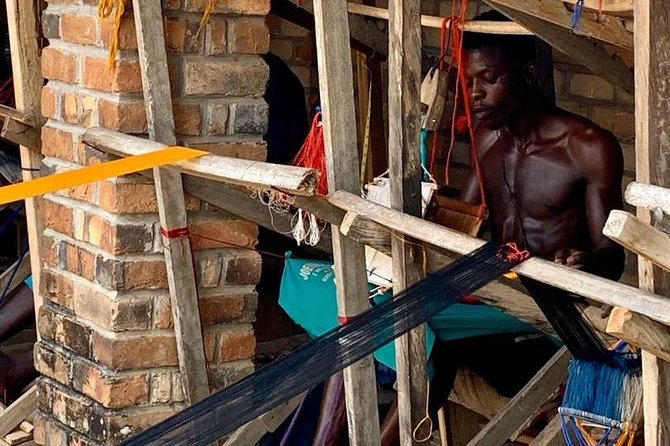
Bonwire is presented as the home of Kente cloth, one of Ghana’s best-known forms of woven textile. The value of visiting this village is that the cloth is connected to a working local setting, not just a shop display in a city market.
You will be shown how Kente is woven and taught about its meaning. The experience is designed to let you try the loom yourself, giving you a better sense of the handwork behind the finished fabric.
That hands-on part is important. Kente can look simple from a distance, with its neat strips and strong patterns, but weaving requires coordination and patience. Even a short attempt can help you understand that the cloth is made through repeated, careful work rather than produced as a quick souvenir.
I would not book this tour expecting a long technical course in textile production. The available information promises an introduction and a chance to weave, not an advanced workshop. Still, for most people, the short practical lesson is more memorable than a lecture alone.
You may also want to ask about the meaning of the pattern or colors used during the lesson. The tour specifically includes an explanation of Kente’s meaning, and this is the part that can turn a craft demonstration into a better cultural encounter.
Trying the loom yourself
The weaving session gives the tour its most active moment. Instead of standing behind a barrier, you can have a go at making Kente cloth under instruction from the people at the center.
Expect this to be a guided introduction rather than a polished craft class. You might find the first attempt awkward, which is part of the fun. The process lets you appreciate the skill involved and gives you a stronger connection to the fabric you see for sale.
This is also a good activity for families and small groups because each person can take part at a different level. If you have limited mobility or prefer to watch, the tour information says most people can participate and service animals are allowed, but it does not give detailed information about seating, loom access, or step-free entry.
The center may also be a place to look at finished Kente cloth. The supplied details do not specify what is available for purchase or whether shopping is part of the visit, so treat any buying opportunity as a possible extra rather than a guaranteed feature.
The Akan naming ceremony at Bonwire Palace
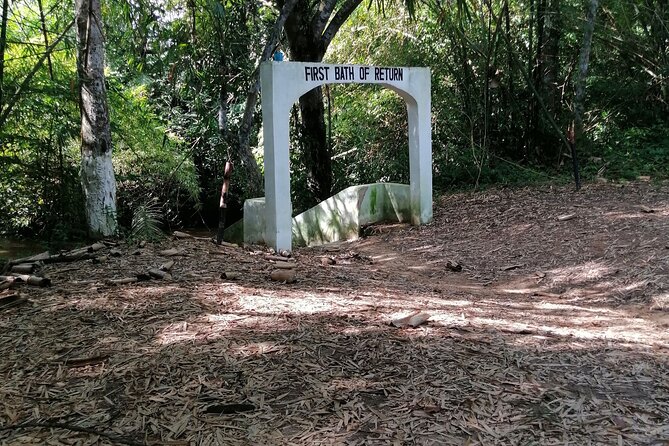
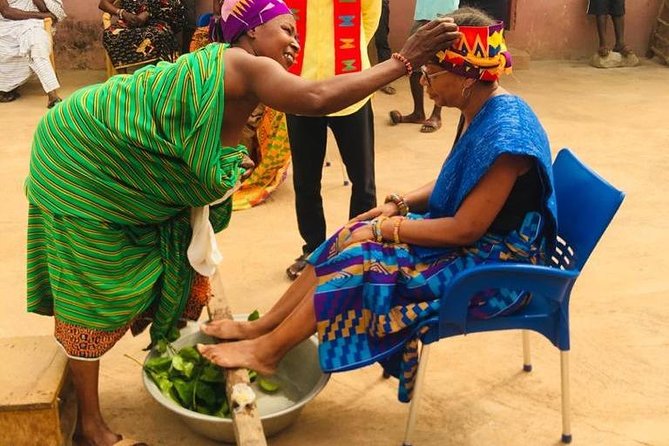
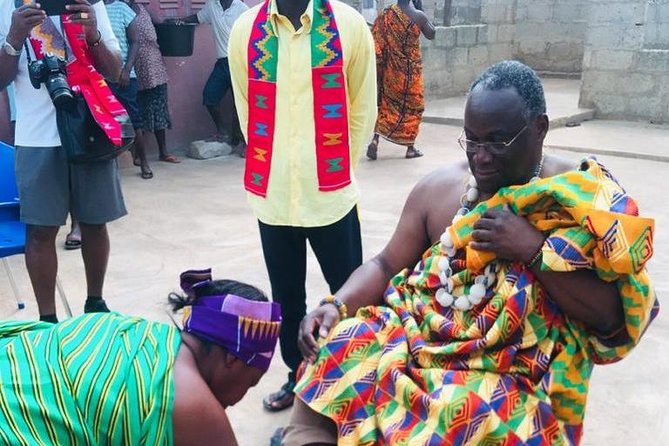
After the weaving activity, you go to Bonwire Palace for an Akan naming ceremony. The chief, Queen-mother, and village leaders pray for you and give you a traditional name.
This is the heart of the experience. A name in this setting is not simply a label chosen for fun. The ceremony connects the visitor with Akan cultural practice and gives the day a personal focus. You are not only learning about Ghanaian traditions from the outside. You are being formally included in a ceremony, with the permission and participation of local leaders.
The exact ceremony will depend on the group and the palace schedule, so it is best to arrive with respect and an open mind. Listen carefully to the explanation of your name and ask your guide if you want to understand its meaning or the role of each person taking part.
The presence of the chief and Queen-mother gives the occasion a formal tone. This is not a staged performance described as entertainment. The information provided emphasizes prayer, traditional naming, and village leadership, so you should approach it as a cultural and ceremonial visit.
You receive a certificate with your new Akan name. That certificate is a practical souvenir, but its main value is personal. It records the name given during the ceremony and gives you something more meaningful than a standard ticket stub or mass-produced keepsake.
Further from Kumasi, and a different kind of day:
- Kumasi City Tour
★ 5.0 · 8 reviews - Full-Day Tour to Ashanti Region, Kumasi and Ghanaian History
★ 5.0 · 8 reviews - Kumasi City Tour
★ 4.5 · 7 reviews - One day tour at Kumasi
★ 5.0 · 6 reviews
What the certificate adds
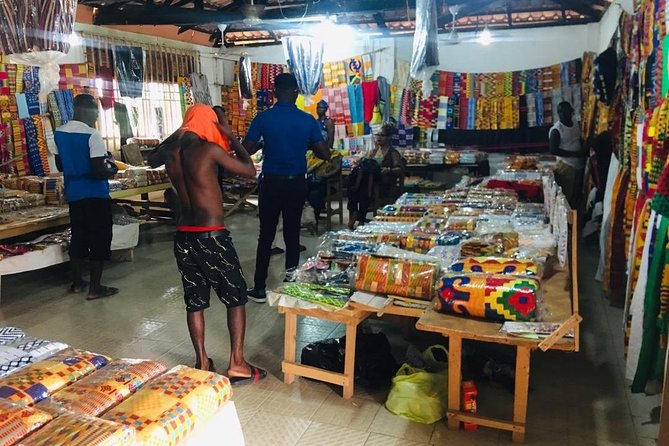
Many cultural tours end with photographs and a quick goodbye. Here, the certificate gives the naming ceremony a clear conclusion.
I like this feature because it helps you remember what happened and what your name means. If you are visiting as a family, each person can have a distinct memory of the ceremony. If you are marking a birthday, anniversary, or other personal occasion, the certificate may feel especially suitable, though the tour information does not promise a customized ceremony for special events.
The certificate does not replace the ceremony itself. Its value depends on the time and care given to explaining the name and the tradition behind it. You should ask the guide to clarify anything you do not understand before leaving the palace.
Lunch, water, and the real value of $180
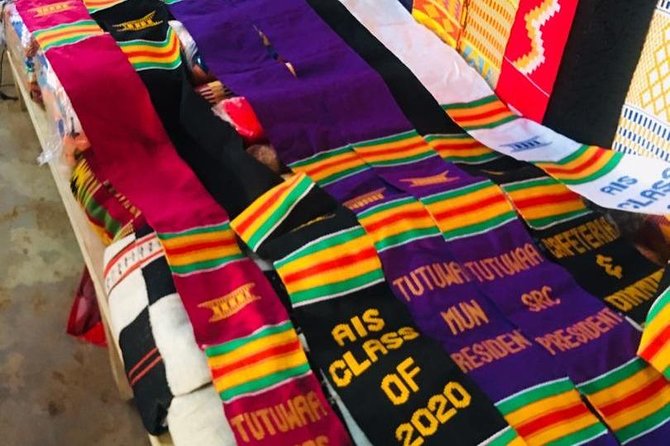
The tour costs $180 per person. That is a high price for a five-and-a-half-hour experience, but you are paying for more than admission to a weaving center.
The package includes an air-conditioned vehicle, pickup, bottled water, all fees and taxes, a local meal, and the naming certificate. You also receive a private guide and driver arrangement rather than sharing the day with a large group. For two or more people who value comfort and a private setting, the total may feel reasonable.
The local lunch adds practical value. You do not have to stop and arrange food in the middle of the day, and the meal gives you another chance to experience something connected to Ghana rather than relying on familiar international options.
Alcoholic beverages are not included, and dinner is not part of the tour. These exclusions are easy to manage, but you should plan your evening separately. Bottled water is included, which is helpful, though carrying extra water may still be sensible if you prefer to drink often in warm weather.
For a solo visitor, the cost deserves closer thought because the price is charged per person. I would choose this tour if the private format, personal ceremony, and included transport are central to your plans. If you mainly want to see Kente cloth or visit a village briefly, a less expensive shared option may offer better value.
Private touring and personal attention
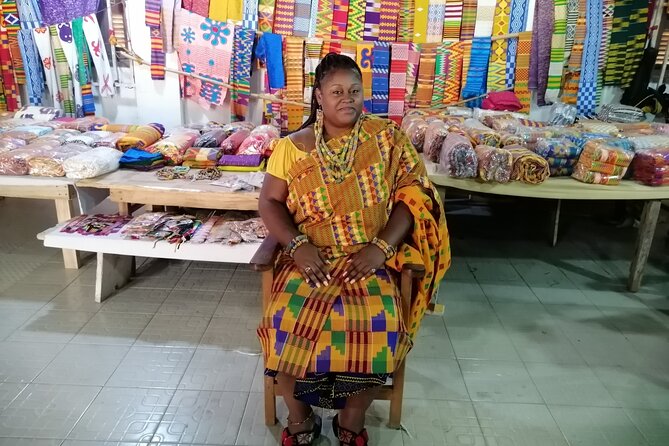
The private format is one of the strongest features. Your group is the only group participating, so you avoid the common problem of a cultural visit becoming a queue of people moving from one display to the next.
A private tour also gives you room to ask basic questions without feeling rushed. You can spend more time understanding the weaving process, clarify the meaning of your name, and discuss the ceremony with your guide.
The strongest praise attached to this experience focuses on care, professionalism, and attention. One account names Solomon as the guide and Kwame as the driver, describing both as exceptionally attentive during a Kumasi visit that began with airport pickup. They may not be assigned to every booking, so confirm the names of your own guide and driver in advance.
That personal service is a major part of what you are buying. It can make the difference between a pleasant transfer and a well-organized cultural day. Still, private does not mean every timing detail is flexible, so provide your pickup information clearly and ask about the order of stops.
Who will enjoy this experience most
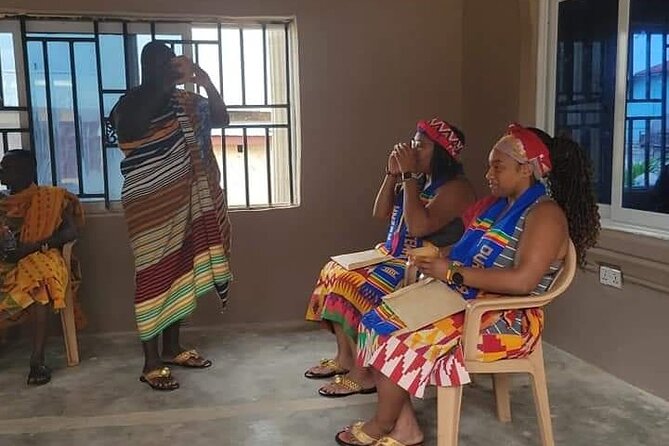
I would recommend this tour to you if you want cultural contact with a personal element. The naming ceremony gives the day more purpose than a standard sightseeing trip, while the weaving session keeps it active.
It suits:
- Couples looking for a distinctive experience in Kumasi
- Families who want a certificate and a story to take home
- Visitors interested in Ghanaian customs and textile work
- First-time visitors who prefer private transport
- Small groups who value a slower, more personal pace
You may want to reconsider if you dislike formal ceremonies, prefer independent travel, or are mainly interested in shopping. The tour centers on participation and cultural exchange, not a long list of attractions.
The experience may also work well for visitors who have already seen Kumasi’s main sights and want something outside the city center. Bonwire offers a change of setting without requiring a full-day trip.
Timing, weather, and booking advice
The tour is often reserved about 12 days ahead, so booking at the last minute may not always work. I would reserve early if your Kumasi dates are fixed, especially if you need airport pickup or want the outing on a particular day.
The listed operating period runs from December 30, 2022, through June 16, 2026, with Monday hours shown as 7:00 AM to 9:30 PM. The listing does not provide a full weekly schedule in the supplied information, so confirm the available day and start time before paying.
Good weather is required. If poor weather causes cancellation, you are offered another date or a full refund. That policy makes sense for a village visit and road transfer, but keep some flexibility in your Kumasi schedule.
Free cancellation is available up to 24 hours before the experience starts. Cancellations or changes made within 24 hours are not refunded, and the cutoff uses local time. Set a reminder if your plans are uncertain.
Is the tour accessible and easy to join?
The experience allows service animals, is near public transportation, and says most people can participate. Pickup is offered, so you may not need to arrange your own way to Bonwire.
The information does not describe wheelchair access, restroom facilities, walking distances, loom design, or palace entry conditions. If any of those details matter to you, contact the provider before booking and explain your needs clearly.
The private format can help if someone in your group needs a little extra time. It does not guarantee full accessibility, so ask specific questions rather than relying on the general statement that most people can participate.
Should you book the Bonwire naming ceremony?
Book it if you want a personal cultural experience that combines craft, ceremony, transport, and lunch in one private outing. The chance to try Kente weaving and receive an Akan name from the chief and Queen-mother gives the day a clear sense of purpose.
At $180 per person, the tour is best for people who value privacy and meaningful contact more than keeping costs low. I would especially consider it for a first Kumasi visit, a family occasion, or a trip where you want one memorable experience beyond ordinary sightseeing.
Skip it if you only want a quick look at Kente cloth or if a formal naming ceremony does not appeal to you. For the right visitor, though, Bonwire offers something rare: you leave with a new skill attempted, a cultural lesson, a local meal, and a name that is yours to remember.
FAQ
Where does the Bonwire naming ceremony and Kente tour take place?
The experience is based in Bonwire village near Kumasi, Ghana. The tour begins with pickup, with the meeting information associated with the Kwame University area.
How long does the experience last?
The total tour lasts approximately 5 hours and 30 minutes. The Bonwire visit itself is listed as about three hours, with the remaining time allowing for transport and other parts of the day.
What happens during the Kente weaving visit?
You learn about Bonwire’s connection with Kente cloth, hear about the meaning of the weaving, and have a chance to try weaving it yourself.
Who leads the Akan naming ceremony?
The ceremony is conducted by the chief, Queen-mother, and other leaders of the village. They pray for you and give you a traditional Akan name.
Do I receive proof of my Akan name?
Yes. A naming ceremony certificate with your new Akan name is included.
Is lunch included?
Yes. A local meal is included, along with bottled water. Alcoholic beverages and dinner are not included.
Is this a private tour?
Yes. Only your group participates in the private tour or activity.
What is the cancellation policy?
You can cancel up to 24 hours before the start time for a full refund. Cancellations or changes made less than 24 hours before the experience are not refunded. If poor weather causes cancellation, you are offered a different date or a full refund.
Most recently reviewed around Kumasi
- Full Day Tour with Traditional Naming Ceremony in Kumasi★ 5.0 · 4 reviews
- Kumasi City Tour★ 4.5 · 3 reviews
- Kejetia Market Tour and Traditional Food Cooking Class.★ 5.0 · 2 reviews
- Kumasi Culture and Heritage Tours★ 4.5 · 3 reviews
- Discover kumasi Tours★ 5.0 · 3 reviews
- Private Half-Day City Tour of Kumasi with Lunch★ 5.0 · 2 reviews
- Ashanti History Tours★ 5.0 · 2 reviews
- Experience the Culture of Ashanti Kingdom in 5days★ 5.0 · 3 reviews
Kumasi Tours, compared.

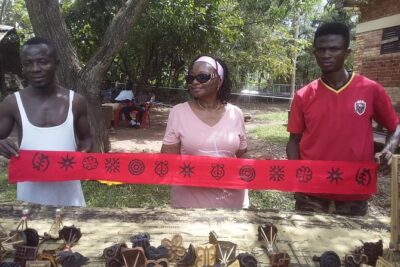
Kumasi Heritage Tours And Naming Ceremony In A Day
Read our review →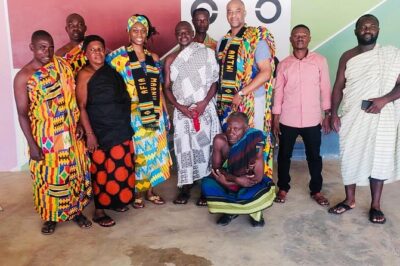
Traditional naming ceremony For African Diasporas in Kumasi
Read our review →
Full-Day Tour to Ashanti Region, Kumasi and Ghanaian History
Read our review →

Lake Bosomtwe Boat Cruisely and Kumasi City Tours
Read our review →
Browse the lists this tour appears in