
Reviewed · CITY TOURS IN KUMASI
Kumasi City Tour
Kumasi tells its story in royal symbols. This four-hour tour brings you to the Manhyia Palace Museum, Prempeh II Museum, Kumasi Fort, and Okomfo Anokye Sword Site, with admission included. I like the strong focus on Ashanti culture and the small group size, capped at 15 people. I also like that a guide can add meaning to objects that would otherwise be easy to overlook.
The main consideration is the itinerary’s meeting information. The tour begins at 8:00 a.m. at Manhyia Palace, but the listed stops begin with Kumasi Fort, and the stated end is Prempeh II Jubilee Museum. Confirm the exact pickup and order before setting out. Minimum numbers are required for confirmation.
In This Review
- Key points to know before booking
- Why this is a useful first look at Kumasi
- Starting at Manhyia Palace and the Ashanti royal story
- Kumasi Fort and the Ghana Armed Forces Museum
- Prempeh II Museum and life inside a chief’s residence
- The Okomfo Anokye Sword Site and a powerful symbol
- What the city adds between the museums
- Is $60 a fair price?
- Timing, transport, and the small practical details
- Who will enjoy this Kumasi tour most?
- Should you book the Kumasi City Tour?
- FAQ
- How long is the Kumasi City Tour?
- What time does the tour start?
- Where does the tour begin?
- Where does the tour end?
- What attractions are included?
- Is admission included?
- How many people can join the tour?
- What is the cancellation policy?
Key points to know before booking
- Four major cultural stops in about four hours: You spend roughly an hour at each site, so the schedule is easy to understand and not overloaded.
- Royal objects are the main attraction: Manhyia Palace Museum and Prempeh II Museum explain Ashanti kingship through clothing, emblems, talismans, furniture, and ceremonial pieces.
- Kumasi Fort adds a different angle: The Ghana Armed Forces Museum connects Kumasi and Ghana to colonial conflict, the Second World War, and the country’s military past.
- The Okomfo Anokye Sword Site carries powerful symbolism: Its small museum centers on the sword said to have been driven into the ground and made immovable.
- A compact group can make questions easier: With no more than 15 participants, you have a better chance to hear the guide and ask about unfamiliar customs.
- Admission is included: At $60 per person, the price covers entry to the four listed attractions, pickup is offered, and you receive a mobile ticket.
Why this is a useful first look at Kumasi
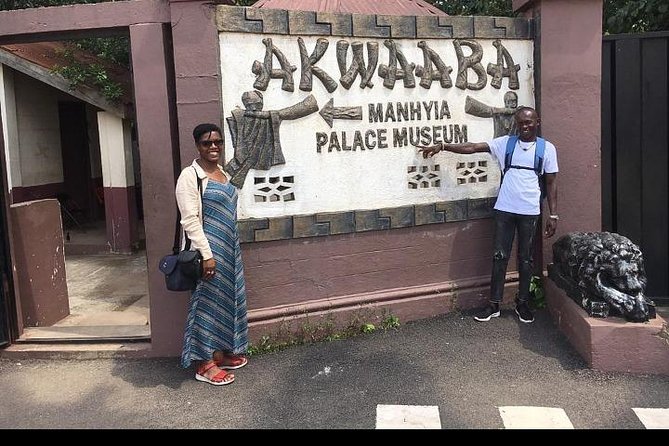
Kumasi is closely tied to the Asante Kingdom, and this tour gives you several ways to understand that connection. You are not simply moving from one photo stop to another. The museums show how political power, spiritual belief, warfare, craft, and daily royal life fit together.
I especially like the balance between the four sites. The palace museums give you royal and cultural context. Kumasi Fort shifts the story toward military history and Ghana’s colonial period. The sword site then brings you back to the religious and symbolic traditions linked with the founding of Kumasi.
The pace is brisk but sensible. Four hours is long enough for a useful introduction, while short enough to fit into a busy Kumasi visit. Since each stop is planned for about one hour, you should expect an overview rather than a slow museum study. If you like to read every label or linger over every object, the schedule may feel tight.
The tour is capped at 15 people. That is not a private outing, but it is small enough to avoid the feel of a large coach group. A good guide matters here, since several exhibits require explanation. One favorable account specifically praised the guide’s clear English, pleasant manner, and strong command of the places visited. Those qualities are important in museums where the meaning of an object is not always obvious at first glance.
More City Tours in Kumasi
- Tour Kumasi City Like a Local
★ 4.5 · 34 reviews - Kumasi City Tour
★ 4.5 · 7 reviews - Lake Bosomtwe Boat Cruisely and Kumasi City Tours
★ 4.5 · 6 reviews
Starting at Manhyia Palace and the Ashanti royal story
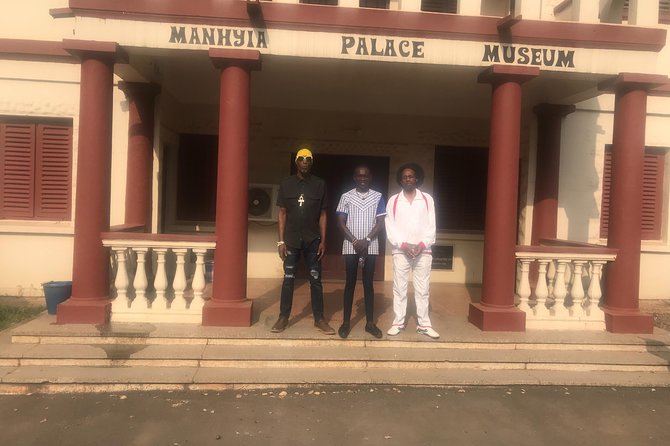
Manhyia Palace is the natural anchor for a Kumasi culture tour. It connects the city to the Asante monarchy and gives you a starting point for understanding why royal objects, gold symbols, stools, clothing, and ceremonial items carry such weight.
The Manhyia Palace Museum opened in 1995 during the Silver Jubilee celebration connected with the ascension of the Golden Stool. Even without a long visit, that detail gives the museum a clear place in the story of modern Ashanti heritage.
The collection includes historic artifacts, war talismans, and other objects connected with the Asante Kingdom. The museum is modest in size, which works in your favor if you have only an hour. You can focus on the objects and listen to the guide instead of trying to cover a huge building.
I would pay close attention to the difference between an ordinary historical item and an item tied to royal authority. The objects here are not only old things behind glass. They help explain how the Asante court expressed leadership, protection, ceremony, and continuity.
The tour information gives Manhyia Palace as the meeting point at P93P+M2Q, Palace, Kumasi. Pickup is offered, but the exact arrangement should be checked when you book. Since the tour begins at 8:00 a.m., plan to be ready early and allow time to find the palace entrance.
Kumasi Fort and the Ghana Armed Forces Museum
The Kumasi Fort stop gives the tour a welcome change of direction. Instead of concentrating only on royal and cultural material, the Ghana Armed Forces Museum presents military equipment, weapons, flags, decorations, armored vehicles, portraits, and photographs.
The collections cover the British Asante War of 1900 and the Second World War, along with Ghana’s military development from the colonial period to the present. That makes this more than a display of uniforms and machines. It helps place Kumasi inside the wider political story of Ghana.
I find this stop valuable because it can correct an overly narrow view of Ashanti history. The royal museums focus on the Asante Kingdom from within its own institutions and traditions. The fort adds the perspective of conflict, foreign rule, military organization, and national change.
You have about one hour here. That is enough time to see the major pieces and ask questions, but you probably will not study every photograph in detail. If military history is your main interest, you may wish the stop were longer. If your main goal is culture, the hour provides useful background without taking over the entire tour.
The museum’s mix of large equipment and smaller personal or official items should keep the visit varied. Flags and decorations can show how institutions represented authority. Portraits and photographs can make the timeline more personal. Weapons and armored vehicles give the past a physical scale that written history alone cannot provide.
Prempeh II Museum and life inside a chief’s residence
The Prempeh II Museum is compact, but its design helps make the visit memorable. It is arranged to resemble an Ashanti chief’s residence, with a front courtyard and walls decorated with traditional carved symbols.
That setting matters. You are not seeing royal objects in an anonymous gallery. The building itself gives you a sense of the visual language surrounding Ashanti leadership.
The collection includes items linked with King Prempeh II. You can expect to see war attire, ceremonial clothing, jewelry, protective talismans, personal bathing and dining accessories, furniture, royal emblems, and brass weights used to measure gold.
The range of objects is one of the museum’s strengths. Clothing shows public ceremony and rank. Jewelry and emblems point to authority and display. Talismans reveal the spiritual side of protection. Bathing and dining items bring royal life down to a more personal level, reminding you that history is also found in ordinary routines.
The brass gold weights deserve special attention. Their practical purpose connects trade, measurement, and craftsmanship. They also show how a small object can carry information about the economy and material culture of the period.
Admission includes a personalized tour at this museum. That is particularly helpful here because the displays may not explain themselves fully. The guide can connect an item of clothing or a carved symbol to the larger customs of the Ashanti court.
The listed end point is the Prempeh II Jubilee Museum at P929+HXX, Kumasi. The information identifies this as the final tour location, so confirm whether the Prempeh II Museum and Prempeh II Jubilee Museum refer to the same scheduled stop in your booking details. This is a small but important practical check, especially if you need to arrange transport afterward.
More of Kumasi and the Ashanti country:
- Bonwire Namimg Ceremony and Kente Tourist Center
★ 5.0 · 40 reviews - Kumasi Heritage Tours And Naming Ceremony In A Day
★ 5.0 · 11 reviews - Traditional naming ceremony For African Diasporas in Kumasi
★ 5.0 · 10 reviews - Full-Day Tour to Ashanti Region, Kumasi and Ghanaian History
★ 5.0 · 8 reviews
The Okomfo Anokye Sword Site and a powerful symbol
The Okomfo Anokye Sword Site is centered on a single object with major symbolic importance. In its small museum, you see the sword said to have been driven into the ground by Okomfo Anokye and made immovable.
The site is not a large collection, and you should not expect a long museum visit. Its value comes from the story and meaning attached to the sword. A guide’s explanation can help you understand why this one object matters within Ashanti tradition and the history of Kumasi.
This is a good example of why the tour benefits from local interpretation. Without context, you might spend only a few minutes looking at the sword. With an explanation, the visit becomes a chance to consider how spiritual belief, political identity, and place can meet in one physical object.
The supplied schedule gives each stop about an hour, including the sword site. That suggests the guide may use the time for explanation rather than simply viewing the display. If you prefer grand buildings and large collections, this may be the least visually impressive stop. If you appreciate symbolism and local tradition, it may be one of the most memorable.
What the city adds between the museums
The tour’s listed attractions are museums and heritage sites, but Kumasi itself is part of the experience. The city’s sounds, local music, food aromas, and daily movement provide a setting for the history you are hearing.
Kejetia Market is named in the overall description as one of Kumasi’s iconic attractions, but it does not appear as a separate timed stop in the four-stop schedule. Treat it as part of the city context rather than a guaranteed market visit unless the operator confirms otherwise.
The same applies to street food. You may notice traditional Ghanaian food around the city, but no specific tasting is listed. If sampling local dishes is important to you, ask before booking rather than assuming a food stop is included.
This distinction helps you set the right expectations. The tour is primarily a history and culture outing, not a food tour or a long market-shopping session. You will get a more focused introduction to Kumasi’s heritage than a broad survey of every city attraction.
Is $60 a fair price?
The price is $60 per person. Value depends on what you would otherwise pay for admission, transport, and a guide, but the package includes entry to all four listed attractions and offers pickup. That makes the price easier to justify than a ticket-only museum visit.
The strongest value comes from the interpretation. Manhyia Palace Museum, Prempeh II Museum, and the sword site all contain objects whose importance is tied to Ashanti customs and beliefs. A guide who speaks clear English and explains the background can turn a short visit into a much more useful lesson.
The four-hour length also helps. You are paying for a half-day of organized sightseeing rather than a single entrance ticket. The group limit of 15 keeps the experience from becoming too unwieldy, though it is not a fully private tour.
I would consider the price reasonable for a first-time visitor who wants structure and historical context. It may feel less worthwhile if you already know Kumasi well, have your own transport, and prefer to visit museums independently at a slower pace.
Timing, transport, and the small practical details
The start time is 8:00 a.m. Early timing is useful in a city tour because it gives you a full morning for the sites and leaves room for other plans later in the day. It also means you should not treat the start time casually.
Pickup is offered, and the tour is near public transportation. The stated meeting point is Manhyia Palace, while the final location is the Prempeh II Jubilee Museum. Because the supplied route details contain a difference between the meeting point and the first listed stop, confirm where you must wait and how the group moves between sites.
A mobile ticket is provided, so you can keep the booking on your phone. Confirmation is received at booking. The group can include up to 15 people, and minimum participation is required before the tour is confirmed.
Most people can participate according to the supplied information. No separate accessibility details are provided, so ask the operator directly if you have specific mobility or access needs.
Free cancellation is available if you cancel at least 24 hours before the local start time. Cancellations or changes made inside that window are not accepted for a refund.
Who will enjoy this Kumasi tour most?
I would recommend this experience to you if you want a clear introduction to Ashanti history without arranging several museum visits yourself. It suits culture lovers, history enthusiasts, and first-time visitors who prefer a guide to explain the meaning behind unfamiliar objects.
It is also a good fit if you have only half a day in Kumasi. The four-hour structure covers royal heritage, military history, traditional symbolism, and local identity in one morning.
Families with older children may appreciate the variety. Large vehicles, weapons, royal clothing, carved symbols, and the sword site offer different ways into the past. The tour could also suit independent visitors who enjoy asking questions but do not want a completely private guide.
I would be more cautious if you want extensive shopping at Kejetia Market, a dedicated food experience, or long unstructured time at each museum. Those elements are not clearly scheduled. The tour is focused and educational, with a set route and about an hour per stop.
Should you book the Kumasi City Tour?
Book it if you want the main cultural landmarks explained in one organized morning. The included admission, offered pickup, English-speaking guide, and maximum group size of 15 make it a practical choice at $60, especially for a first visit.
Before paying, confirm the exact meeting point, the order of stops, and whether Kejetia Market or any food tasting is actually included. If those details match your plans, this tour offers a sensible introduction to Kumasi through royal museums, military history, and one powerful spiritual symbol.
FAQ
How long is the Kumasi City Tour?
The tour lasts approximately four hours.
What time does the tour start?
The stated start time is 8:00 a.m.
Where does the tour begin?
The listed starting point is Manhyia Palace, P93P+M2Q, Palace, Kumasi, Ghana.
Where does the tour end?
The stated end point is Prempeh II Jubilee Museum, P929+HXX, Kumasi, Ghana. The information identifies this as the final tour location.
What attractions are included?
The scheduled stops are Kumasi Fort and the Ghana Armed Forces Museum, Manhyia Palace Museum, Prempeh II Museum, and Okomfo Anokye Sword Site.
Is admission included?
Yes. Admission tickets are included for all four listed stops.
How many people can join the tour?
The tour has a maximum group size of 15 people. Minimum participant numbers are required for confirmation.
What is the cancellation policy?
You can cancel for a full refund if you cancel at least 24 hours before the experience start time. Changes or cancellations made less than 24 hours before the start time are not accepted for a refund.
Most recently reviewed around Kumasi
- Kumasi City Tour★ 4.5 · 3 reviews
- Full Day Tour with Traditional Naming Ceremony in Kumasi★ 5.0 · 4 reviews
- Kejetia Market Tour and Traditional Food Cooking Class.★ 5.0 · 2 reviews
- Kumasi Culture and Heritage Tours★ 4.5 · 3 reviews
- Discover kumasi Tours★ 5.0 · 3 reviews
- Private Half-Day City Tour of Kumasi with Lunch★ 5.0 · 2 reviews
- Ashanti History Tours★ 5.0 · 2 reviews
- Experience the Culture of Ashanti Kingdom in 5days★ 5.0 · 3 reviews
City Tours in Kumasi, compared.



Lake Bosomtwe Boat Cruisely and Kumasi City Tours
Read our review →
Browse the lists this tour appears in